
INDUSTRY APPLICATION
Rail, Shipbuilding & Aerospace
Aluminium car bodies, hull blocks and aerospace composites: large parts, long welds and special materials raise the bar for dust control.
Send your duty, get a proposal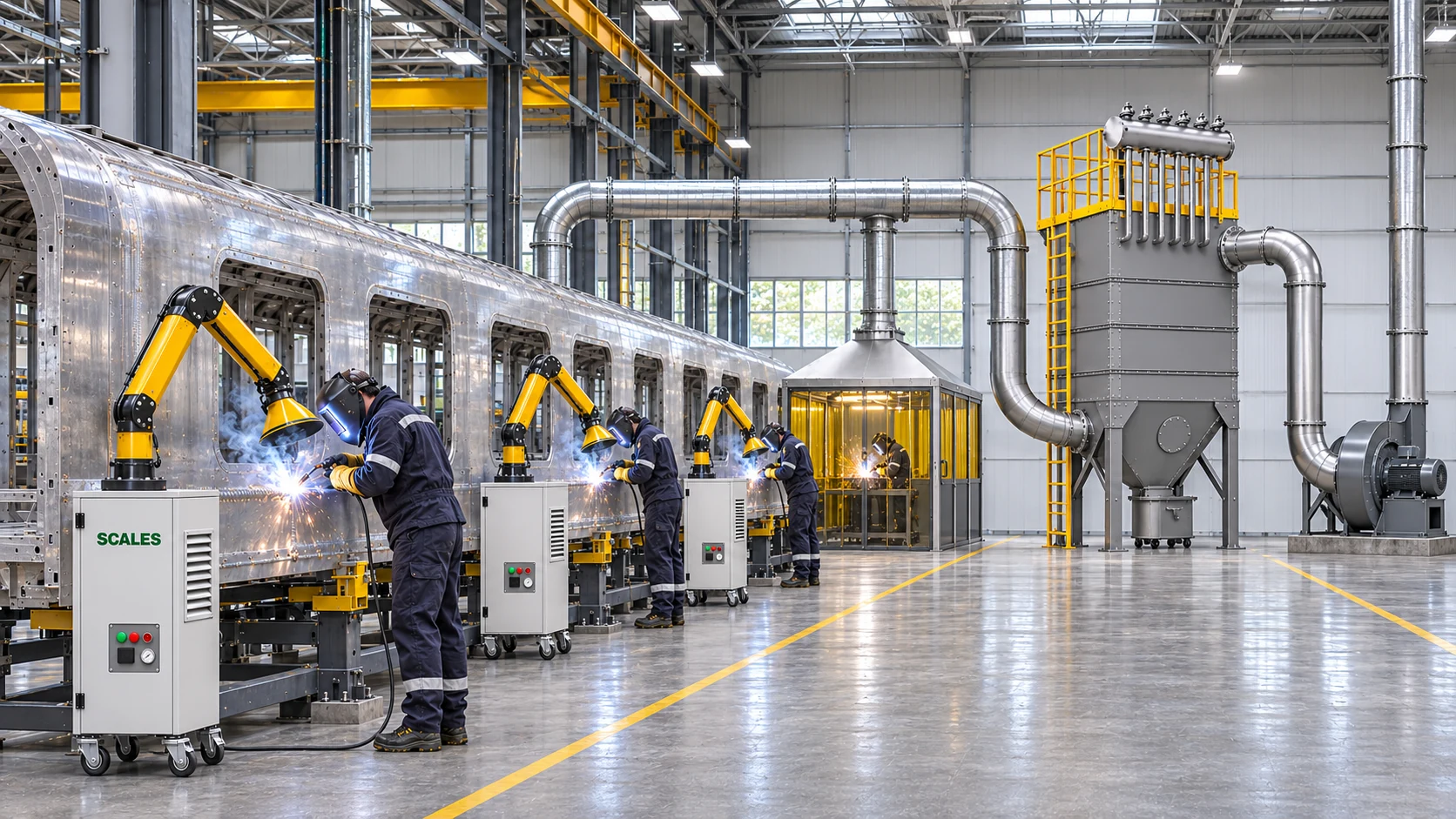
Industry overview
Rail vehicles use aluminium and stainless-steel car bodies, shipyards weld thick-plate hull blocks, and aerospace works with titanium, superalloys and carbon-fibre composites. What they share is large parts, long welds and strict quality, often in halls dozens of metres long.
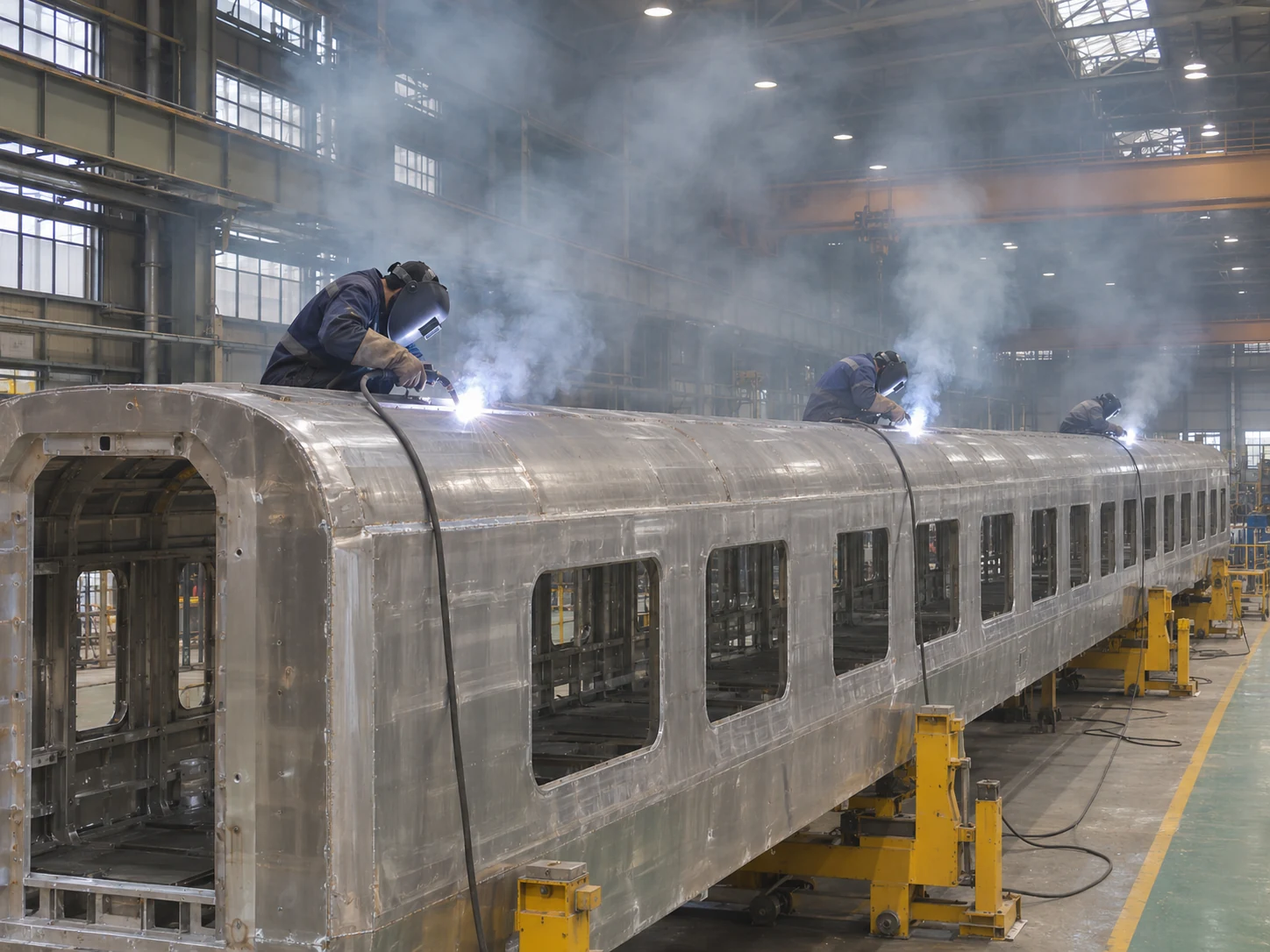
Dust from welding and grinding aluminium is combustible; hull blocks are welded in large halls or docks, with stations moving along the block; cutting and grinding composites releases conductive carbon-fibre dust.
Main processes and contaminants
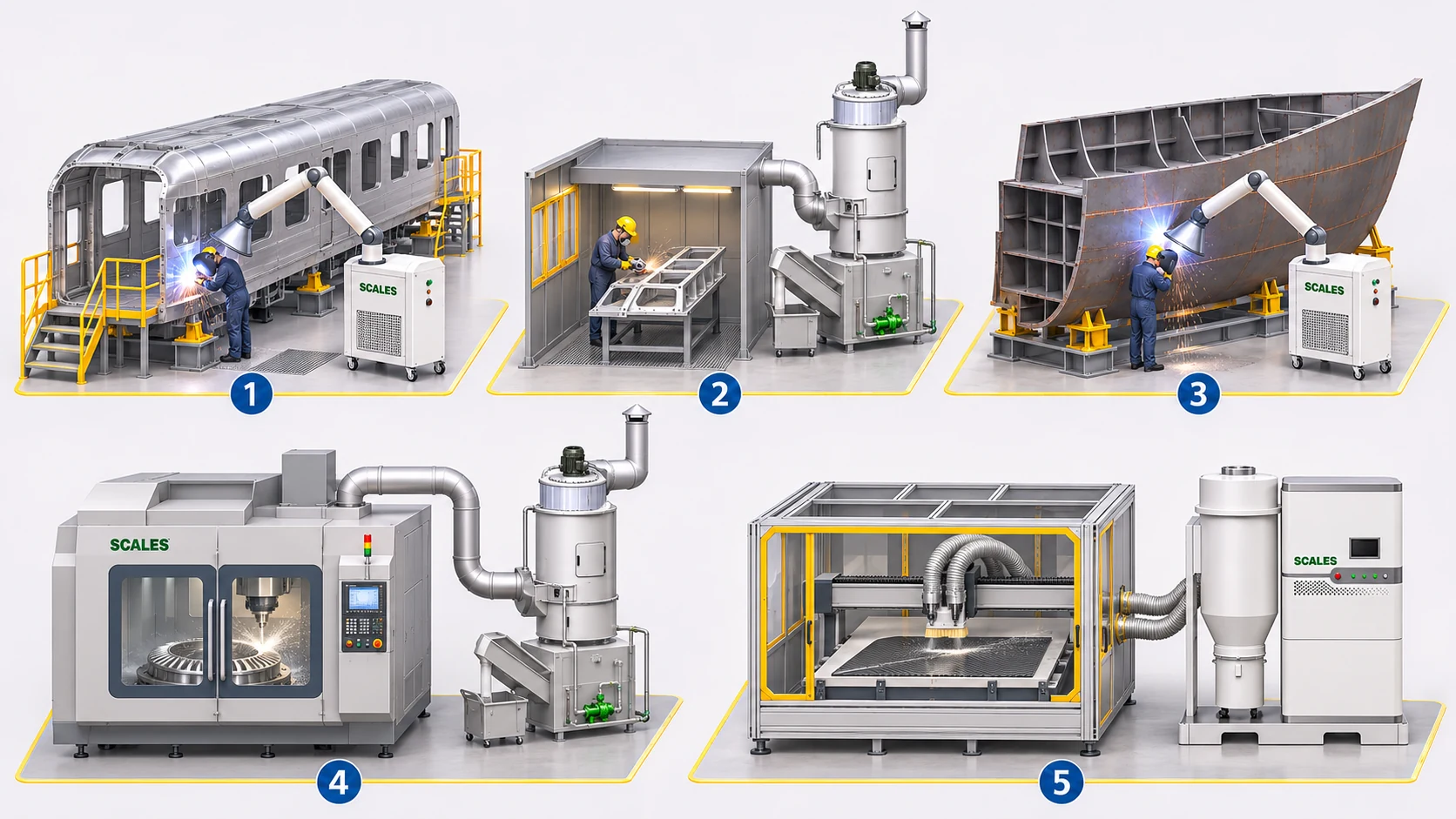
| Process | What it releases | Challenge | Recommended approach | SCALES series |
|---|---|---|---|---|
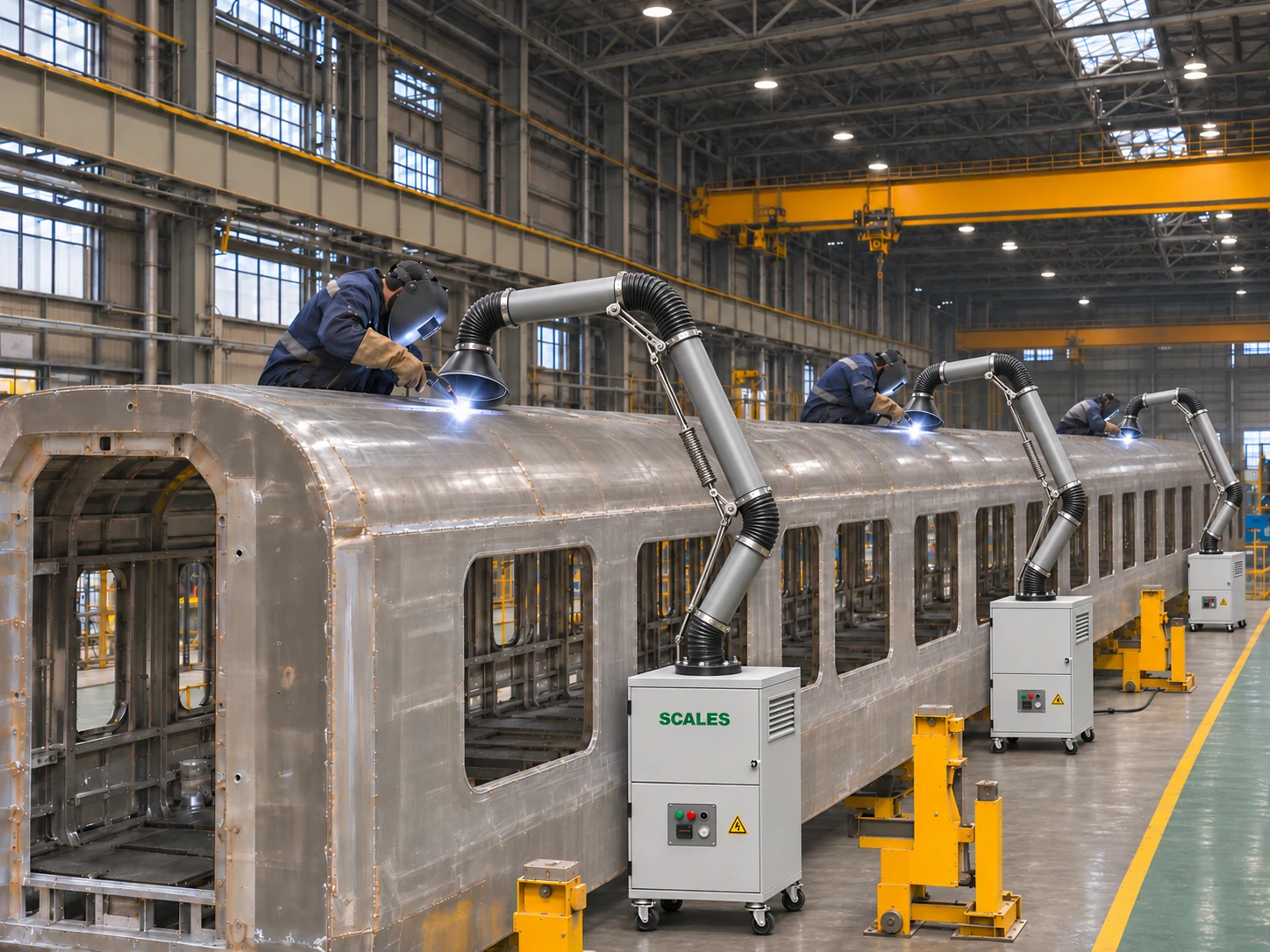
| Aluminium car-body welding | Welding fume | Long parts, long welds | Mobile extraction arms or extraction along the line; central cartridge | SCS, SLF, SHF |
| Aluminium grinding | Aluminium dust | Combustible metal dust | Wet collection | SVT |
| Hull-block welding and cutting | Fume and sparks | Stations move with the block | Mobile units; central network with flexible hoses | SCS, SCU, SLF |
| Titanium and superalloy machining | Dust and oil mist | Titanium dust is combustible | Wet collection, explosion-protected design | SVT |
| Carbon-fibre composite cutting and grinding | Carbon-fibre dust | Conductive and fine | On-tool extraction at high vacuum | SVB-T, SVB, SCW |
How SCALES approaches it
- Long parts are welded with a central network and several extraction arms, or with a group of mobile units.
- Combustible metal dust from aluminium, titanium and similar metals is treated wet first.
- Carbon-fibre dust is conductive, so keep it out of electrical equipment; see the article on carbon-fibre dust and electrical equipment.
RESULT
Before and after
Safety notes
- Dust from aluminium, magnesium and titanium is always assessed for its properties first.
- Welding inside a ship's hull is confined-space work; extraction must also provide ventilation for the people inside.
What to tell us for selection
- Products and part size
- Materials
- Number of welding and grinding stations
- Hall length and height
- Whether stations move