
TECHNICAL KNOWLEDGE
Combustible Dust Testing: When Is It Needed?
Test for combustible dust when the material is new, the formulation or particle size or moisture has changed, or old reports no longer match the dust you collect. Use the results, not experience, to decide on venting, isolation and antistatic features.
Request a Technical Assessment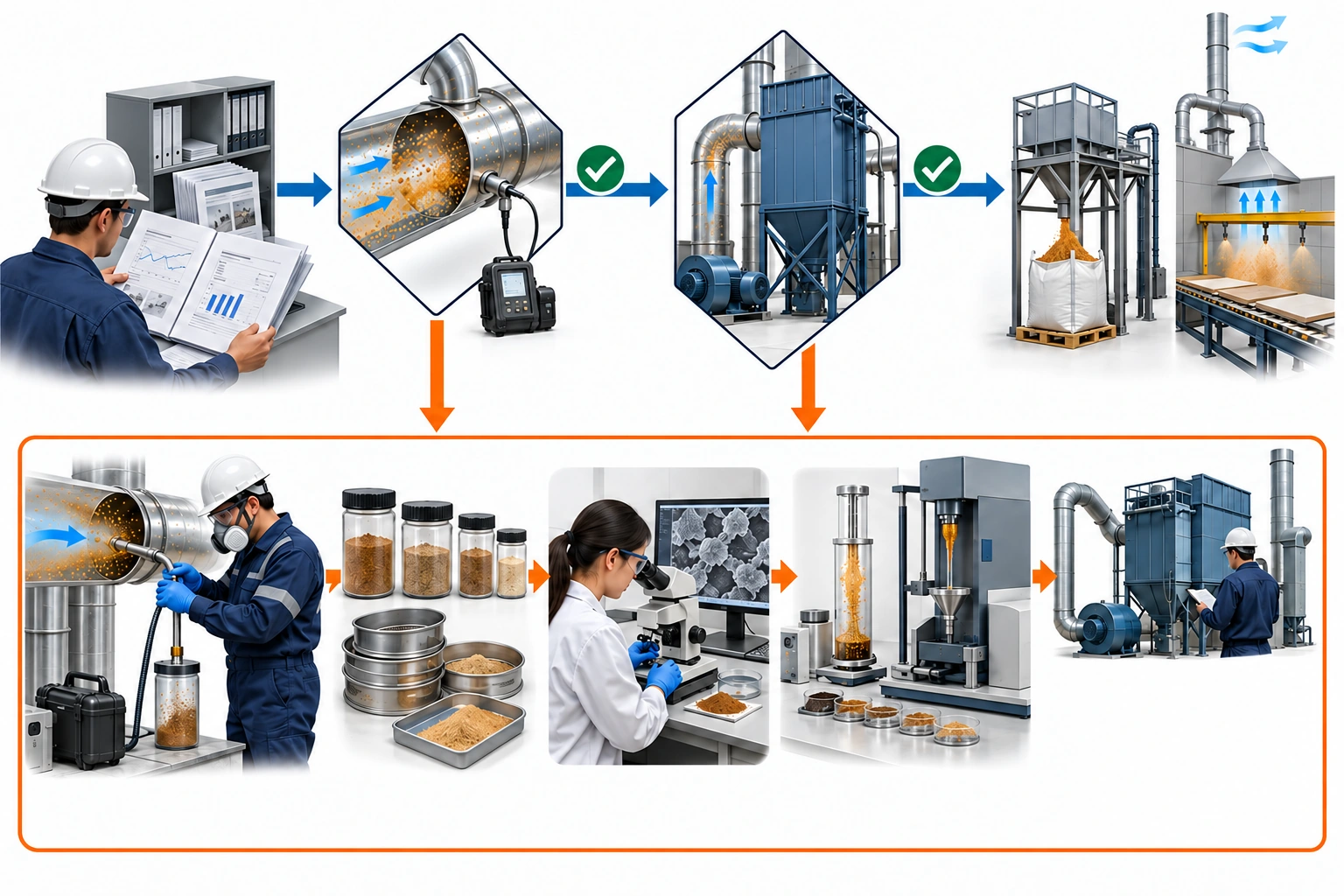
When to test
- The first time you handle this dust.
- Raw material, formulation or process has changed, or the dust is finer or drier.
- Common combustible dusts: aluminium, magnesium, titanium, wood, flour, starch, sugar, plastics, carbon black, graphite.
- The sample in an old report is not what you collect now.
What is tested and why
| Test | Answers |
|---|---|
| Combustible / explosible? | Whether to design for combustible dust |
| Kst and maximum explosion pressure | Vent area and equipment strength |
| Minimum ignition energy | How dangerous static and sparks are; antistatic media |
| Lower explosive limit, layer ignition temperature | Risk from deposits and hot surfaces |
Representative samples
Samples from the hopper, duct deposits or near the workstation represent reality best; record the process, date and location. Give the report to the equipment supplier to define venting, isolation, antistatic and earthing measures, and reassess when the process changes.