
INDUSTRY APPLICATION
Foundry
From melting and pouring to shake-out and fettling, a foundry brings together almost every dust problem in industry: heat, high loading, sparks and mixed particle sizes.
Send your duty, get a proposal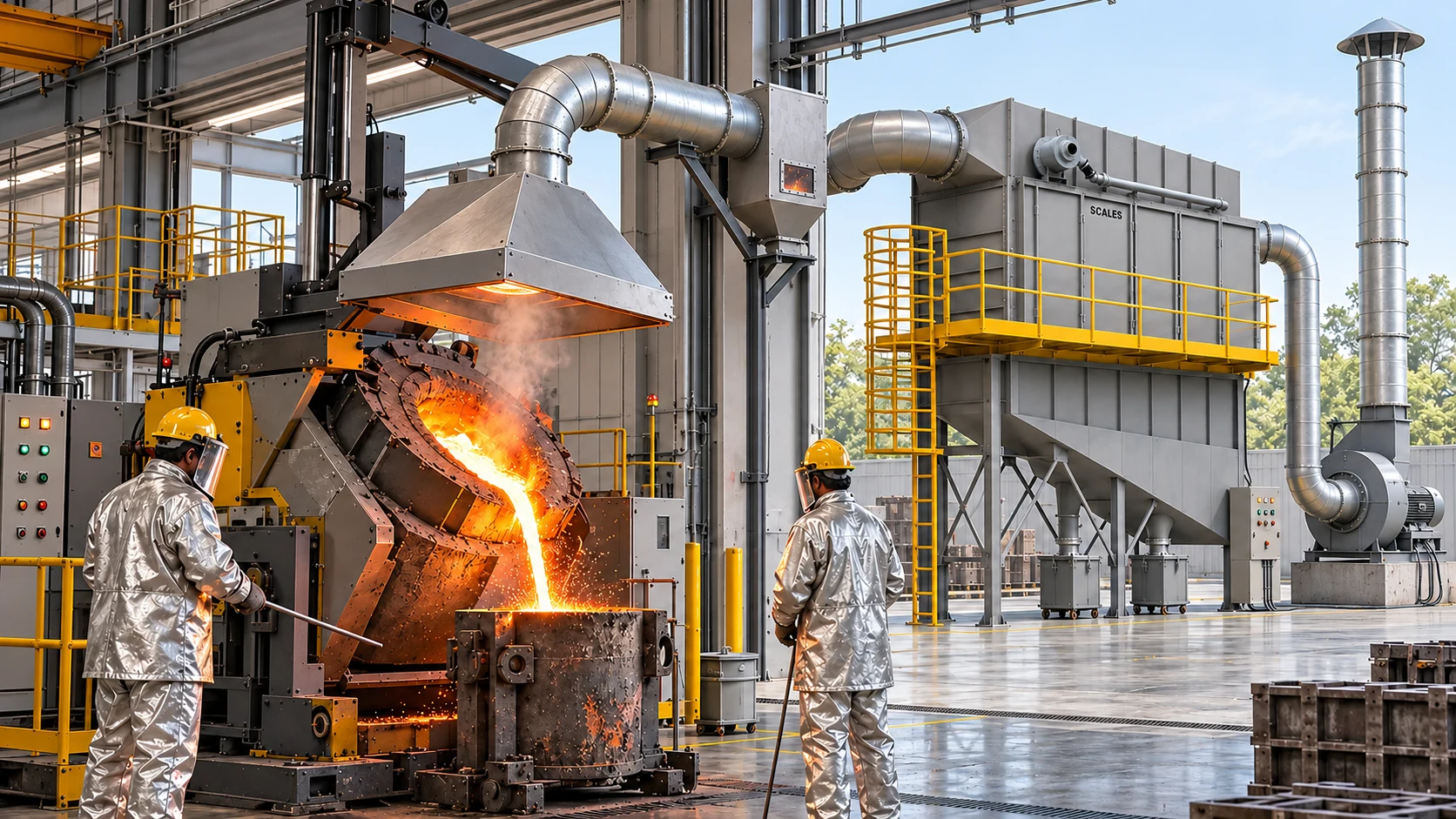
Industry overview
Casting is a base process for equipment manufacturing. Many parts for vehicles, construction machinery, machine tools, pumps, valves and wind turbines start as castings. China has led world casting output for many years; sand casting still dominates, while lost-foam, investment and permanent-mould casting keep growing.
Emission sources in a foundry are many and spread out: hot fume at the furnace, fume along pouring and cooling lines, heavy dust from shake-out, sand handling and shot blasting, and sparks at fettling stations. Temperature, loading and particle size differ at every step, so one collector rarely serves the whole shop well.
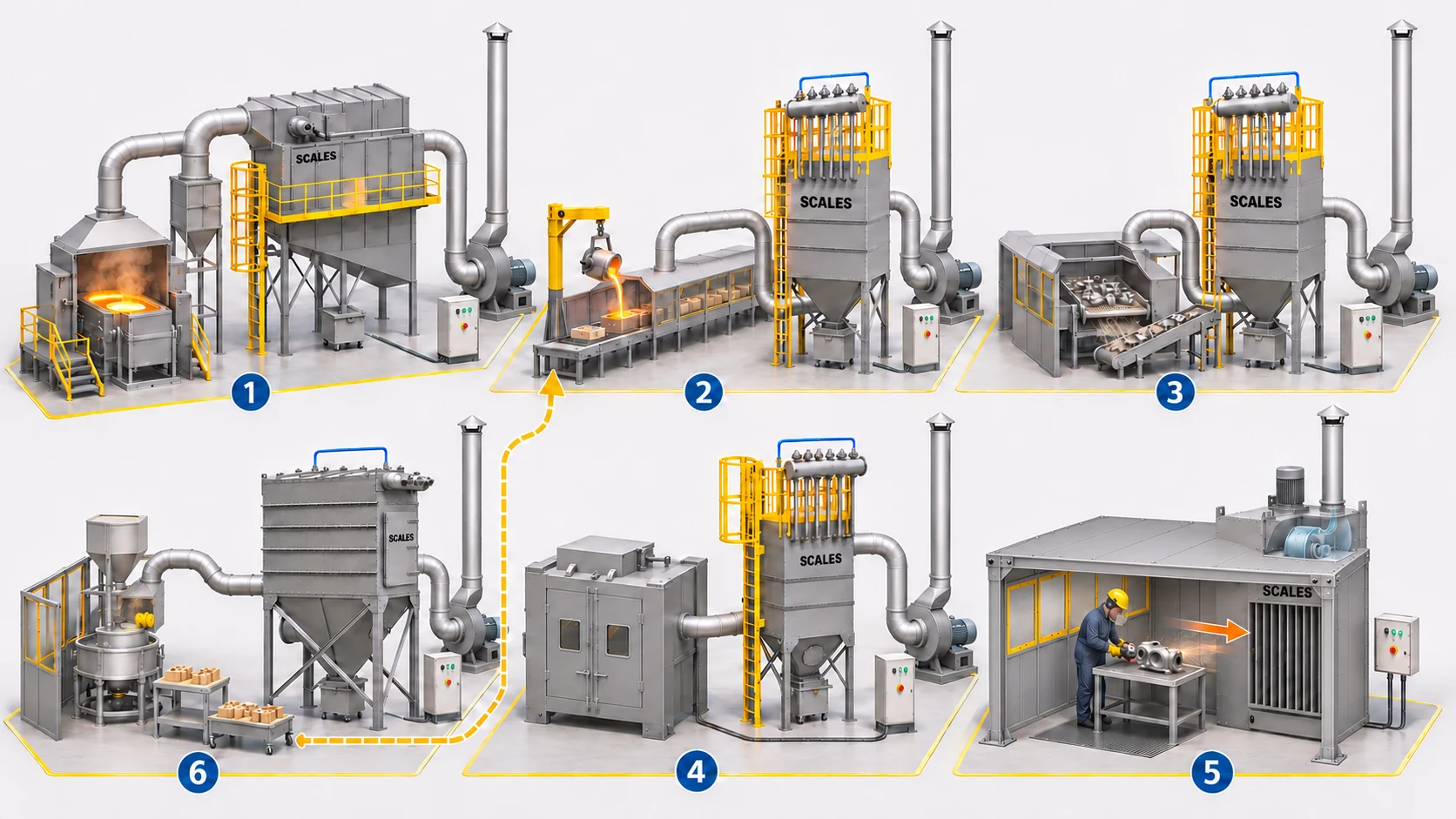
- 01Induction / arc furnace meltingMetal-oxide fume, with peaks at charging and tappingSMB, SIB, SMC
- 02Pouring and coolingPouring fume and smoke from heated bindersSIB, SMC
- 03Shake-out and sand handlingMoulding-sand dust, heavy and abrasiveSIB, SMC, SMB
- 04Shot blastingRust, scale, sand and broken shotSLF, SIB, SVF
- 05Grinding and riser removalMetal dust and sparksSCW, SHF
- 06Core makingSand dust; odour from resin-bonded sandSVF, SLF
Main processes and contaminants
| Process | What it releases | Challenge | Recommended approach | SCALES series |
|---|---|---|---|---|
| Induction / arc furnace melting | Metal-oxide fume, with peaks at charging and tapping | High temperature, fume surges, space needed around the furnace | Swing or movable hood at the furnace; cool the gas before the baghouse | SMB, SIB, SMC |
| Pouring and cooling | Pouring fume and smoke from heated binders | Long pouring lines, dispersed fume | Sectional overhead or side extraction; enclosed cooling section | SIB, SMC |
| Shake-out and sand handling | Moulding-sand dust, heavy and abrasive | High loading, coarse particles, wear | Enclosed shake-out; extraction at each transfer point; pre-separator at the inlet | SIB, SMC, SMB |
| Shot blasting | Rust, scale, sand and broken shot | Abrasive dust with sparks | Direct connection from the blast machine; pre-separator at the inlet | SLF, SIB, SVF |
| Grinding and riser removal | Metal dust and sparks | Large parts, scattered stations, sparks can ignite media | Grinding room or workroom; spark arrestor at the inlet | SCW, SHF |
| Core making | Sand dust; odour from resin-bonded sand | Dust and odour need separate treatment | Dust to the collector; odour treated in an extra stage | SVF, SLF |
How SCALES approaches it
- Zone the shop
- Melting, pouring, sand handling and fettling get their own systems or branches. Hot fume and ambient dust do not share one collector.
- Cool first, then filter
- Furnace fume is cooled to what the media can take before it reaches the collector. The SMB reverse-air trolley baghouse suits hot gas from aluminium and foundry work.
- Bags for heavy dust, cartridges for fine dust
- Sand handling and shake-out run at high loading, so SIB and SMC baghouses come first. Blasting and grinding dust is finer and cartridge units are more compact.
- Stop the sparks
- Pre-separators or spark arrestors on grinding, blasting and cutting lines; hoppers emptied regularly.
- Design for wear
- Elbows and inlets on heavy, abrasive branches are built for wear.
RESULT
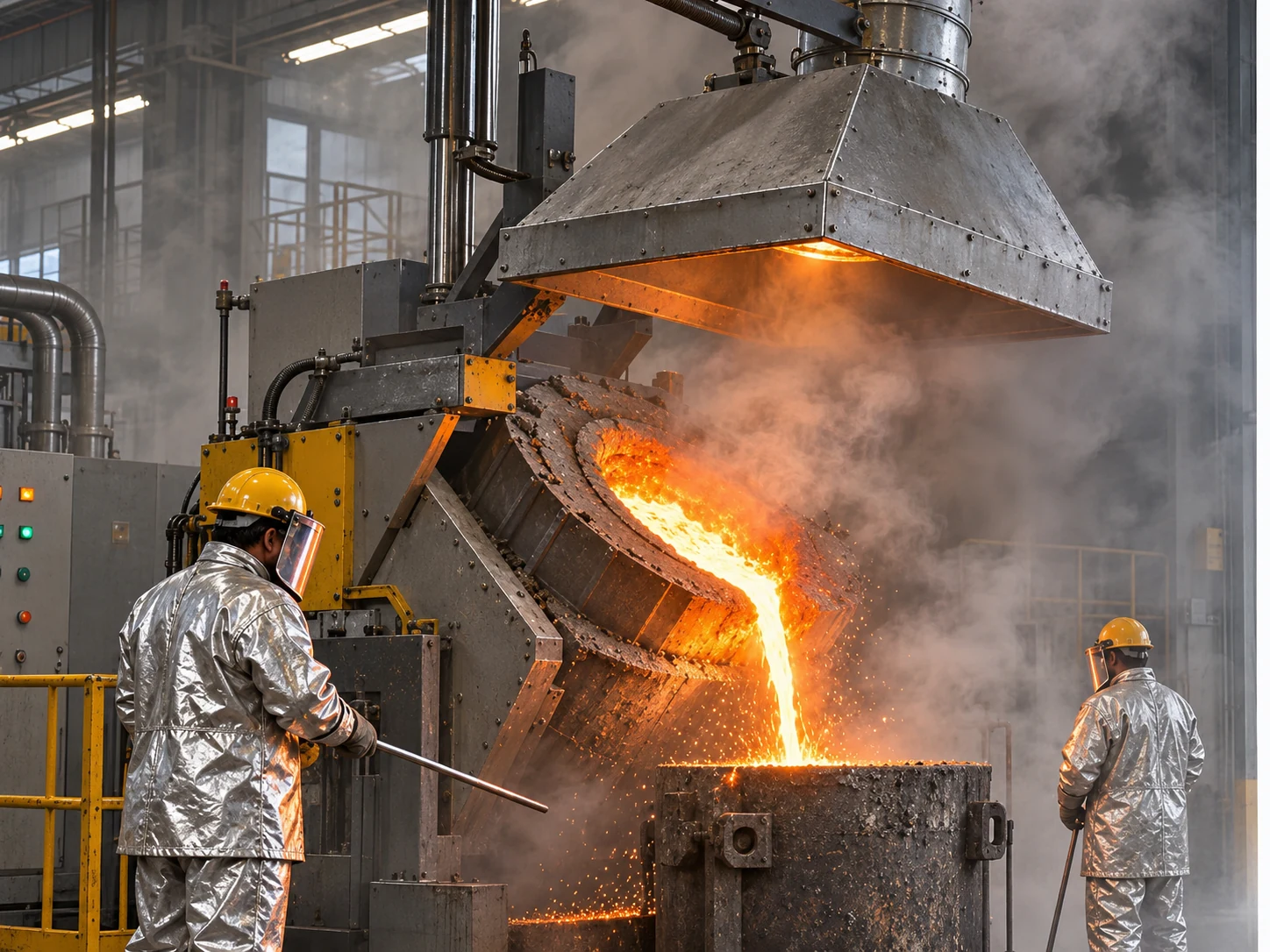
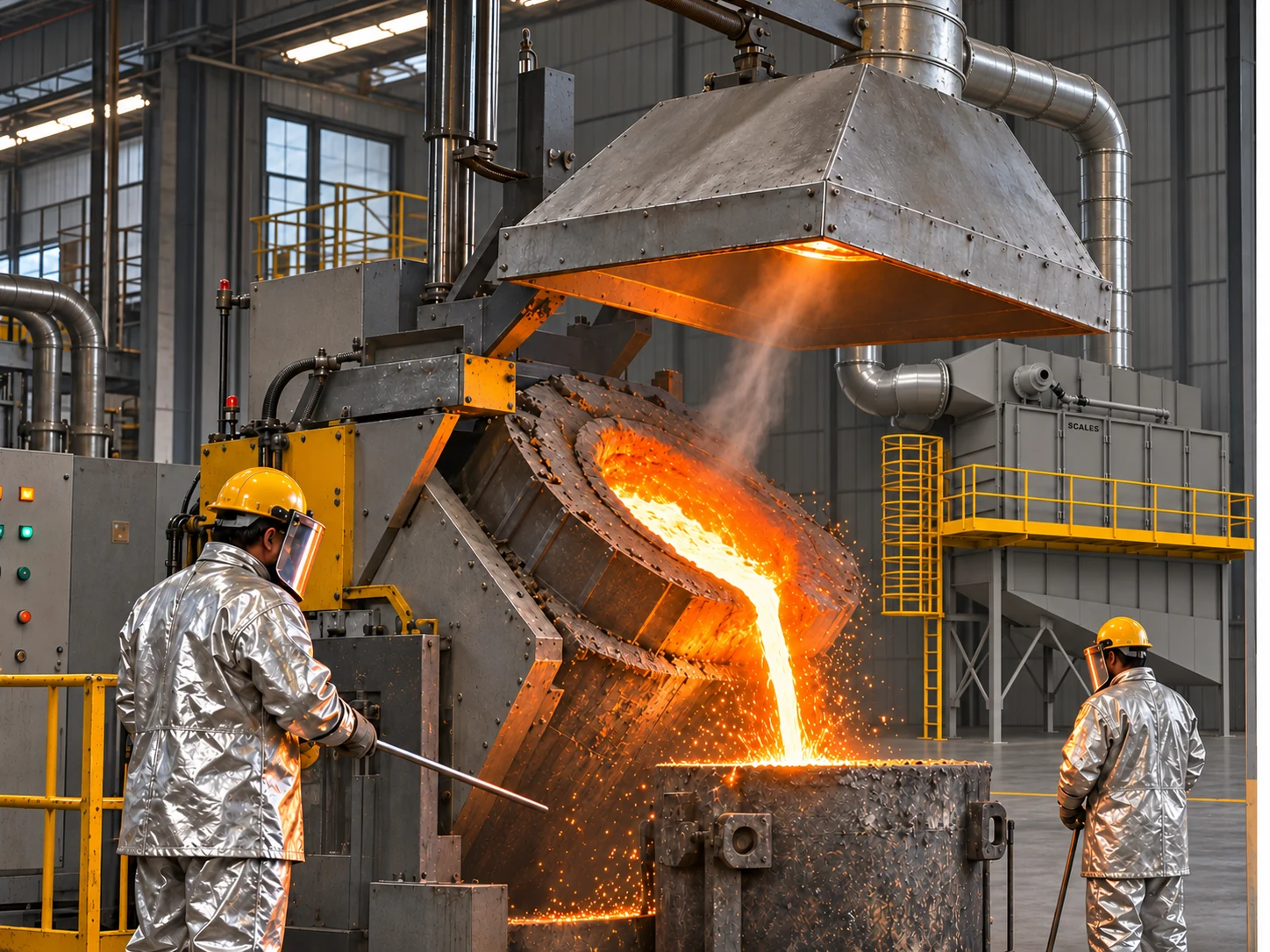
Before and after
Safety notes
- Grinding and fettling dust from aluminium and magnesium castings is combustible metal dust. Test the dust first, then choose a dry or wet system.
- The furnace mouth sees splash and radiant heat. Place hoods so charging, tapping and crane work stay clear.
What to tell us for selection
- Casting process (sand, lost-foam, investment, permanent mould)
- Alloy (grey iron, ductile iron, steel, aluminium)
- Furnace type, capacity and number
- Heats per day
- Number and layout of shake-out, sand, blasting and grinding stations
- Shop layout and existing collectors