
INDUSTRY APPLICATION
Rubber, Plastics & Composites
Carbon-black charging, fume from moulding and composite cutting dust: one sector, three completely different contaminants.
Send your duty, get a proposal
Industry overview
Rubber goods (tyres, seals, hoses) are mixed with carbon black, silica and additives in internal mixers, releasing heavy dust; curing and extrusion give off rubber fume. Plastic products release fume during injection moulding, extrusion and blow moulding, and regrind milling produces dust.
Composites (GRP, carbon fibre) are used in wind-turbine blades, vehicles, rail, boats and aircraft. Sawing, trimming, drilling and grinding after moulding release glass-fibre or carbon-fibre dust that is fine and irritates the skin; carbon fibre is also conductive.
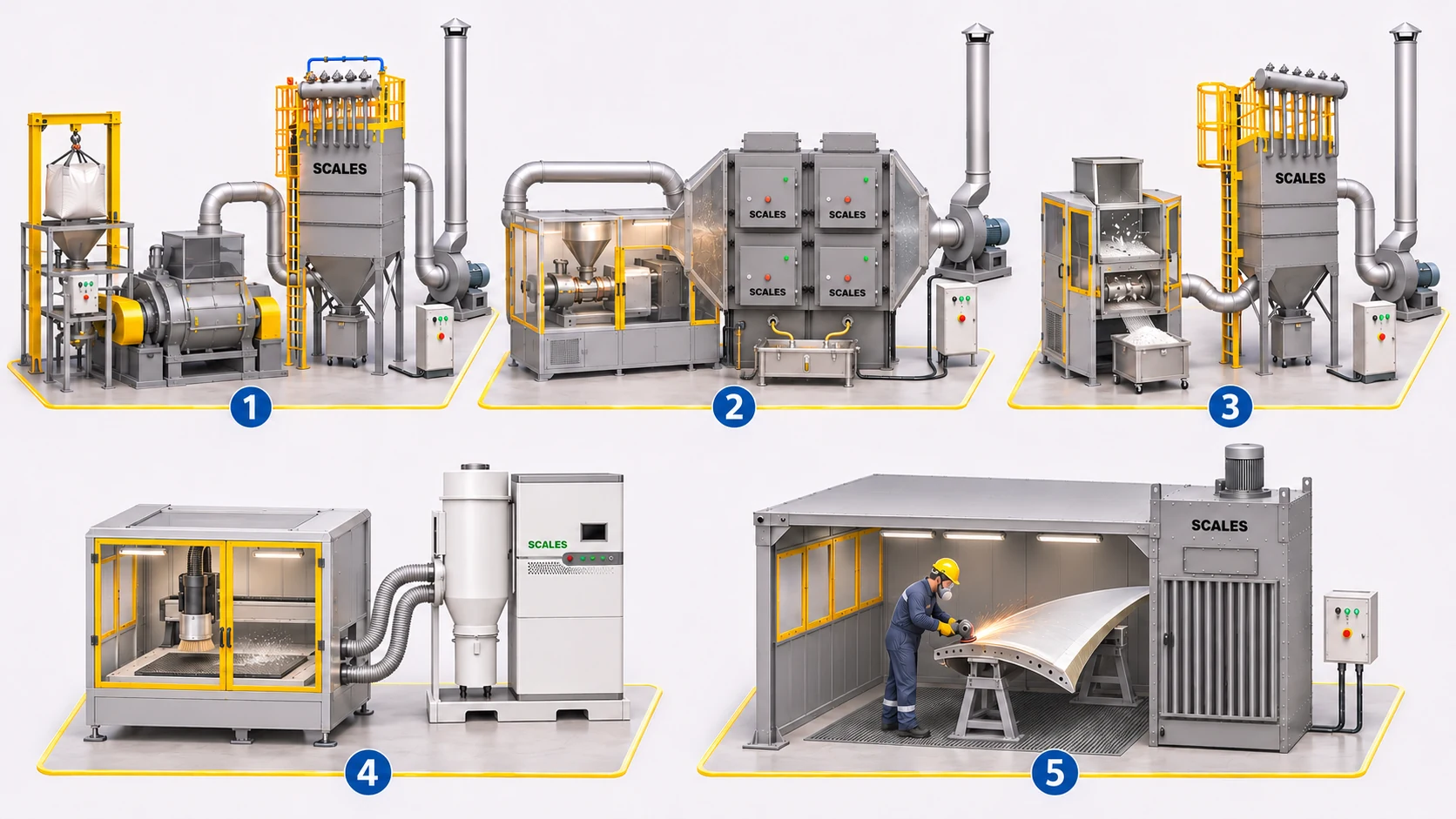
- 01Charging carbon black and additives; internal mixingCarbon-black dustSIB, SMC
- 02Curing, extrusion, injection mouldingRubber and plastic fume (oily)SEM, SVT
- 03Plastic regrind millingDustSLF, SVF
- 04Composite sawing, trimming, drillingGlass-fibre and carbon-fibre dustSVB-T, SVB, SCW
- 05Grinding wind blades and other large partsHeavy dustSCW, SLF
Main processes and contaminants
| Process | What it releases | Challenge | Recommended approach | SCALES series |
|---|---|---|---|---|
| Charging carbon black and additives; internal mixing | Carbon-black dust | Fine, black, high concentration | Enclosed extraction at the charging port; baghouse | SIB, SMC |
| Curing, extrusion, injection moulding | Rubber and plastic fume (oily) | Sticky, with odour | Electrostatic or wet | SEM, SVT |
| Plastic regrind milling | Dust | Combustible | Cartridge with antistatic media | SLF, SVF |
| Composite sawing, trimming, drilling | Glass-fibre and carbon-fibre dust | Fine, conductive, irritant | High vacuum at the tool; workrooms | SVB-T, SVB, SCW |
| Grinding wind blades and other large parts | Heavy dust | Very large parts | Grinding hall with central collection | SCW, SLF |
How SCALES approaches it
- Fume from plastic and rubber moulding can be treated electrostatically, and the SVT wet scrubber also serves rubber and plastics processing.
- The SCW workroom is suited to composites; SVB suits on-tool extraction.
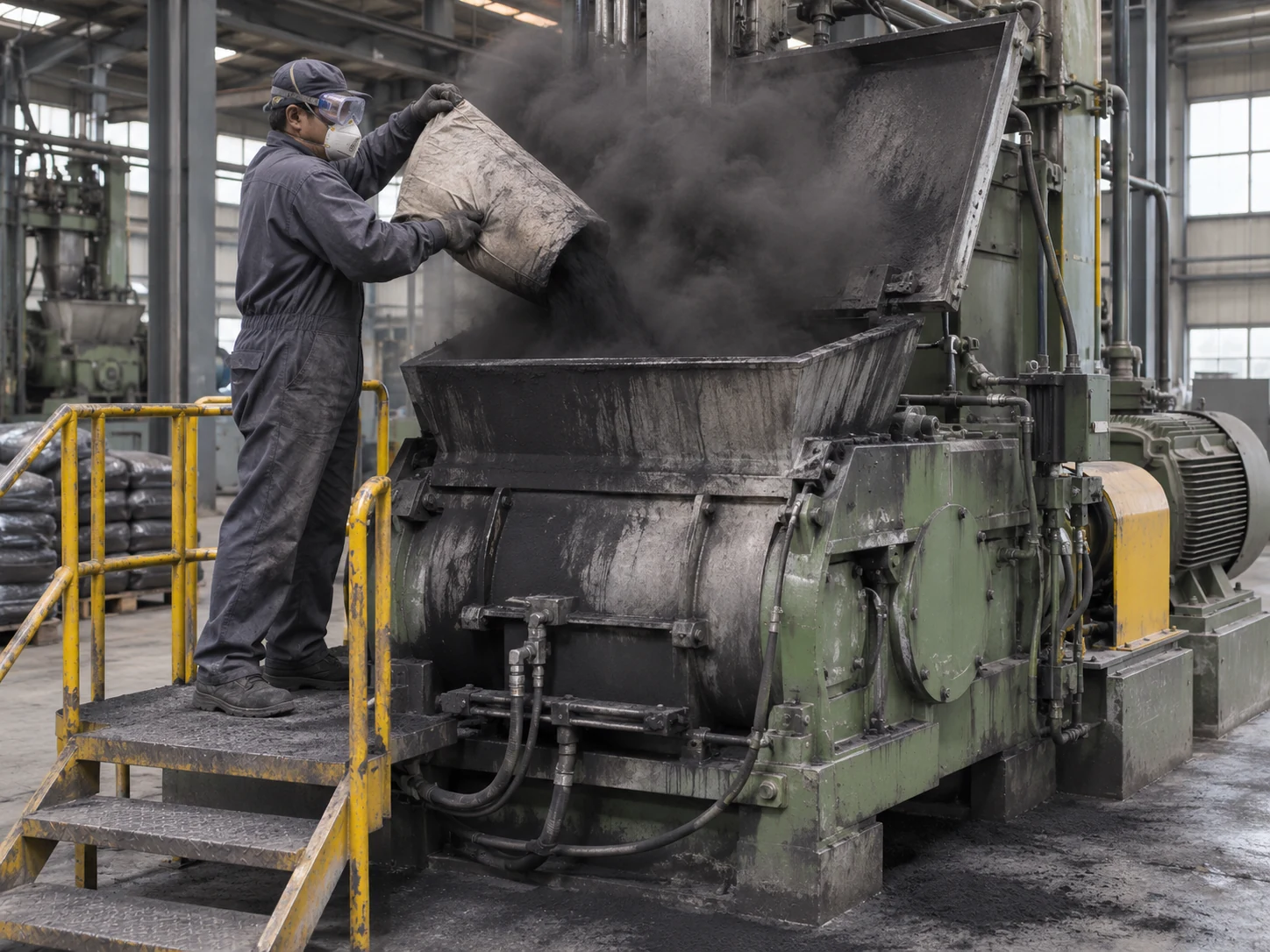
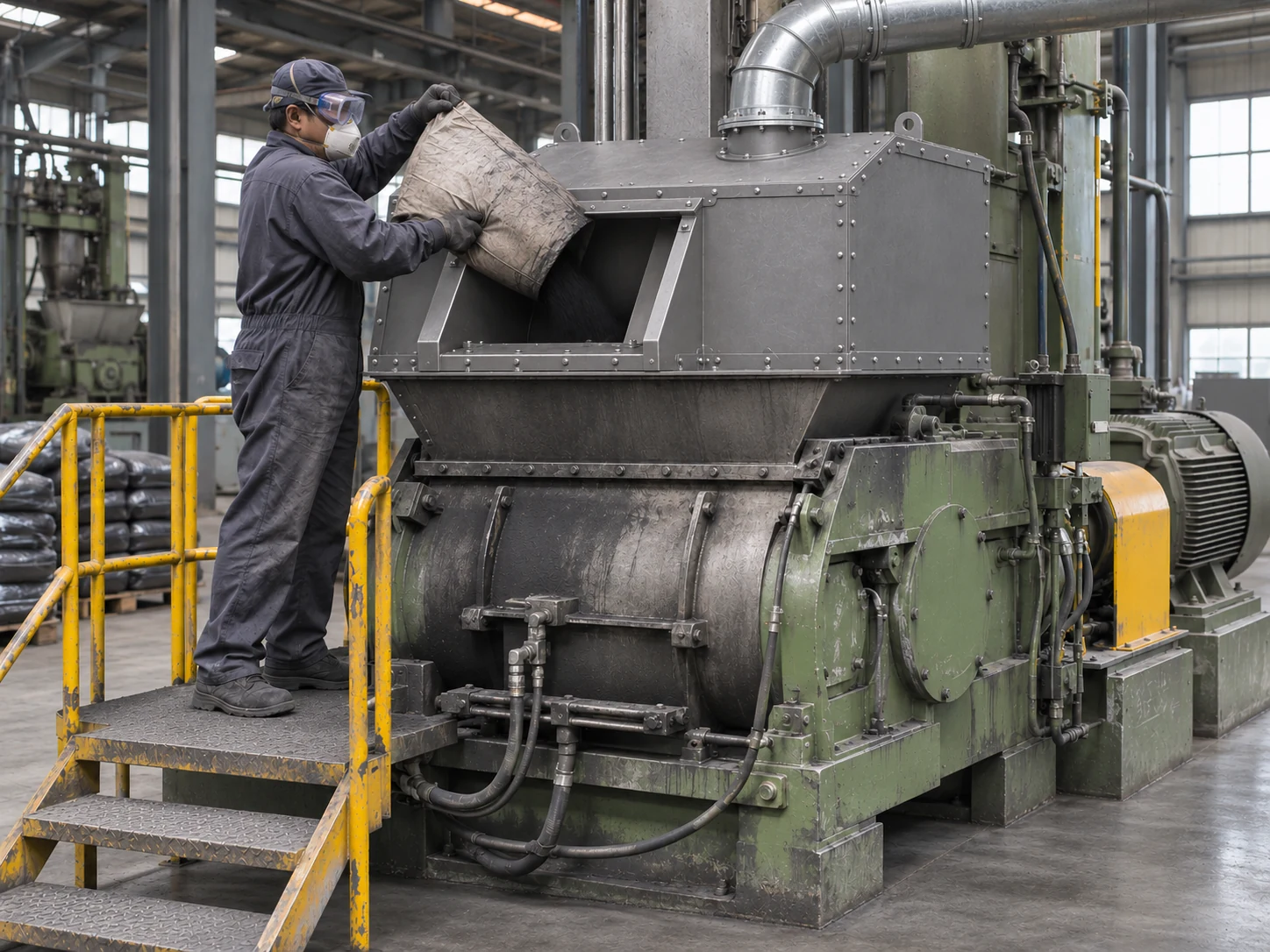
- Carbon-black dust goes to a baghouse with a sealed discharge so it does not become airborne again.
RESULT
Before and after
Safety notes
- Carbon-fibre dust is conductive and causes short circuits inside electrical cabinets, so extraction and electrical protection go together.
- Gases from resin curing and adhesives are treated separately.
What to tell us for selection
- Products
- Materials (rubber, plastic, glass fibre, carbon fibre)
- Processes
- Part size
- Number of stations