
TECHNICAL KNOWLEDGE
Understanding Dust from Composite Material Processing
Sawing, trimming, drilling and sanding glass-fibre and carbon-fibre composites releases very fine fibre dust that irritates the skin; carbon fibre also conducts electricity. The best approach is to capture it at the tool.
Request a Technical Assessment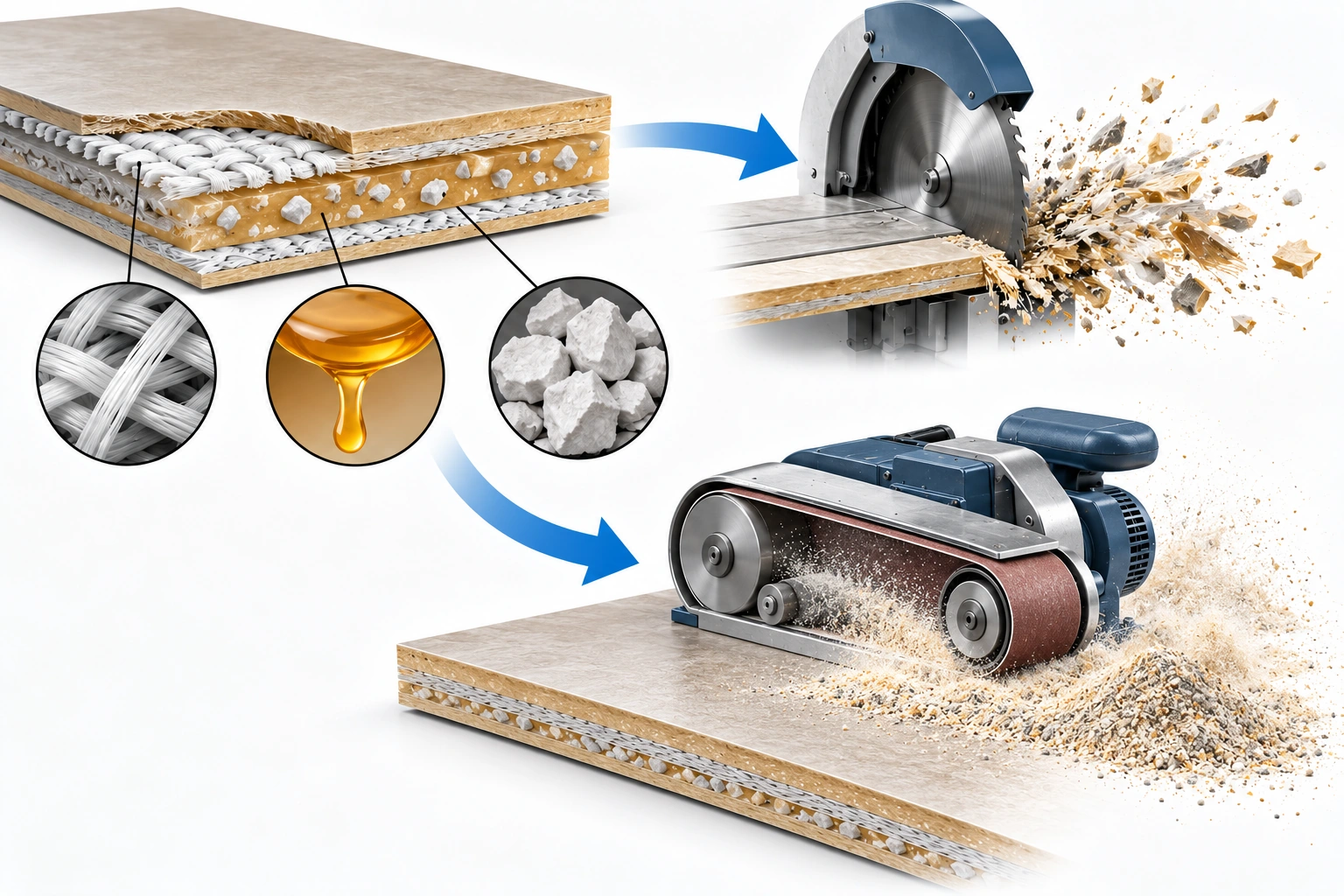
What makes it different
- A mixture of fibre, resin, filler, and sometimes coatings and adhesives.
- Fine and light, it drifts and is hard to clean from equipment and skin.
- Carbon-fibre dust is conductive and can short-circuit electrical cabinets.
- Resin dust is combustible; test it when quantities are large.
How to capture it
- Hand tools: sanders and trimmers connected by high-vacuum hose to an SVB-T unit or an SVB system.
- CNC routing: extraction at the machine port.
- Large parts such as wind blades and hulls: sanding-room airflow plus tool extraction; SCW workrooms suit the sanding area.
After collection
Dust is released again during filter changes and emptying, so staff wear protective equipment and used filters are bagged and sealed. In carbon-fibre areas, filter the air intakes of electrical cabinets while keeping them cool.