
INDUSTRY APPLICATION
Non-ferrous Metals
Melting, rolling and finishing of aluminium, copper and zinc bring hot fume, rolling-oil mist and combustible metal dust together.
Send your duty, get a proposal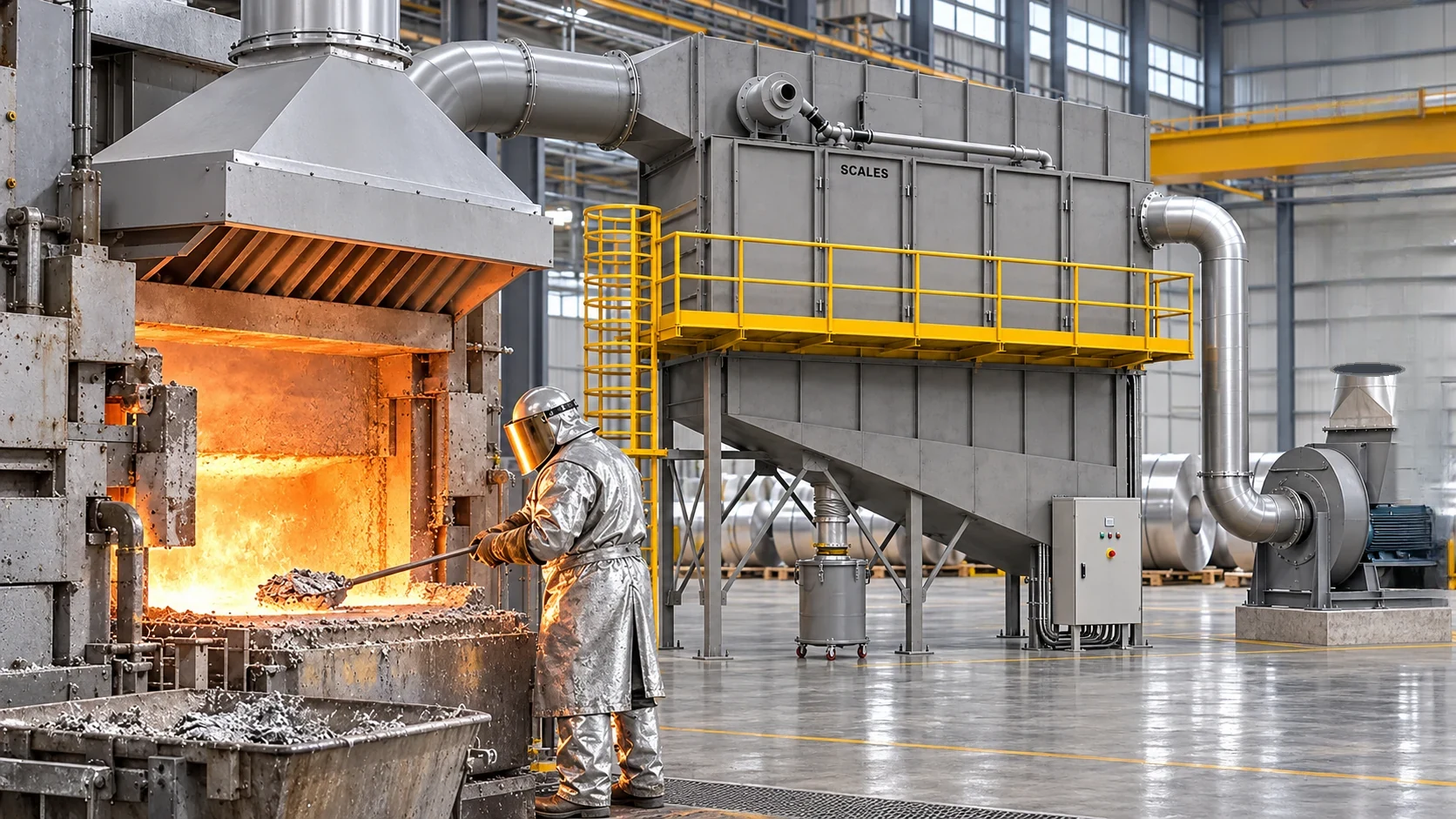
Industry overview
Non-ferrous processing links smelting upstream with vehicles, electronics, construction and packaging downstream. Recycled aluminium, aluminium sheet, strip and foil, copper tube and plate, and zinc alloys are the main fields. Melting and refining give off hot fume; cold and foil rolling use large amounts of rolling oil that forms mist; sawing, face milling and grinding produce aluminium chips and dust.
Main processes and contaminants
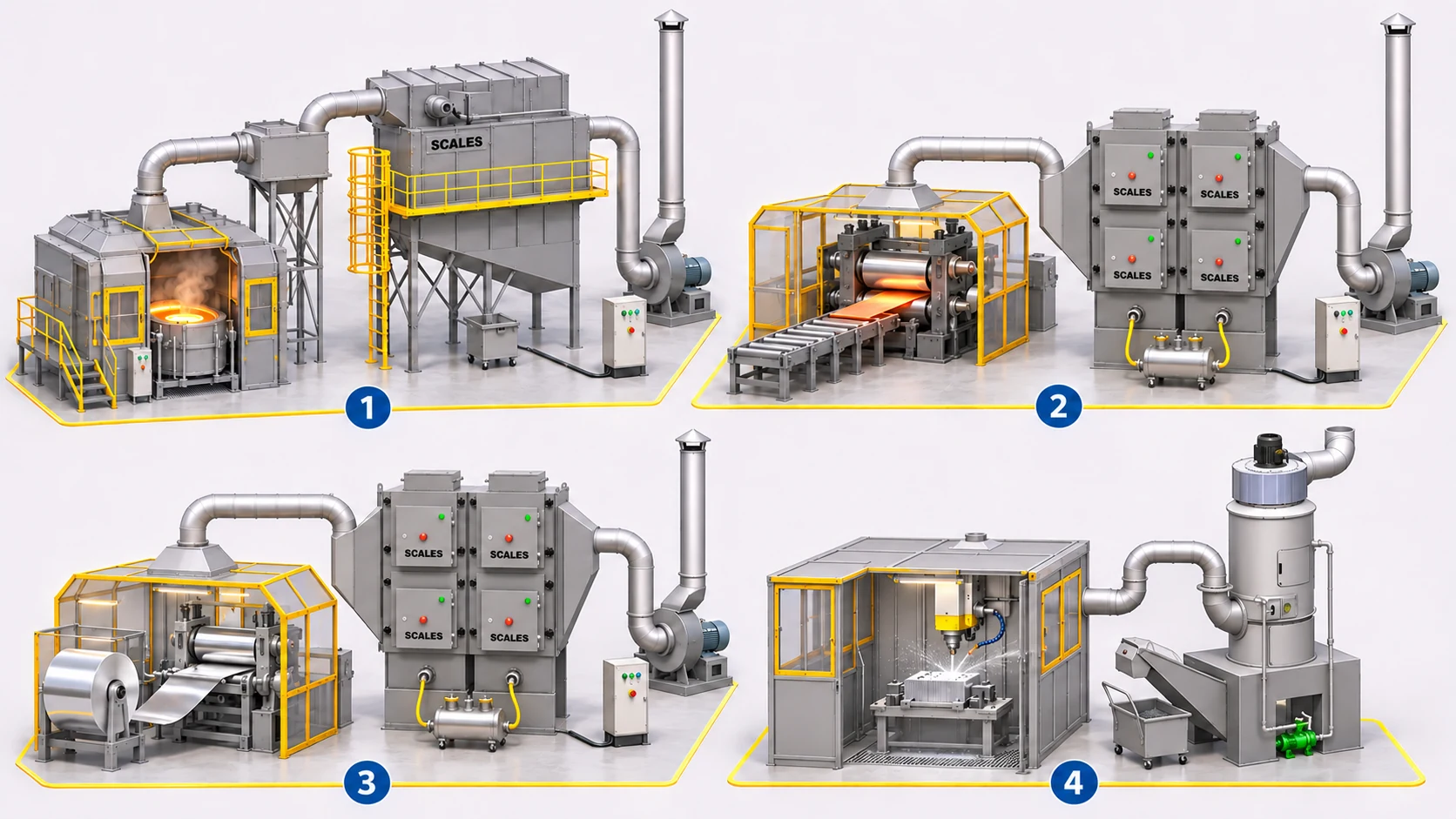
| Process | What it releases | Challenge | Recommended approach | SCALES series |
|---|---|---|---|---|
| Melting, refining, skimming | Metal-oxide and flux fume | Hot and intermittent | Hood at the furnace door; cool, then baghouse | SMB, SIB |
| Casting-rolling, hot rolling | Emulsion vapour, oil smoke | Wet and heavy | Mill hood; electrostatic or wet | SEM, SVT |
| Cold rolling, foil rolling | Rolling-oil mist | High airflow, fine mist | Mill exhaust to high-capacity electrostatic modules | SEM, SOF |
| Sawing, face milling, grinding | Aluminium chips and dust | Combustible metal dust | Wet collection | SVT |
How SCALES approaches it
- The SMB reverse-air trolley baghouse suits hot gas from aluminium work and cleans continuously without stopping.
- Rolling-mill mist comes in high volumes; SEM modules can be combined, and each cell slides out at the side for washing.
- Aluminium dust is best collected wet, with water and sludge removed on a schedule.
RESULT
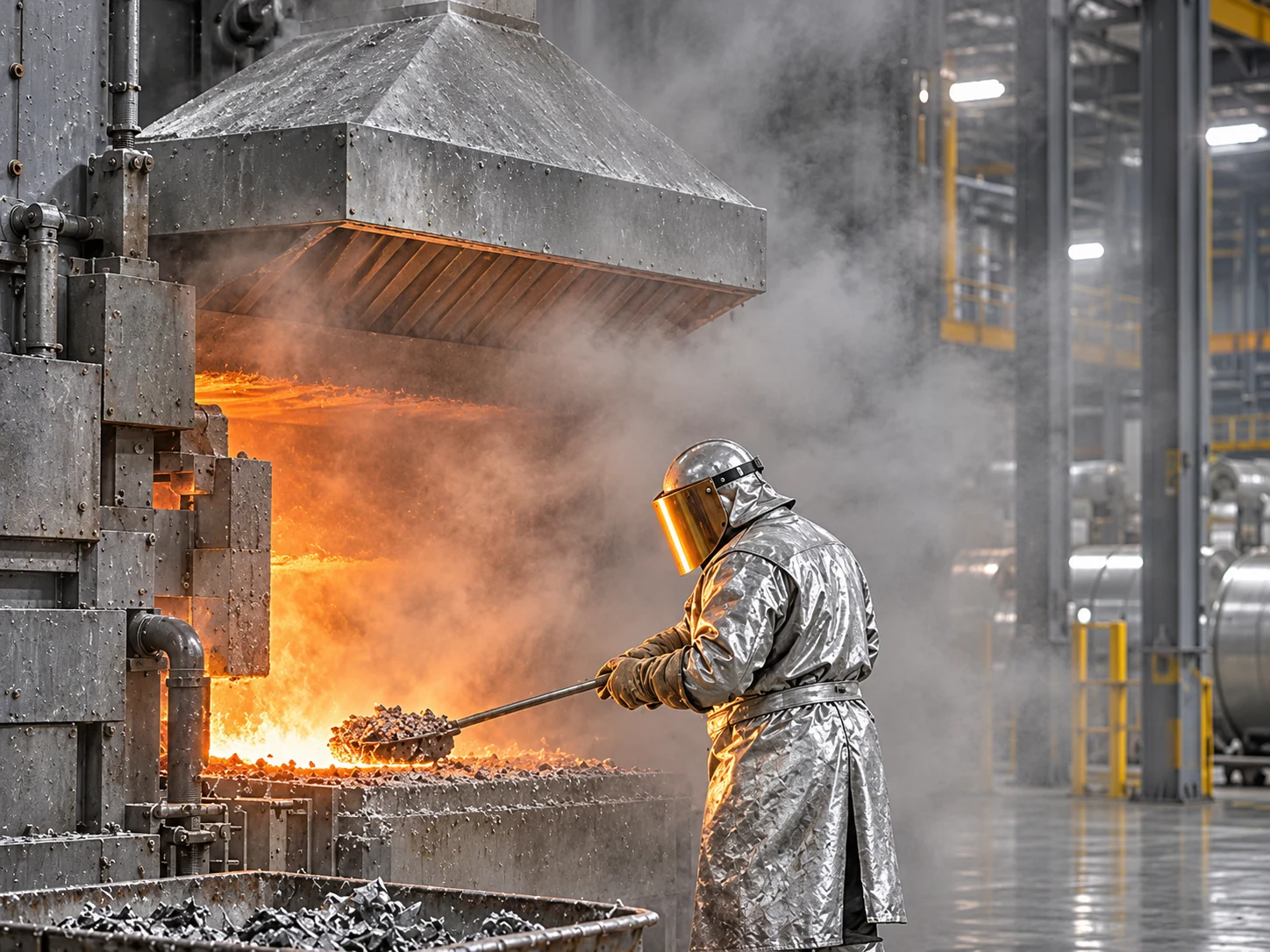
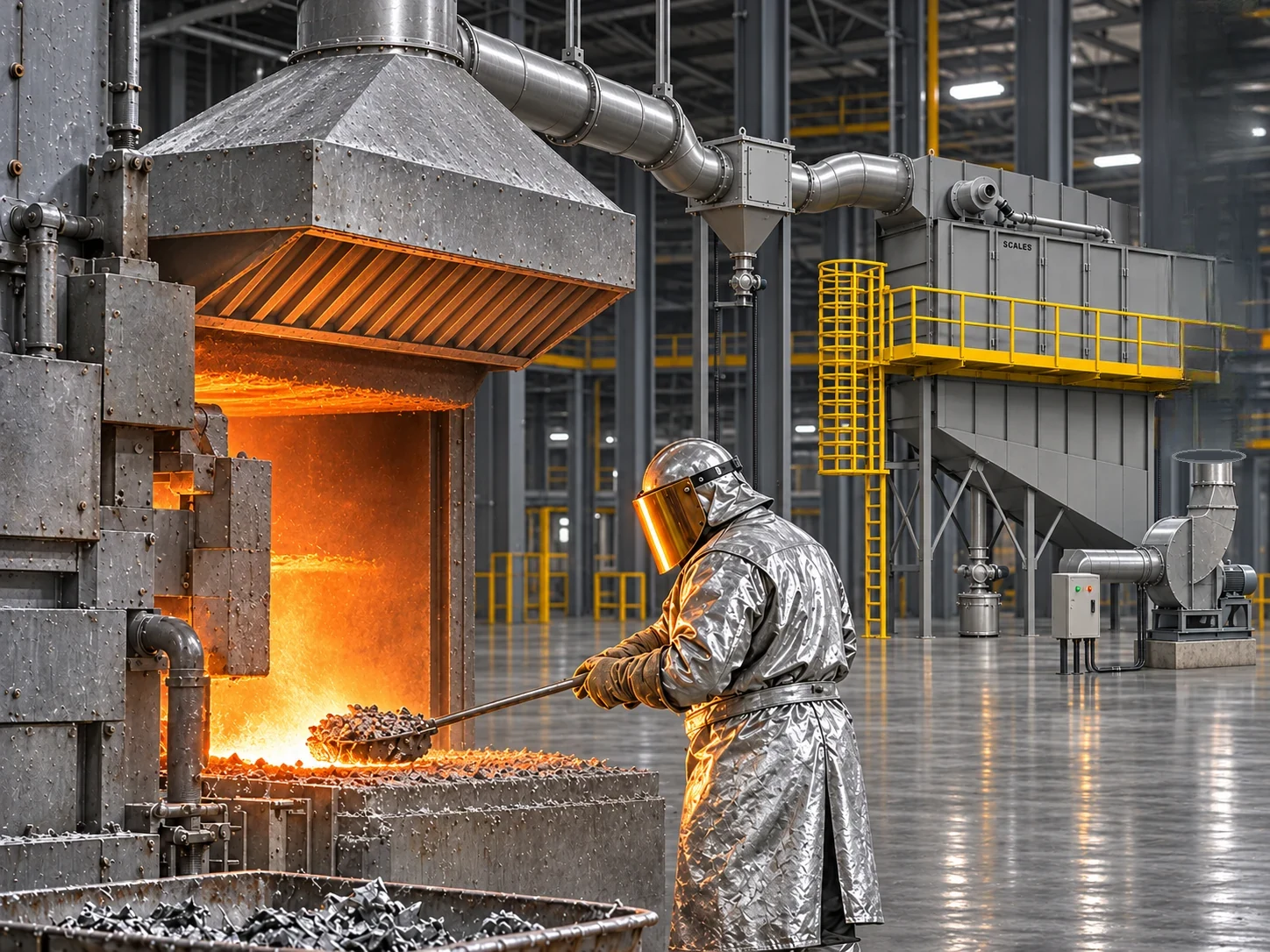
Before and after
Safety notes
- Aluminium dust is combustible. Dry collection needs dust testing and an explosion-protected design.
- Furnace fume temperature swings widely; fit temperature monitoring and over-temperature protection.
What to tell us for selection
- Metal
- Furnace type and capacity
- Mill type and rolling oil
- Number of sawing and grinding stations
- Any measured gas temperature and airflow