
TECHNICAL KNOWLEDGE
How Temperature and Altitude Affect Airflow
Gas expands when heated, and at altitude lower pressure means the same air takes more volume. Correct airflow for actual temperature and pressure on hot-gas and high-altitude projects, or the collector and fan will be undersized.
Request a Technical Assessment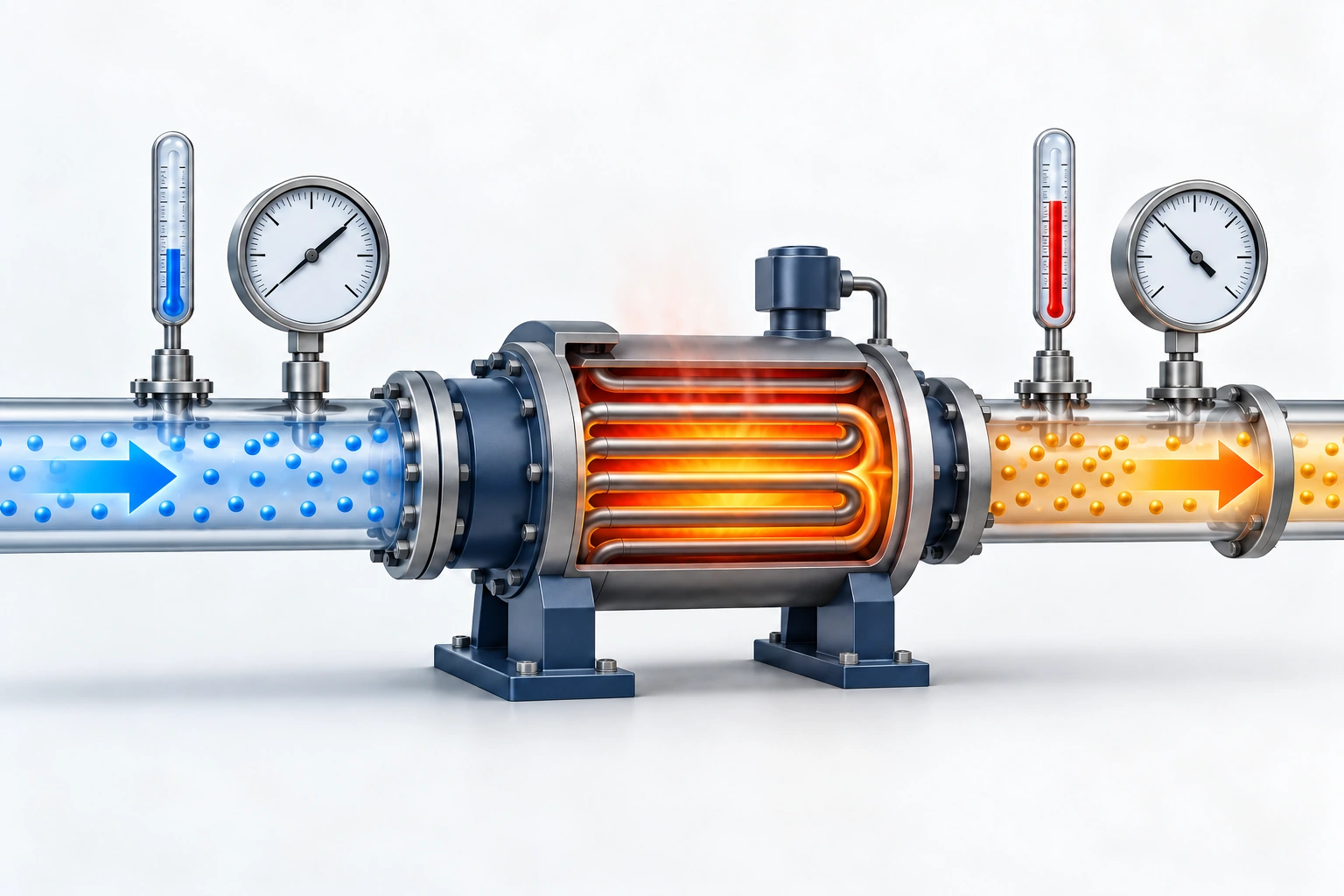
The correction
Q₂ = Q₁ × (T₂ ÷ T₁) × (P₁ ÷ P₂). Temperature T is in kelvin (T = °C + 273.15); pressure P is absolute, in consistent units.
A worked example
1,000 m³/h at 20 °C and 101.325 kPa, heated to 120 °C at a site where absolute pressure is 90.0 kPa: Q₂ = 1,000 × (393.15 ÷ 293.15) × (101.325 ÷ 90.0) ≈ 1,510 m³/h, about half as much again.
Heated only to 60 °C at the same pressure: Q₂ = 1,000 × 333.15 ÷ 293.15 ≈ 1,136 m³/h.
Points to watch
- Fan static pressure (a few thousand Pa) is not atmospheric pressure; use local absolute pressure.
- Where gas is cooled, diluted with air or water vapour condenses, the simple formula does not apply; calculate section by section.
- Tell us the measuring point, temperature and altitude, and we size for actual conditions.