
TECHNICAL KNOWLEDGE
Why Aluminium and Magnesium Dust Need Special Assessment
Fine aluminium and magnesium dust from grinding and machining is combustible; deposits in ducts and filters can ignite or even explode when sparks reach them. Wet collection comes first; where dry collection is unavoidable, design it for explosion protection.
Request a Technical Assessment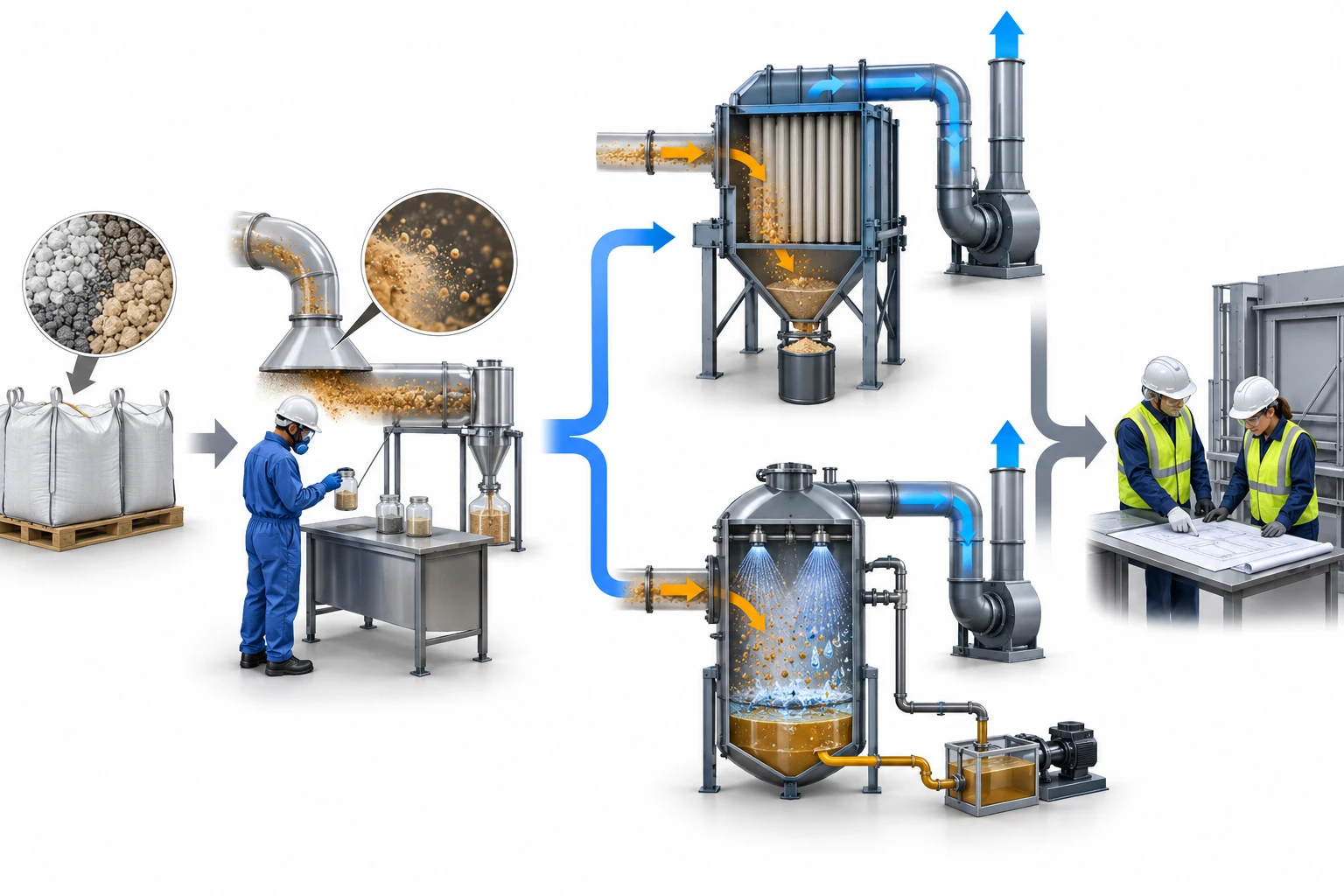
Why special care is needed
- The finer the particles, the easier they ignite, and grinding and polishing produce exactly that.
- Aluminium dust mixed with sparks from steel grinding in one system is the highest risk.
- Aluminium and magnesium sludge in a wet collector slowly releases hydrogen; ventilate the tank and remove sludge promptly.
Two routes
| Route | How | Key points |
|---|---|---|
| Wet (preferred) | SVT venturi scrubber; dust is wetted as soon as it enters | Ventilated tank, regular sludge removal, sludge never stored sealed |
| Dry (assess first) | Cartridges or bags with venting, isolation, antistatic media and earthing | Test the dust first and design protection from the results |
Before selection, prepare
- Material and alloy, and whether steel is ground in the same area.
- Grinding, polishing or machining method and number of stations.
- Any existing dust test reports.
- Open flames, spark sources and electrical equipment in the area.