
INDUSTRY APPLICATION
Heat Treatment & Surface Finishing
Quench smoke, blasting dust and thermal-spray fume: in heat treatment and finishing, the contaminant changes with the process.
Send your duty, get a proposal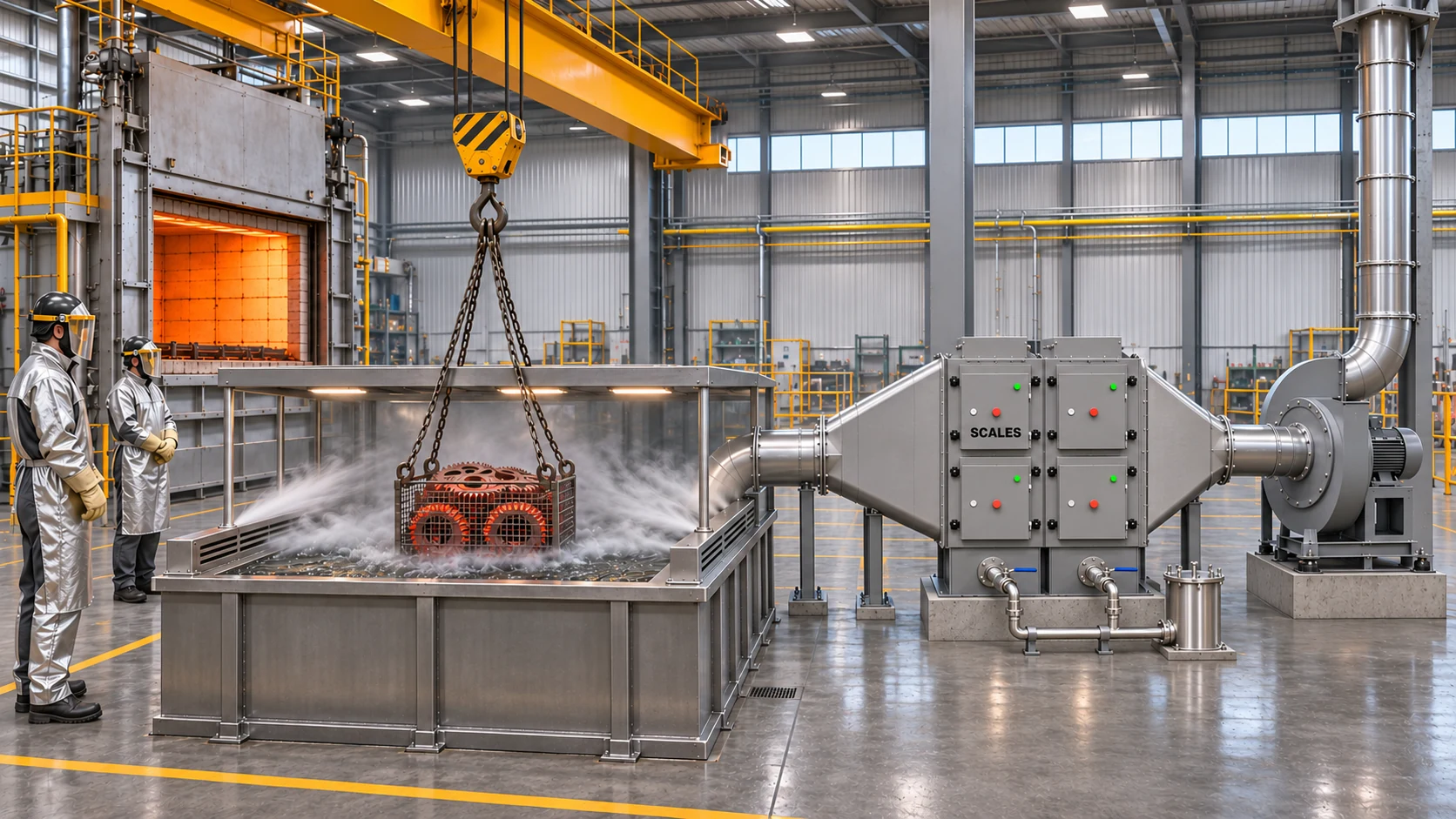
Industry overview
Heat treatment sets the strength and life of parts; nearly all gears, shafts, bearings, fasteners and dies are quenched and tempered. Surface finishing includes shot and grit blasting, thermal spraying, phosphating and pre-treatment for coating.
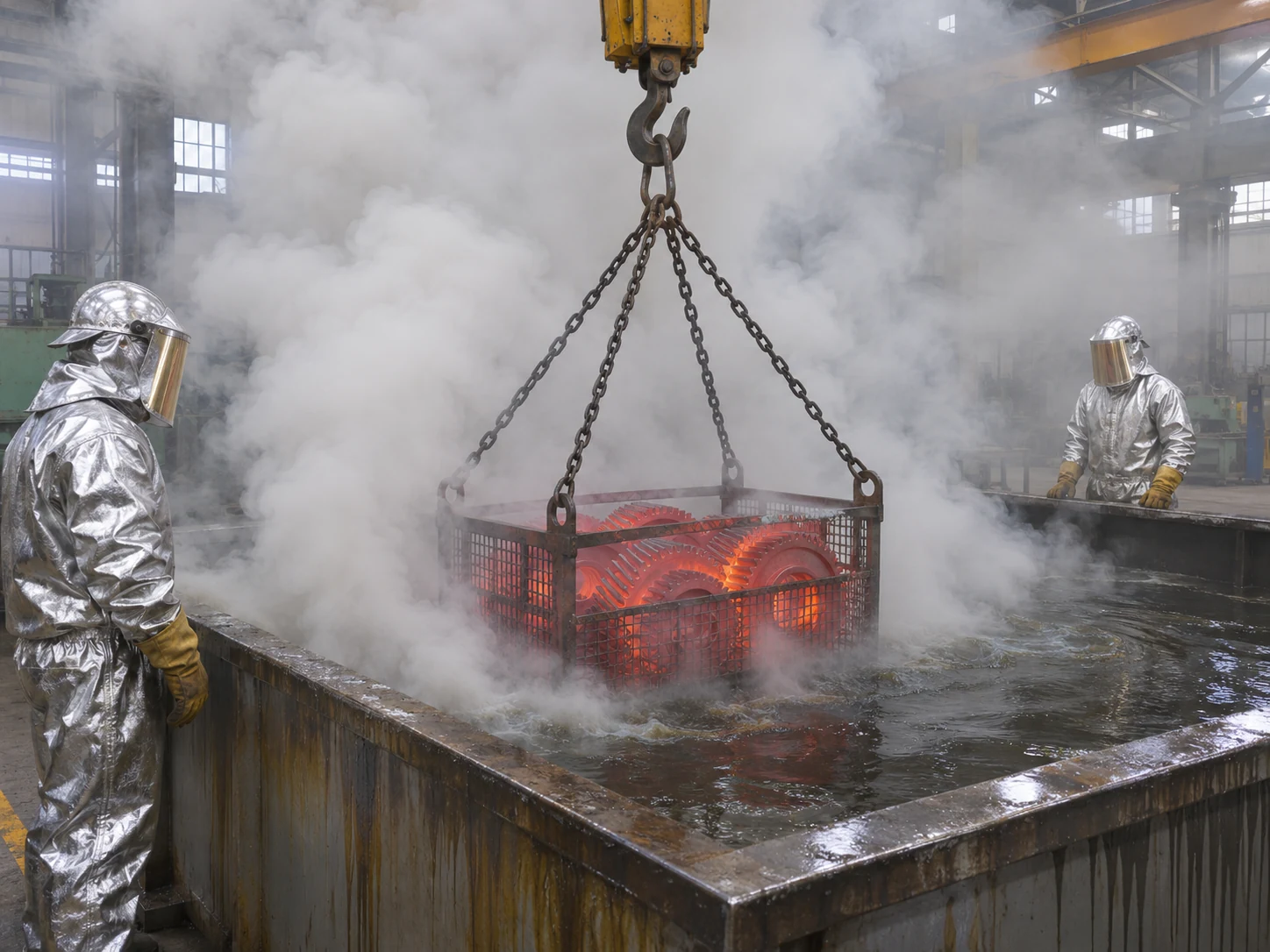
In oil quenching the hot load enters the oil and releases a burst of smoke; induction hardening also produces smoke above the station. The discharge ends of continuous, sealed-quench and pit furnaces are the main sources. Blasting creates abrasive dust, and thermal spraying gives off fine metal fume.
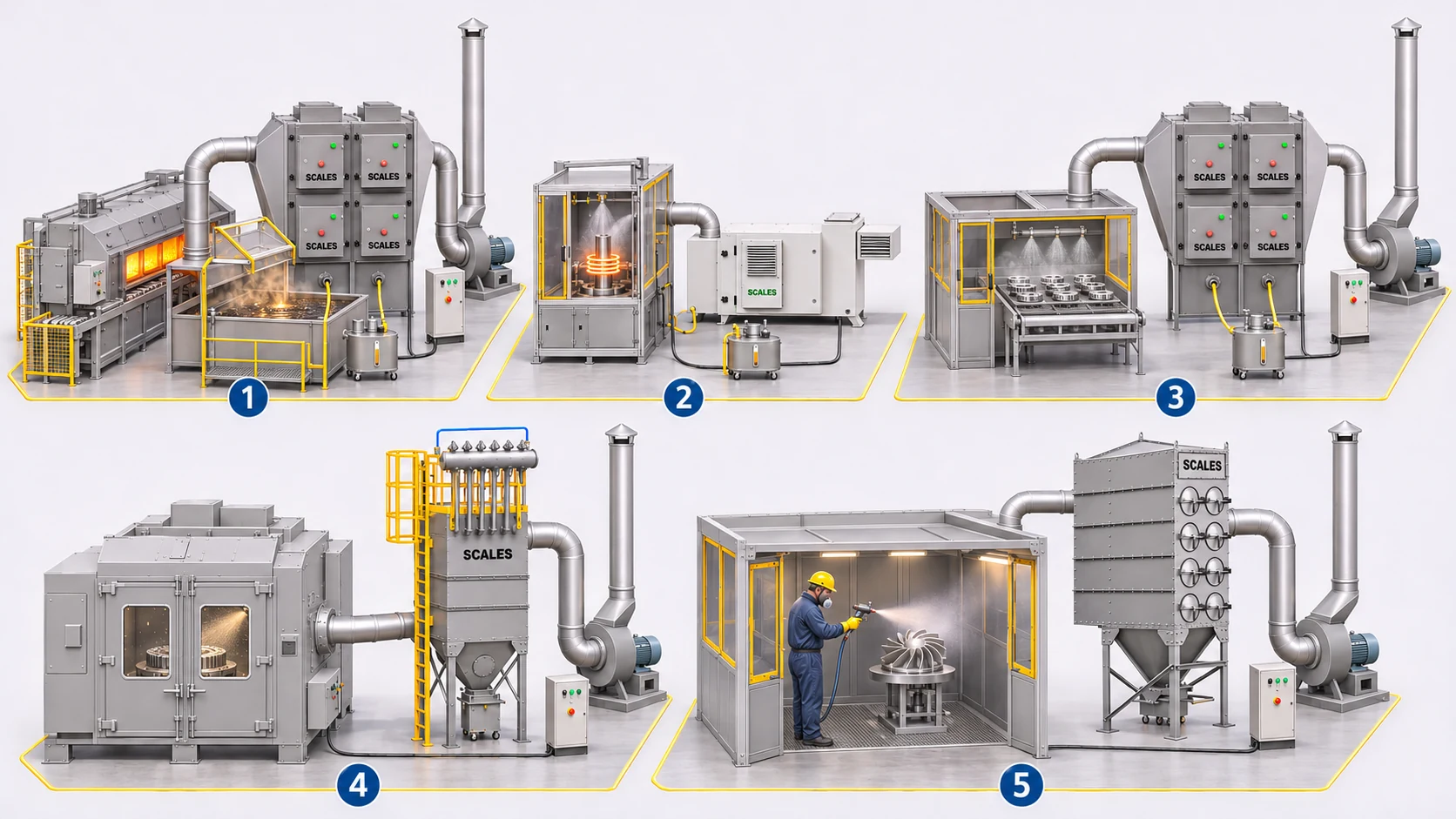
- 01Oil quenching (sealed-quench, continuous, pit furnaces)Quench oil smoke, hot and in burstsSEM, SEA, SVT
- 02Induction hardeningOil smoke, water mistSEA, SOH
- 03Tempering, washingOil smoke, vapourSEM, SVT
- 04Shot and grit blastingRust and grit dustSLF, SVF, SIB, SMC
- 05Thermal sprayingFine metal fumeSHF, SLF
Main processes and contaminants
| Process | What it releases | Challenge | Recommended approach | SCALES series |
|---|---|---|---|---|
| Oil quenching (sealed-quench, continuous, pit furnaces) | Quench oil smoke, hot and in bursts | Sticky smoke, oil build-up and fire risk | Hood at the quench tank; electrostatic or wet | SEM, SEA, SVT |
| Induction hardening | Oil smoke, water mist | Many small sources | Local hood at each station; integrated units | SEA, SOH |
| Tempering, washing | Oil smoke, vapour | High humidity | Electrostatic or wet | SEM, SVT |
| Shot and grit blasting | Rust and grit dust | Abrasive | Cartridge or bag collector | SLF, SVF, SIB, SMC |
| Thermal spraying | Fine metal fume | Very fine, possibly combustible | Booth extraction with cartridge filtration | SHF, SLF |
How SCALES approaches it
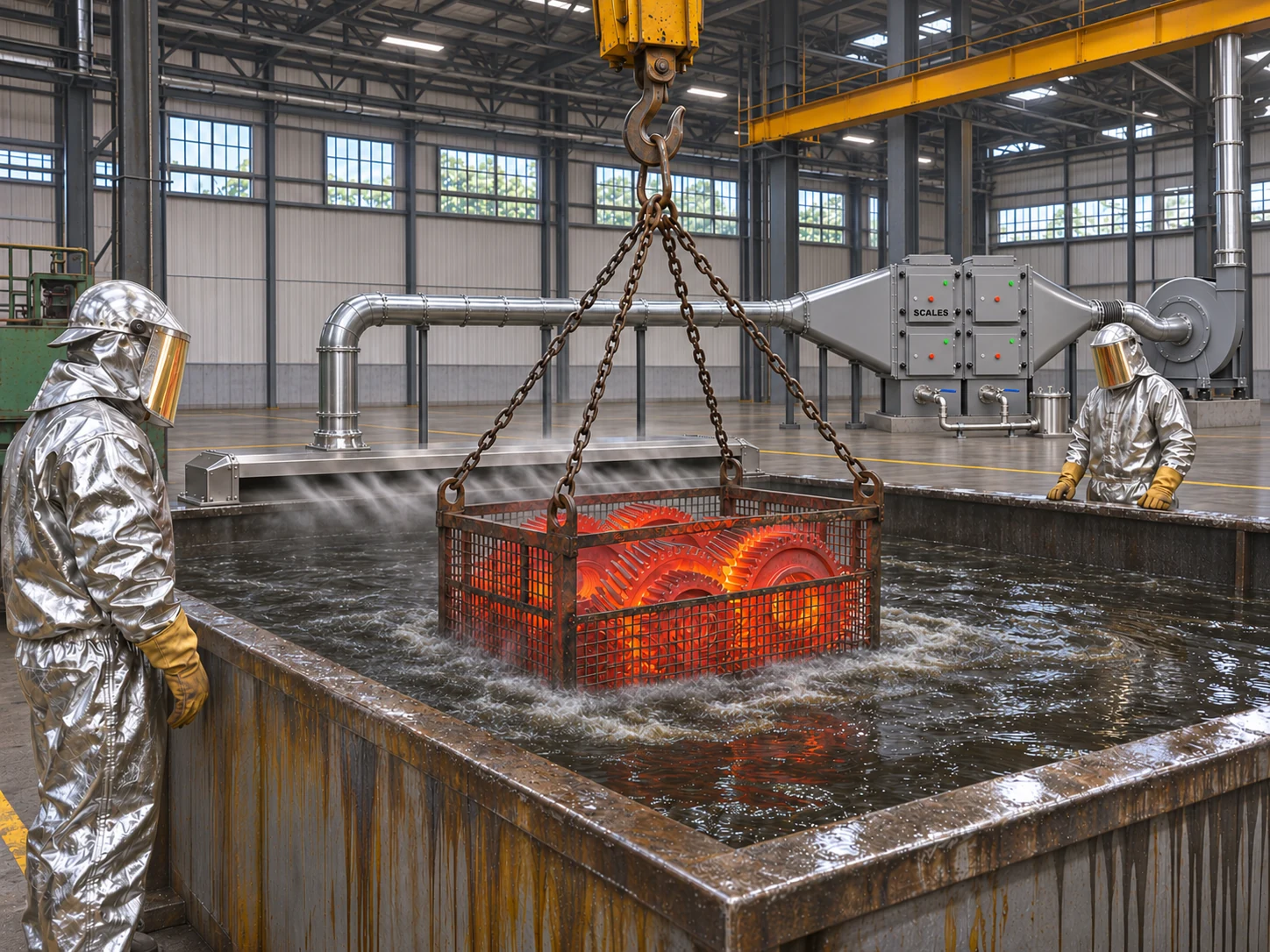
- Electrostatic units suit oil smoke from foundry work, heat treatment, induction hardening, cold forming and forge quenching. SEM module banks handle high airflow; SEA serves single machines.
- The SVT venturi scrubber can treat quench smoke and cool it at the same time.
- Blasting uses cartridge or bag collectors with a pre-separator at the inlet to reduce wear.
RESULT
Before and after
Safety notes
- Clean oil from quench-smoke ducts and units and wash electrostatic cells on schedule to prevent oil fires.
- Acid mist from pickling and plating needs dedicated acid-mist scrubbers.
What to tell us for selection
- Furnace type and number
- Quench medium (oil, water, polymer)
- Quenches per hour
- Quench tank size
- Blasting equipment
- Thermal-spray material