
TECHNICAL KNOWLEDGE
How to Control Oil Smoke from Quenching
Quench smoke bursts out the moment the hot part enters the oil: hot, sticky and fine. Hood the tank, size airflow for the peak at entry, treat with electrostatic units or a scrubber plus electrostatic stage, and clean the ducts of oil regularly.
Request a Technical Assessment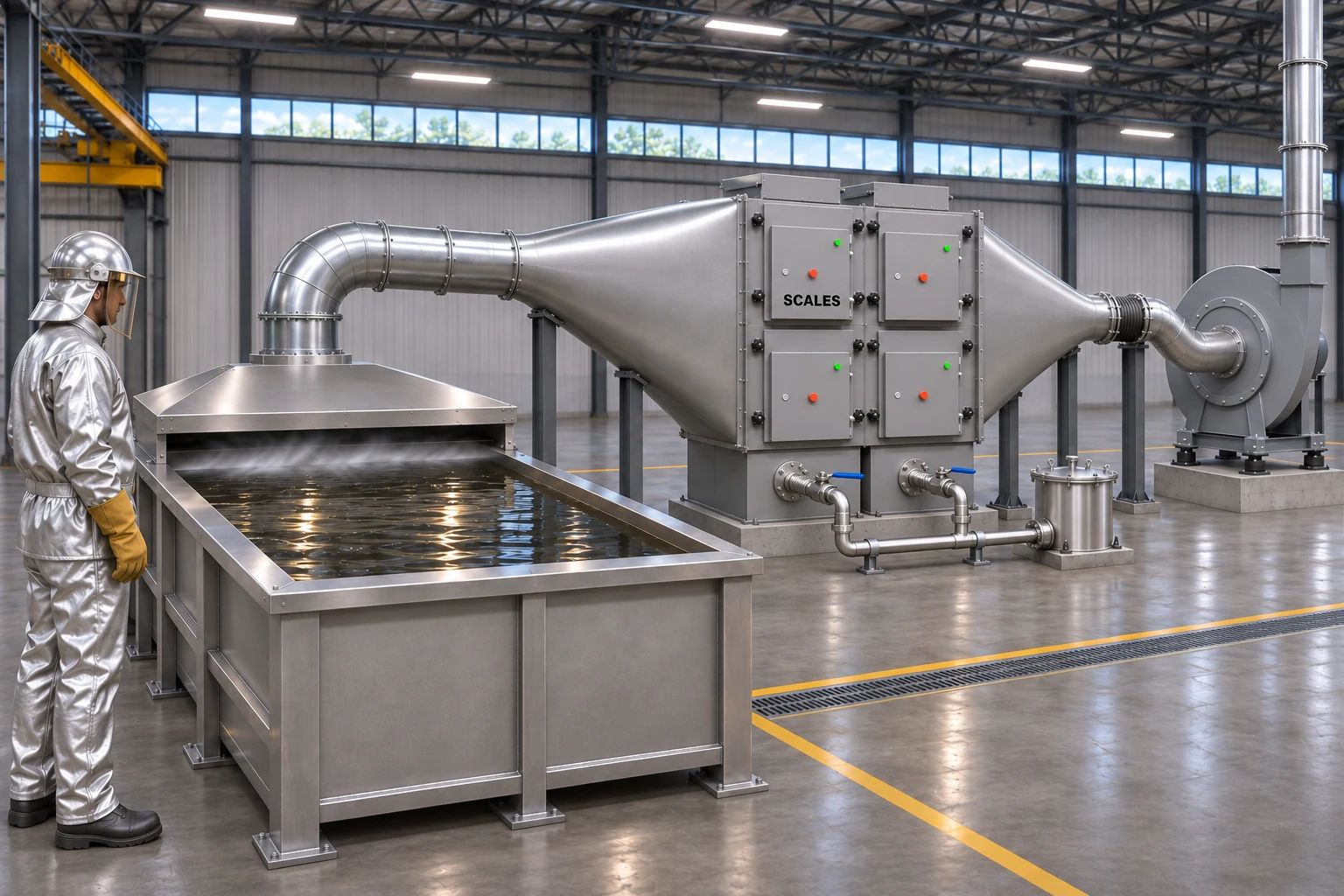
Capture
- Hood above or along the tank, clear of the crane and baskets during loading and unloading.
- On sealed-quench and continuous furnaces, extract at the discharge and quench section.
- Size for the smoke peak at entry; run at lower speed between quenches.
Treatment
Safety and maintenance
- Oil deposits in ducts and units can catch fire: clean them regularly and wash the cells on schedule.
- Connect oil drains so oil cannot run back into the cells.
- Electrostatic units remove particles only; add activated carbon for odour or gases.