
TECHNICAL KNOWLEDGE
How to Clean Electrostatic Collection Cells
Oil build-up lowers electrostatic efficiency and is a fire risk, so wash the cells on schedule. Isolate and discharge before cleaning; dry thoroughly and check insulation before refitting.
Request a Technical Assessment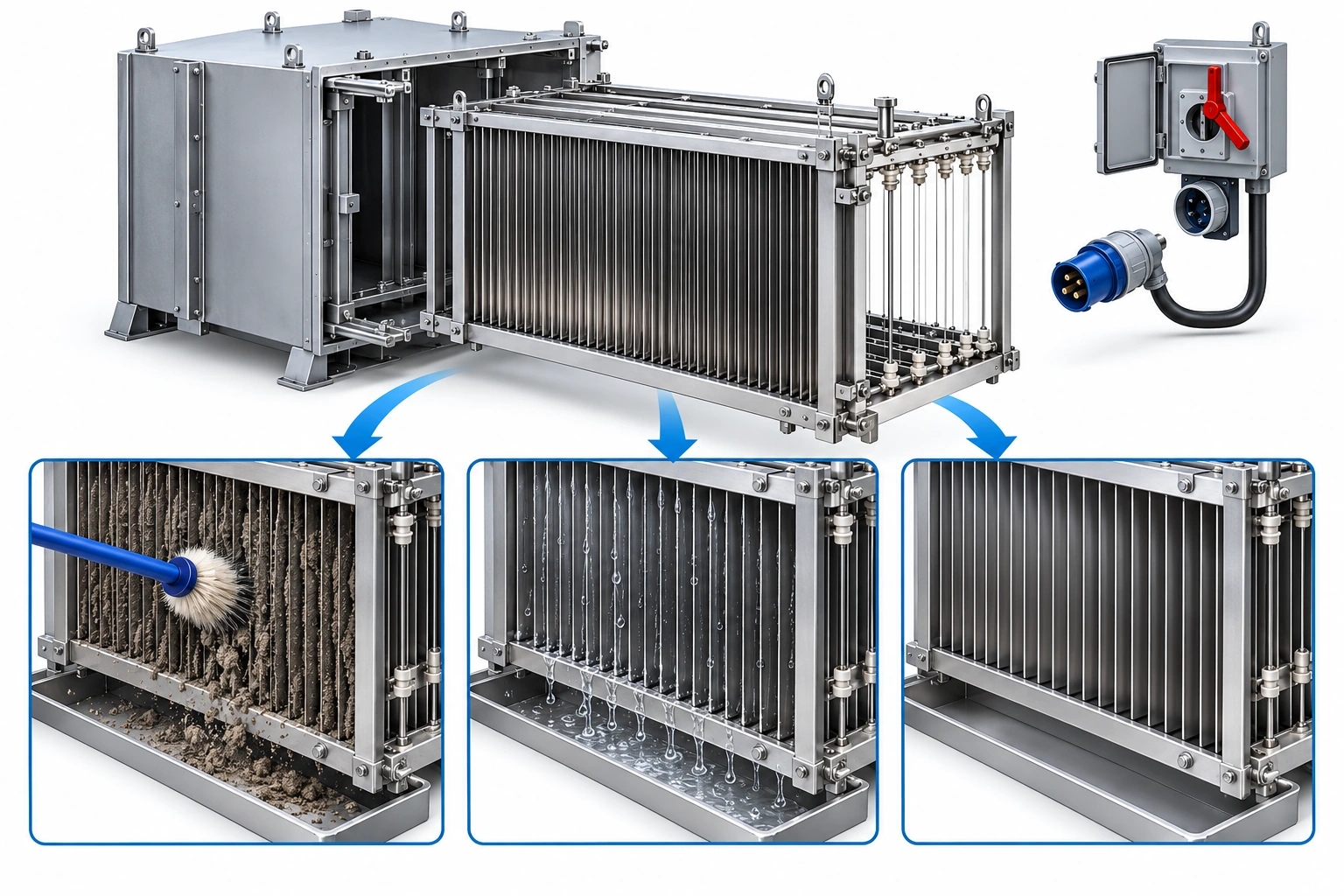
When to clean
- On the interval in the manual, adjusted to the load: more often for heavy smoke from cold heading or quenching.
- When efficiency clearly drops, smoke is visible at the outlet or the HV supply alarms frequently.
Cleaning steps
- Isolate, lock out and tag, and wait for the high voltage to discharge.
- Slide SEM cells out from the side; remove SEA cells as described in the manual.
- Soak and rinse with a suitable cleaner; never scrape the plates with hard tools.
- Dispose of used cleaning liquid properly.
- Dry completely; check plates for distortion and insulators for cracks or dirt.
- Refit and test-run, confirming normal voltage and no arcing.
Longer intervals between cleans
Keep the pre-filters clean to stop large droplets, and keep oil drains clear so oil does not run back into the cells. A spare set of cells lets you rotate them without stopping the unit.