
INDUSTRY APPLICATION
Forging & Cold Forming
Hot forging brings graphite smoke and scale; cold heading brings oil mist. Most air problems in a forge come from lubrication.
Send your duty, get a proposal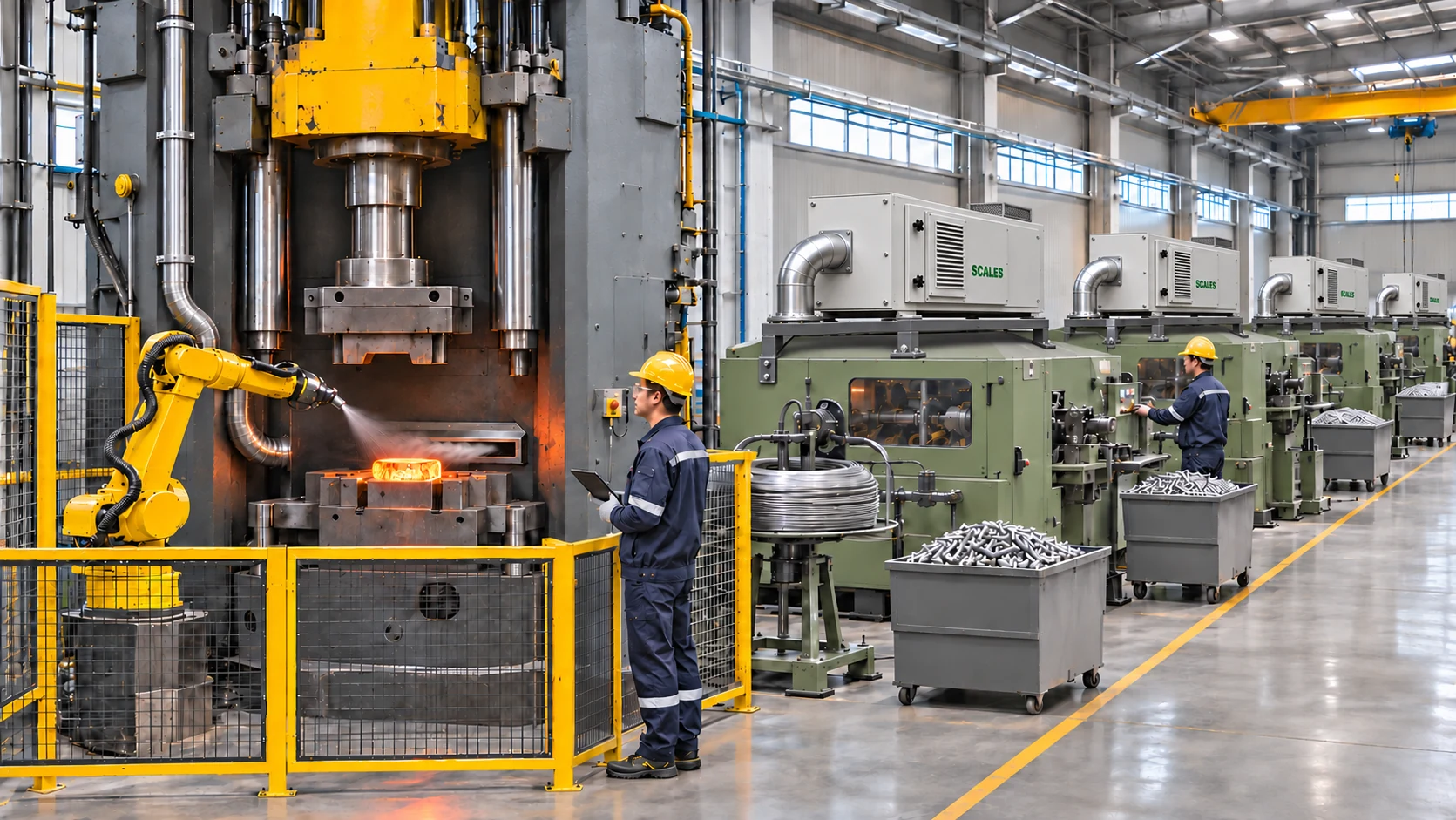
Industry overview
Forgings carry the loads in crankshafts, connecting rods, gears, bearing rings, fasteners and key parts of construction machinery. Hot forging, warm forging, cold heading and cold extrusion each release different contaminants.
In hot forging, die lubricant (graphite, water- or oil-based) hits the hot die and produces dense smoke; shot blasting after cooling releases scale dust. In cold heading, cold extrusion and cold rolling, lubricating oil is atomised at speed into mist that leaves floors slippery and machines coated over time.
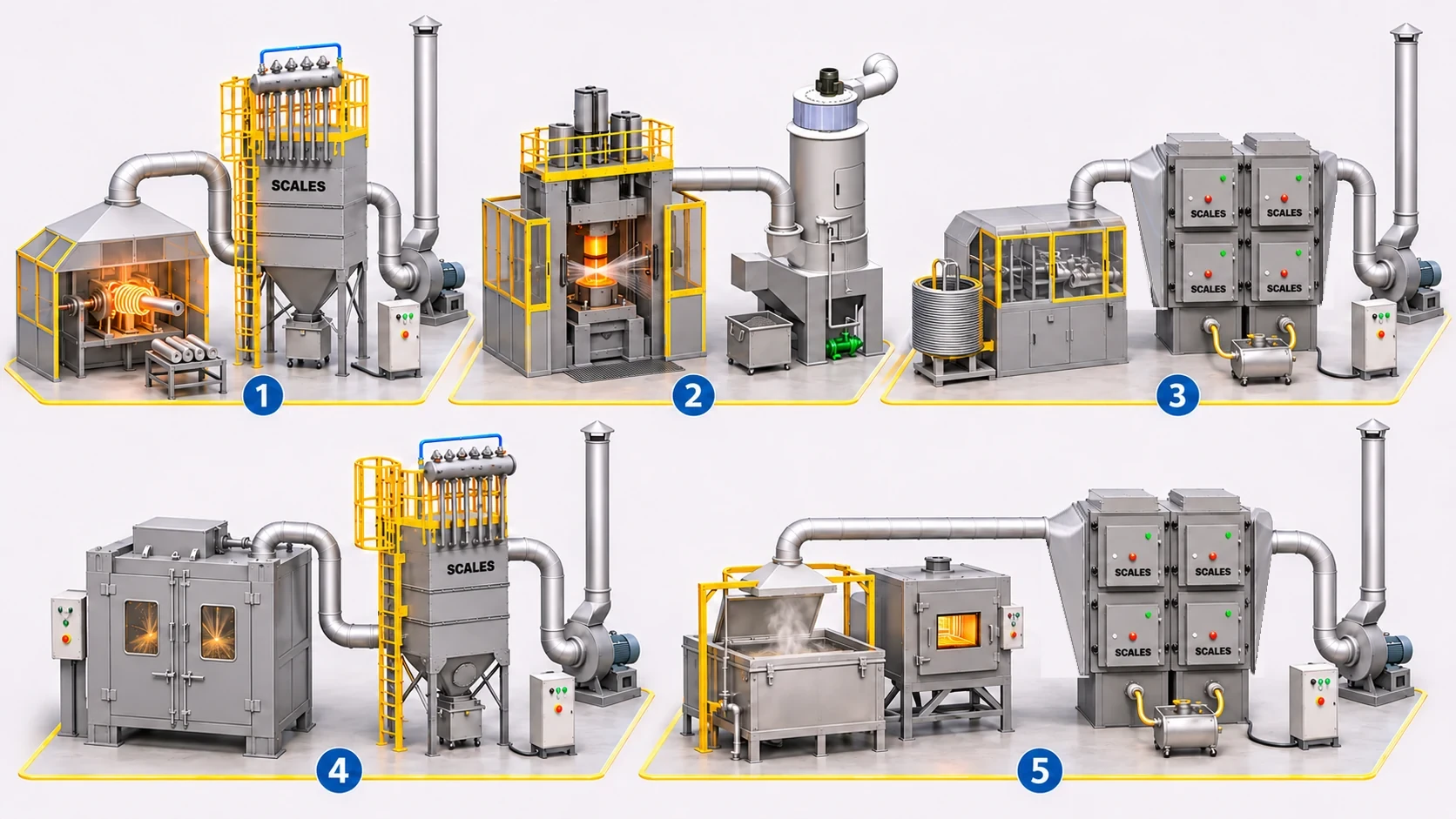
- 01Heating (induction, gas furnace)Scale particles, combustion fumeSIB, SMC
- 02Hot forging (graphite or lubricant spray)Graphite smoke, oil smokeSVT, SEM
- 03Cold heading, extrusion, rollingLubricant oil mistSEM, SEA, SOH
- 04Shot blastingScale dustSLF, SVF, SIB
- 05Quenching and temperingQuench oil smokeSEM, SVT
Main processes and contaminants
| Process | What it releases | Challenge | Recommended approach | SCALES series |
|---|---|---|---|---|
| Heating (induction, gas furnace) | Scale particles, combustion fume | High temperature | Furnace hood | SIB, SMC |
| Hot forging (graphite or lubricant spray) | Graphite smoke, oil smoke | Sticky, fine, moist | Local hood at the press; wet or electrostatic | SVT, SEM |
| Cold heading, extrusion, rolling | Lubricant oil mist | Heavy mist, continuous duty | Enclosed machine; electrostatic or mechanical mist filtration | SEM, SEA, SOH |
| Shot blasting | Scale dust | Abrasive | Cartridge collector on the blast machine | SLF, SVF, SIB |
| Quenching and tempering | Quench oil smoke | See Heat Treatment & Surface Finishing | SEM, SVT |
How SCALES approaches it
- Where cold headers and cold mills are concentrated, an SEM electrostatic system serves them centrally at low resistance and low running cost.
- A single cold header can use an SEA integrated unit mounted on the machine or suspended, saving floor space.
- Graphite smoke from hot forging is fine and moist, so SVT wet collection is an option; with mostly oil-based lubricant, choose electrostatic.
- Blasting dust gets its own system and never shares a line with oil mist.
RESULT
Before and after
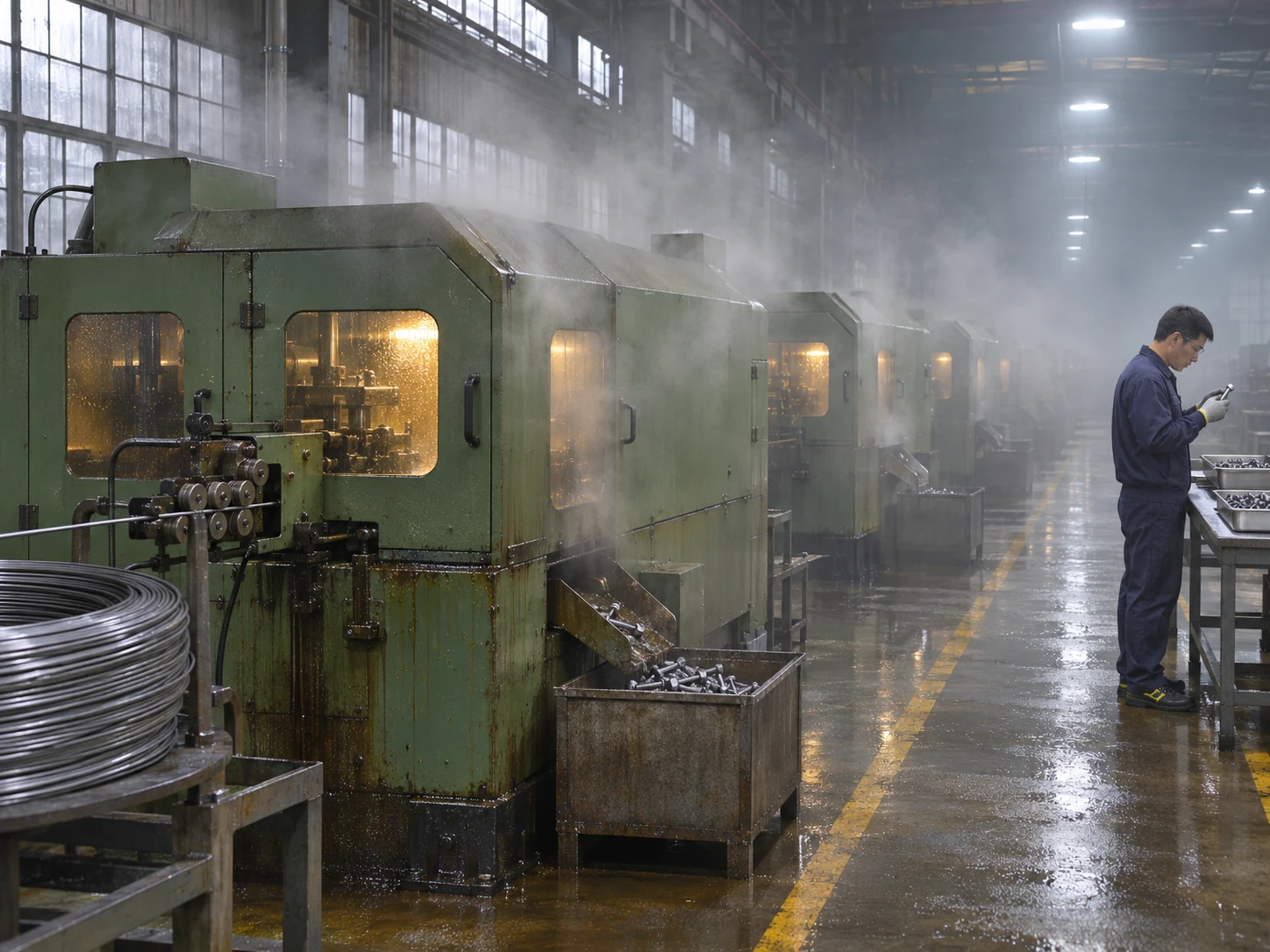
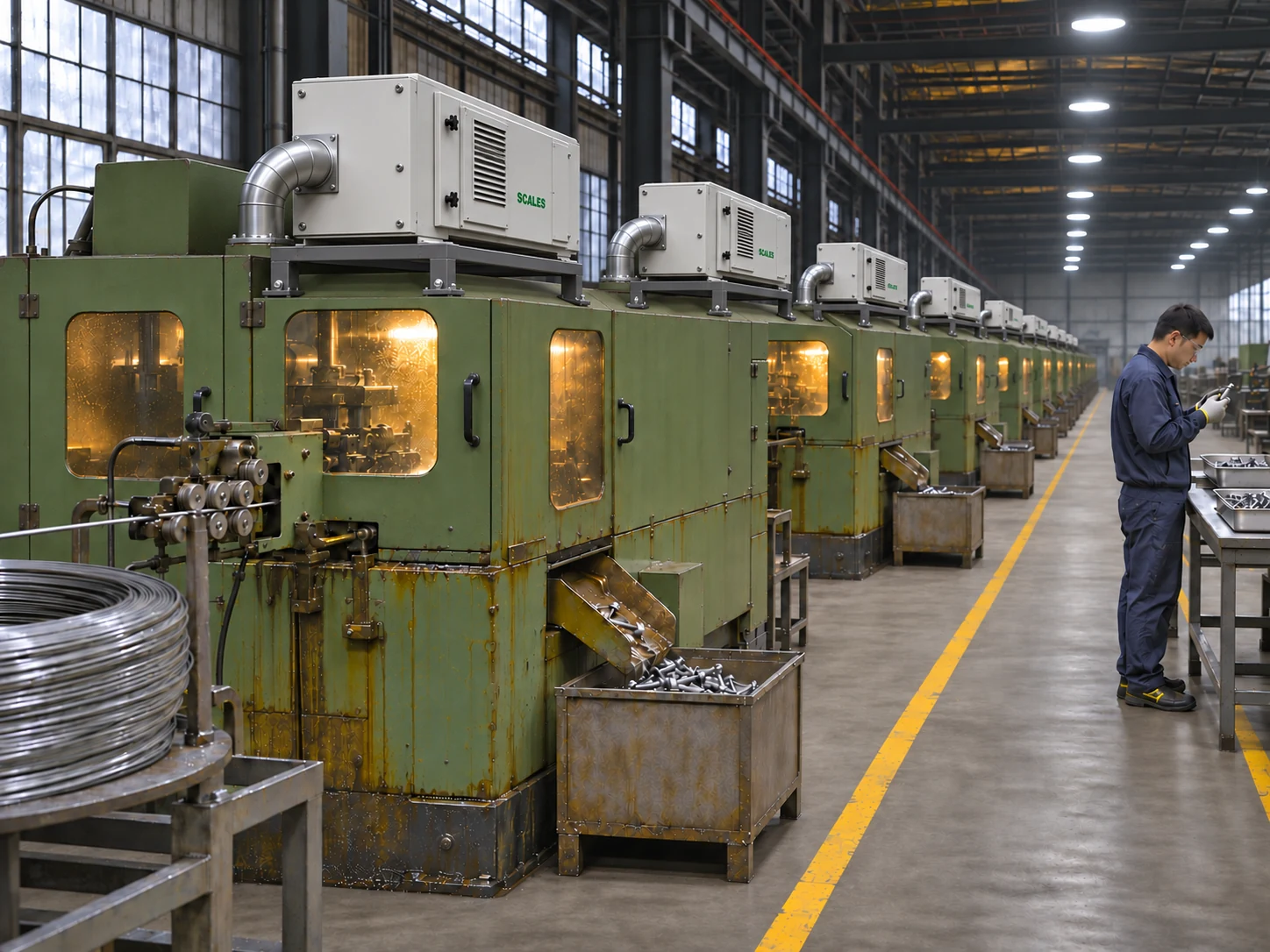
Safety notes
- Clean oil from mist ducts and collectors regularly so deposits do not become a fire risk.
- Connect the oil drains of electrostatic units so oil cannot run back into the cells.
What to tell us for selection
- Forging type (hot, warm, cold heading, cold extrusion)
- Lubricant
- Number and layout of machines
- Existing enclosures
- Visible mist level or measurements
- Discharge outdoors or back to the hall