
INDUSTRY APPLICATION
Die Casting
In die casting the challenge is not dust volume but release-agent mist and aluminium or magnesium dust: one is sticky, the other combustible.
Send your duty, get a proposal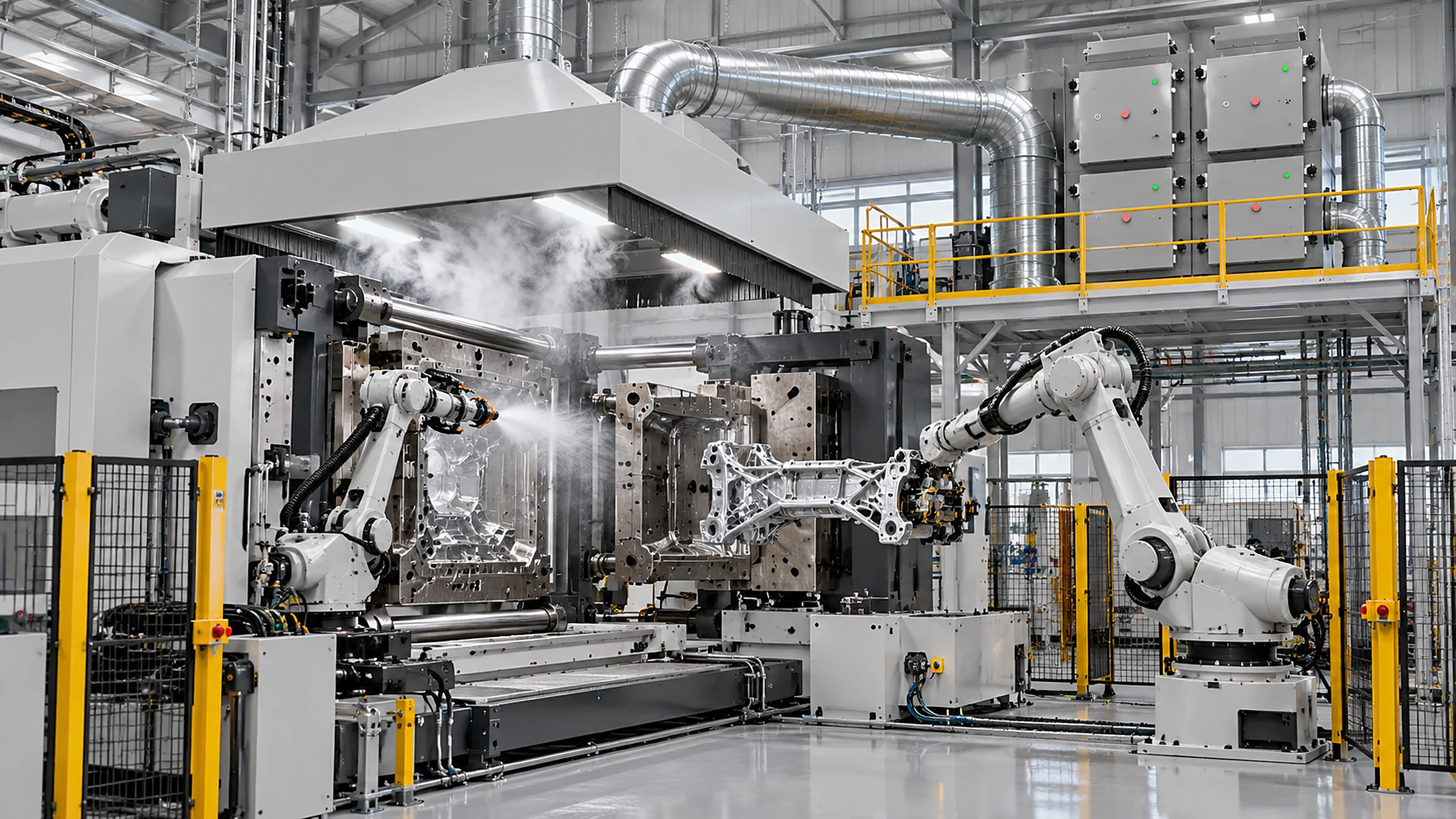
Industry overview
Die casting is the core process of vehicle lightweighting. Aluminium housings, brackets, motor housings and large one-piece EV castings all come from it. Large-tonnage machines have spread fast, raising the mist load of each cell and of the whole hall.
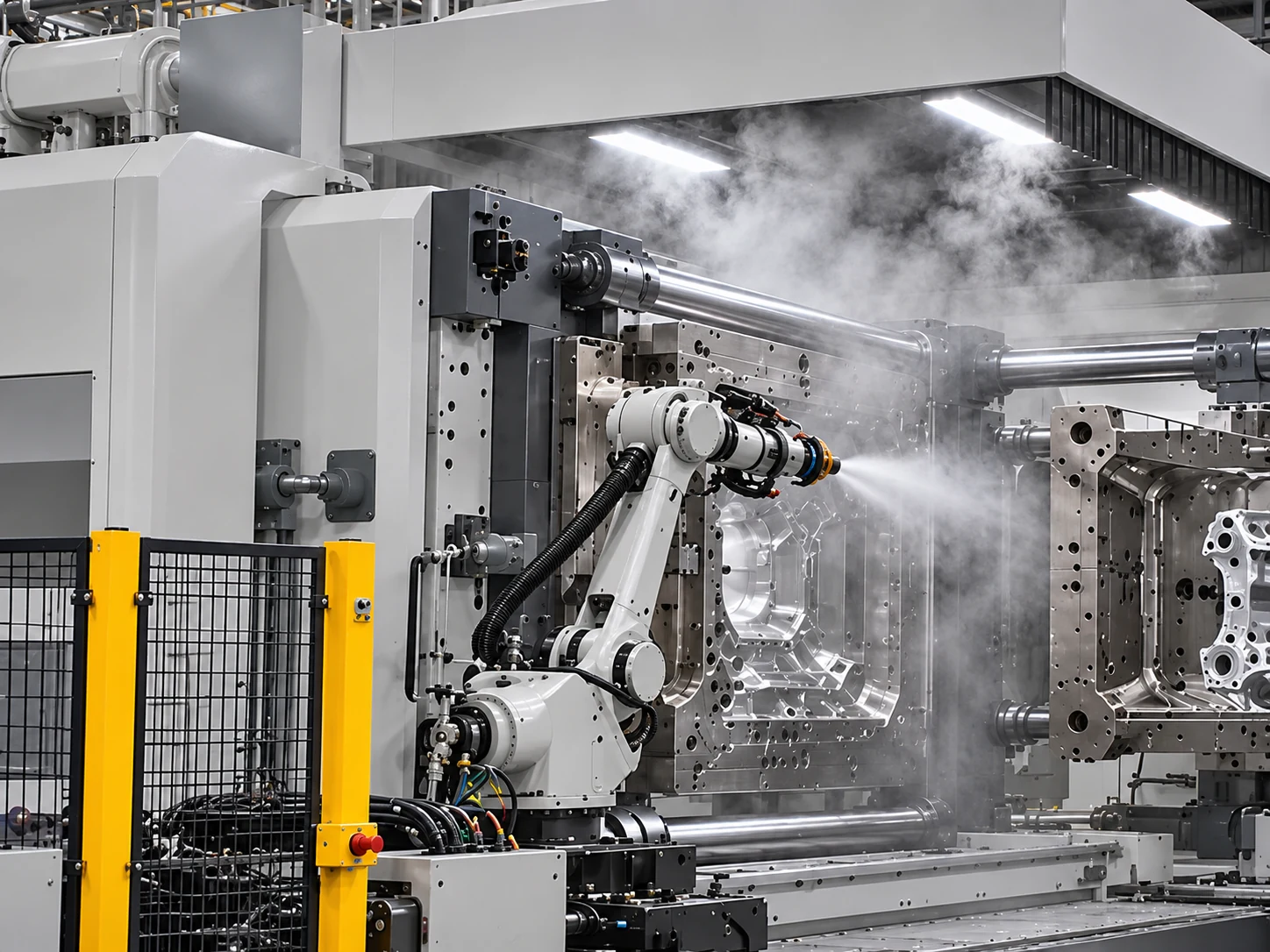
Every cycle sprays release agent, closes the die, injects, opens and extracts. Release agent flashes on the hot die into a white mist of oil and water. Gate removal, deburring and grinding downstream produce aluminium dust. The two contaminants are completely different and must be handled separately.
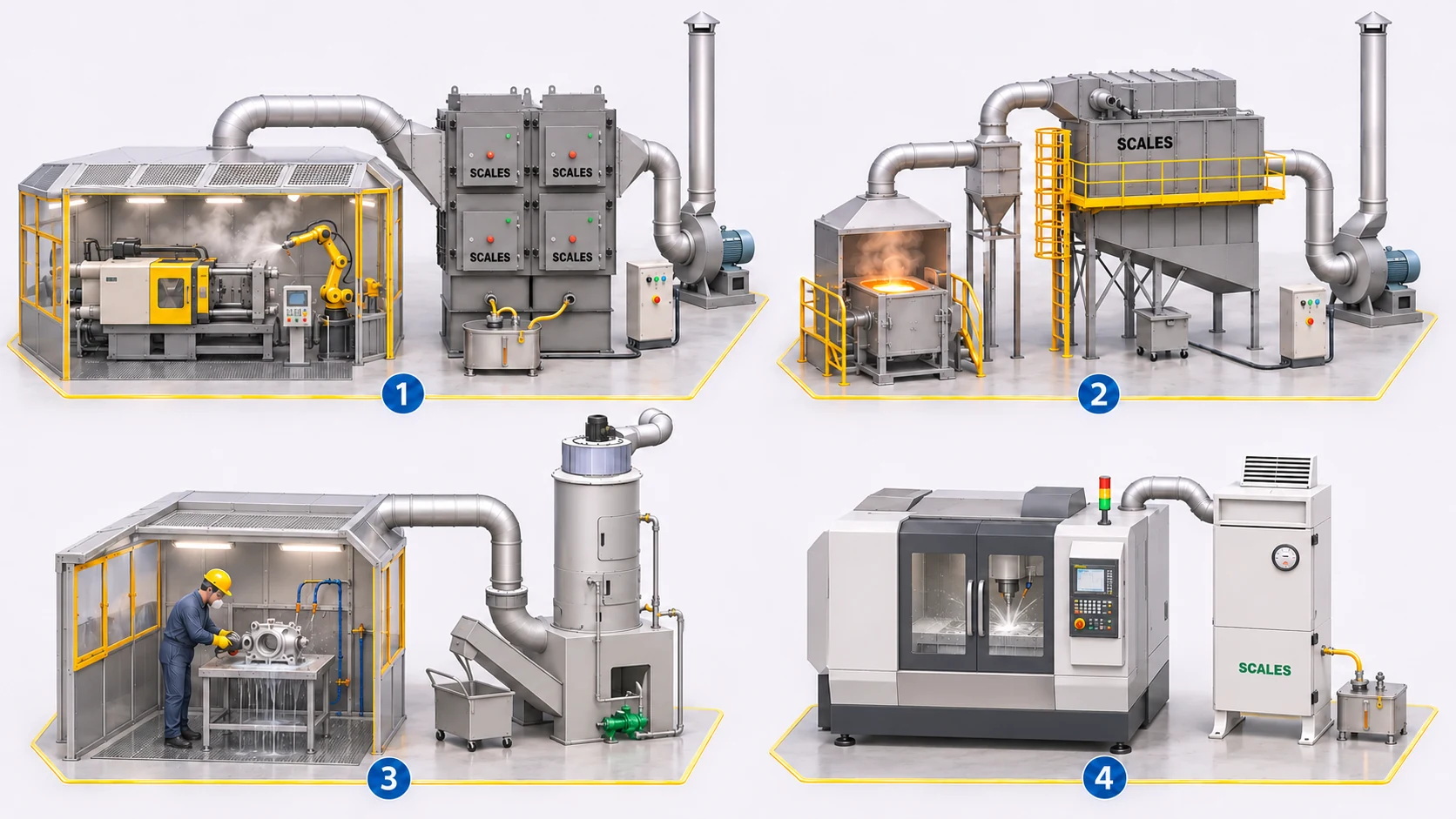
Main processes and contaminants
| Process | What it releases | Challenge | Recommended approach | SCALES series |
|---|---|---|---|---|
| Die-casting cell (spraying, die open/close) | Release-agent mist: oil, water and wax aerosol | Sticky and wet; blinds ordinary cartridges | Canopy or local enclosure over the machine; electrostatic or multi-stage mechanical filtration | SEM, SEA, SOS, SOF |
| Melting and holding furnaces | Metal fume and flux fume | Hot and intermittent | Furnace hood; cool, then baghouse | SMB, SIB |
| Gate removal, deburring, grinding | Aluminium and magnesium dust | Combustible metal dust | Wet collection first | SVT |
| Machining | Coolant mist | See Machine Tools & General Machinery | Extraction at each machine | SPM, SOH, SEA |
How SCALES approaches it
- Two systems: mist and dust
- Release-agent mist goes to electrostatic or mechanical mist collectors; aluminium and magnesium dust goes to a wet collector. They never share a dry cartridge unit.
- Electrostatic: low resistance, washable
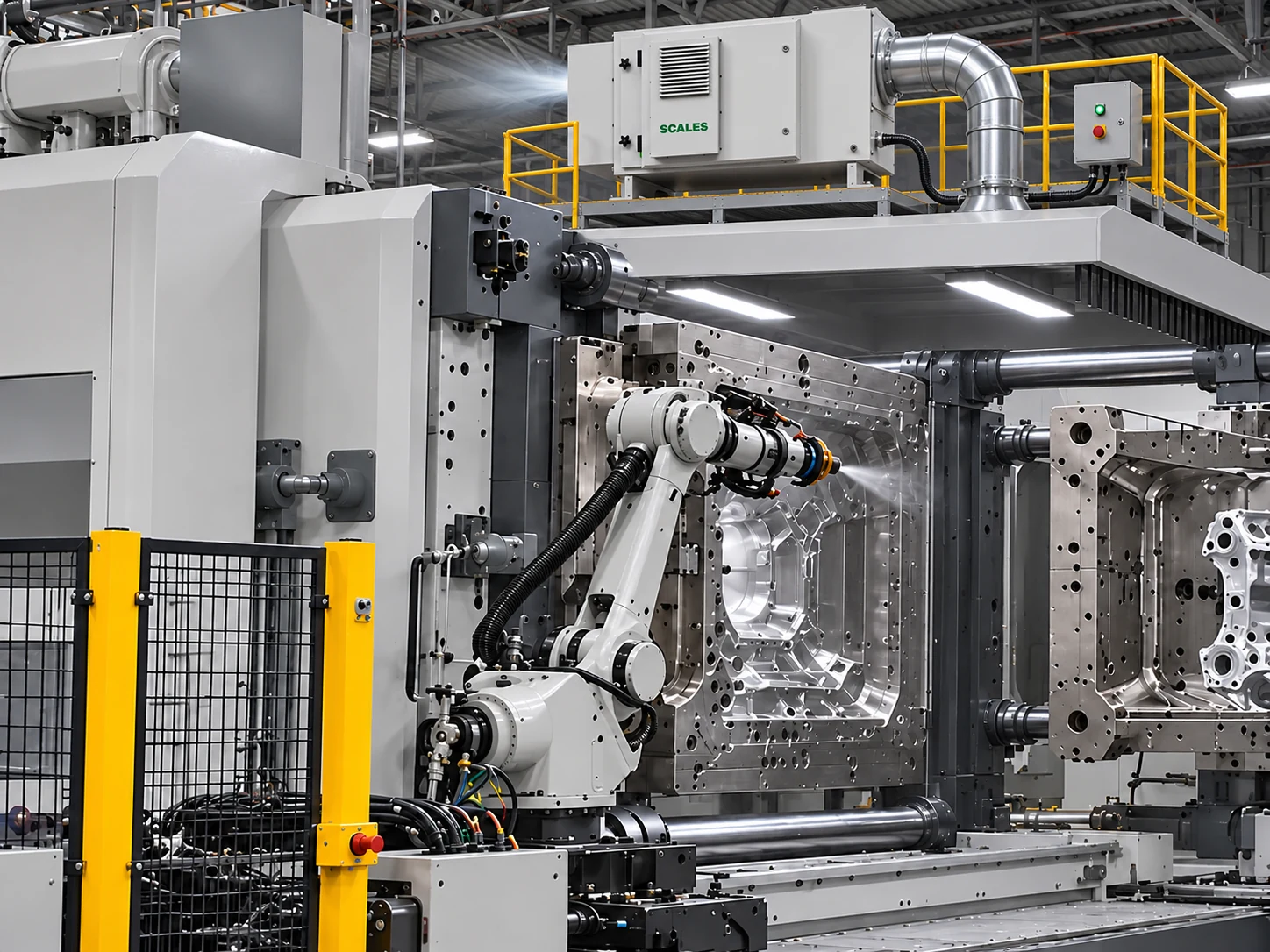
- The SEM electrostatic collector runs below 100 Pa and its cells can be washed again and again, which suits continuous die-casting duty.
- Central systems for large machines
- Several machines can share SEM module banks or an SOF modular mist collector; a single cell can use an SEA integrated unit.
- Wet for aluminium and magnesium
- The SVT venturi scrubber brings dust into close contact with water so it settles, avoiding the ignition risk of dry collection.
RESULT
Before and after
Safety notes
- Aluminium and magnesium dust must not enter a dry cartridge collector unless the dust has been tested and the system designed for explosion protection.
- Aluminium sludge in a wet collector releases hydrogen. Ventilate the water tank and remove sludge regularly.
What to tell us for selection
- Machine tonnage and number
- Release agent (water- or oil-based) and spraying method
- Whether cells are enclosed
- Number of finishing stations
- Alloy (aluminium, magnesium, zinc)
- Whether air returns to the hall