
TECHNICAL KNOWLEDGE
Choosing electrostatic or mechanical oil-mist collection
Electrostatic units run at low resistance with washable cells and suit oil smoke and large continuous airflows; mechanical filters are simple, need no electric field and suit single machines and emulsion mist. Choose by fluid, temperature and maintenance.
Request a Technical Assessment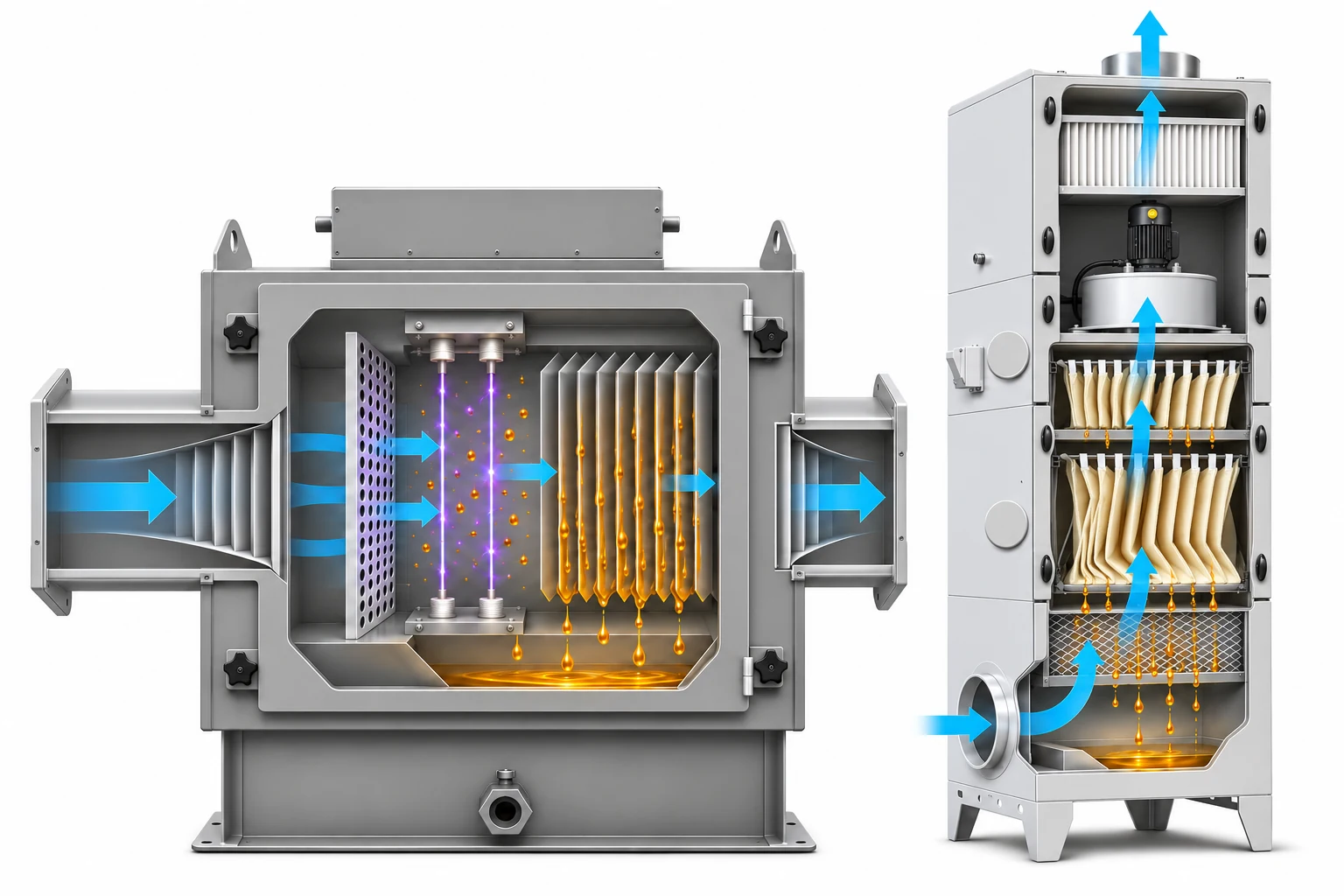
Comparing the two
| Aspect | Electrostatic (SEM, SEA) | Mechanical (SPM, SOH, SOS, SOF) |
|---|---|---|
| Principle | Droplets are charged and collected on plates | Staged media; large droplets separated first |
| Resistance | Low; about 100 Pa for SEM | Rises as media loads with oil |
| Maintenance | Remove and wash the cells; reusable | Replace media stage by stage on pressure drop |
| Best for | Smoke, cold heading, quenching, die casting; central systems | Single machines, emulsion mist, fine grinding mist (SOH with H13) |
Running costs
Compare the same period for power, washing or media, labour, disposal of waste liquid and used filters, and planned downtime. Electrostatic units use little power and few consumables but need washing; mechanical filters need no washing, but the media is consumable.
How to choose
- Smoke, higher temperatures, continuous duty: electrostatic.
- Single machines, mainly emulsion, few maintenance staff: mechanical.
- Air returned to the hall: a HEPA final stage, or a HEPA stage after the electrostatic unit.
- If unsure, send the fluid, temperature, machine count and maintenance arrangements, and we will compare both options for the same duty.