
TECHNICAL KNOWLEDGE
Which Dusts Are Suitable for Wet Collection?
Wet collection brings dusty air into close contact with water so the dust is carried away. It suits dust that would blind dry media or create a fire risk in dry collection, but the water, sludge and gases must be managed.
Request a Technical Assessment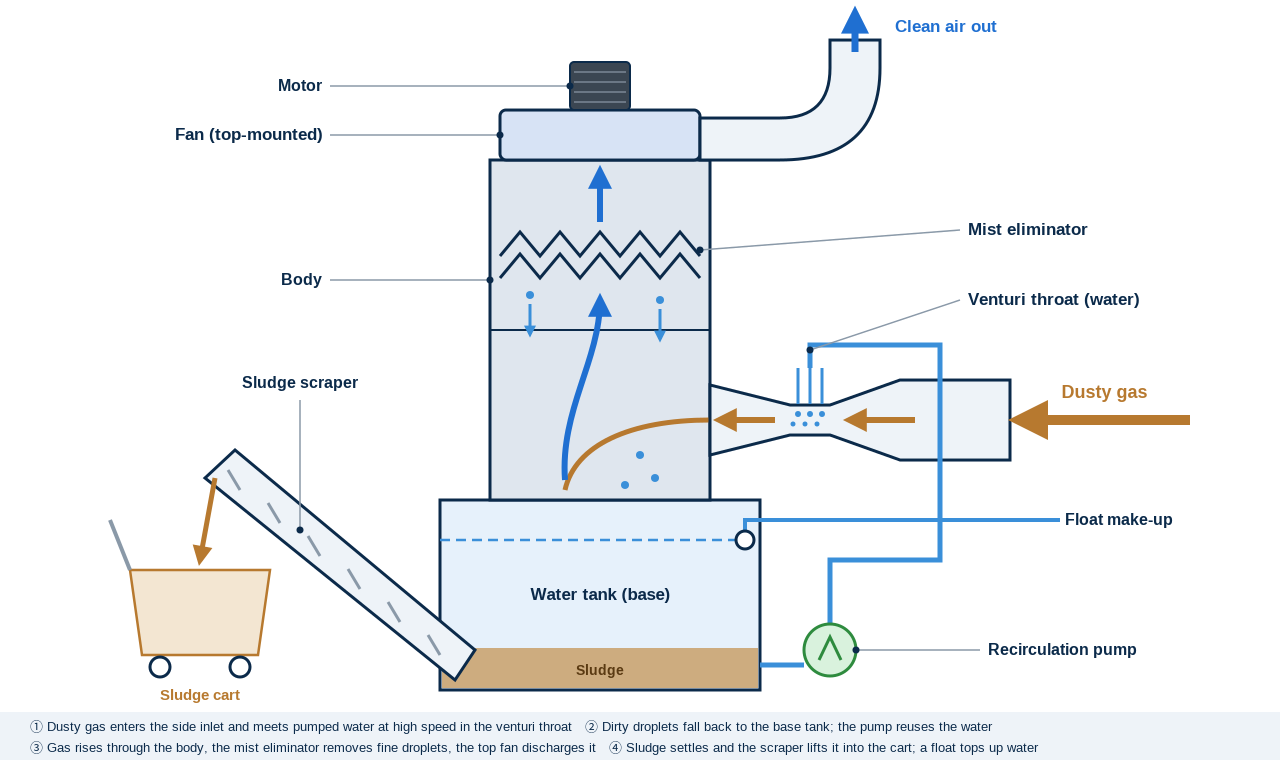
Which dusts suit it
- Aluminium, magnesium and titanium grinding dust: wetted on entry, avoiding the fire risk of dry collection.
- Sticky or damp dust and slurry: wet processing of glass, ceramics and stone.
- Fume that also needs cooling: quench smoke and graphite smoke from hot forging.
When it does not fit, or needs assessment first
- Dust that reacts with water, releases gas or cakes: confirm compatibility first.
- Aluminium and magnesium sludge slowly releases hydrogen: ventilate the tank, remove sludge regularly and never store it sealed.
- Dust that must be recovered: wet collection turns it into sludge, so it is usually unsuitable.
- Outdoors in winter: protect against freezing.
What to specify
Besides the main unit, a wet system includes make-up water, recirculation pump, demister, sludge removal and sludge disposal. The SCALES SVT venturi scrubber covers 2,000–16,000 m³/h with a scraper for sludge removal. Specify who provides the water connection, sludge containers and sludge disposal.