
INDUSTRY APPLICATION
Lithium Batteries & New-Energy Materials
Cathode and anode materials, electrodes, cells and packs: every step makes dust, and most of it is combustible or worth recovering.
Send your duty, get a proposal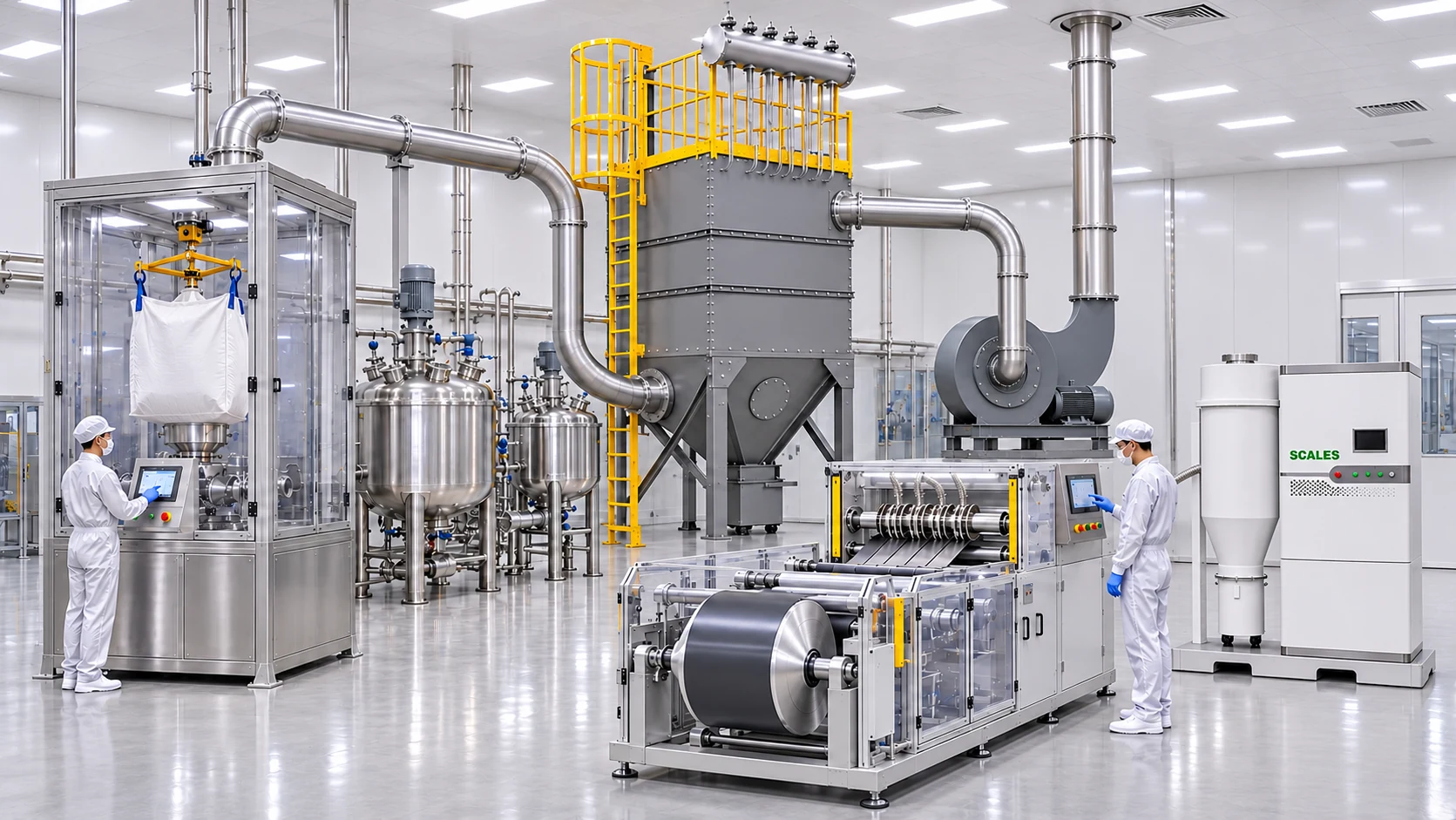
Industry overview
The lithium-battery chain runs from cathode materials (LFP, NCM), anode materials (graphite), separators and electrolyte to cell making, modules and pack assembly; China is the world's largest producer. Material production is classic powder processing: charging, mixing, calcining, milling, classifying and packing. Cell making covers mixing, coating, calendering, slitting, die-cutting and winding or stacking; pack assembly adds laser welding and grinding.
Material dust is valuable, so many duties need both dust control and recovery. Graphite powder and aluminium-foil scrap are combustible, and cell halls have strict cleanliness and humidity requirements.
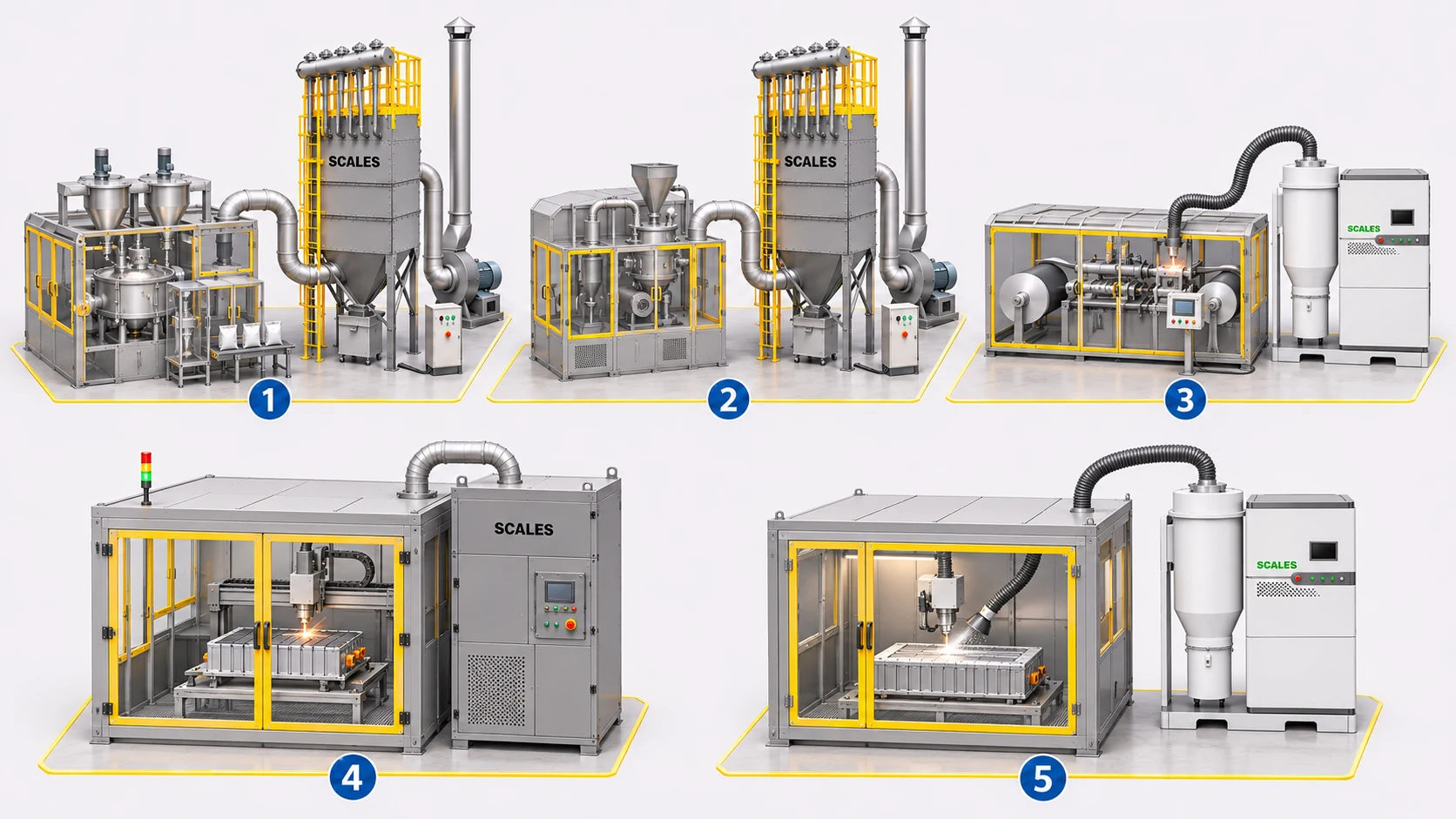
- 01Charging, mixing and packing cathode/anode materialsMaterial dustSIB, SLF, SVF
- 02Milling, classifying, pneumatic conveyingFine dust at high concentrationSIB, SMC
- 03Electrode slitting, die-cutting, laser cuttingElectrode dust and metal particlesSVB-T, SVB
- 04Module and pack laser weldingWelding fumeSCU, SHF
- 05Pack grinding and cleaningDustSVB-T
Main processes and contaminants
| Process | What it releases | Challenge | Recommended approach | SCALES series |
|---|---|---|---|---|
| Charging, mixing and packing cathode/anode materials | Material dust | Must be recovered; fine | Enclosed extraction at charging stations and packing spouts; cartridge or bag | SIB, SLF, SVF |
| Milling, classifying, pneumatic conveying | Fine dust at high concentration | High concentration | Bag or cartridge, with discharge for recovery | SIB, SMC |
| Electrode slitting, die-cutting, laser cutting | Electrode dust and metal particles | Many points; high vacuum needed | High-vacuum extraction at each tool | SVB-T, SVB |
| Module and pack laser welding | Welding fume | Cleanliness requirements | Integrated unit or central cartridge | SCU, SHF |
| Pack grinding and cleaning | Dust | High vacuum | SVB-T |
How SCALES approaches it
- The SLF and SIB series suit new-energy materials: fine dust (0.1–5 µm), light dust and dust that stays airborne.
- The SVB high-vacuum collector suits enclosed dust points in conveying, mixing and packing, and dust control and recovery for high-vacuum material conveying.
- SVB-T can take an H13 or H14 HEPA final stage and optional safety modules: explosion protection, spark detection, explosion venting and interlocks.
- Discharge for recovered material is designed to the customer's needs so it can go straight back into production.
RESULT
Before and after
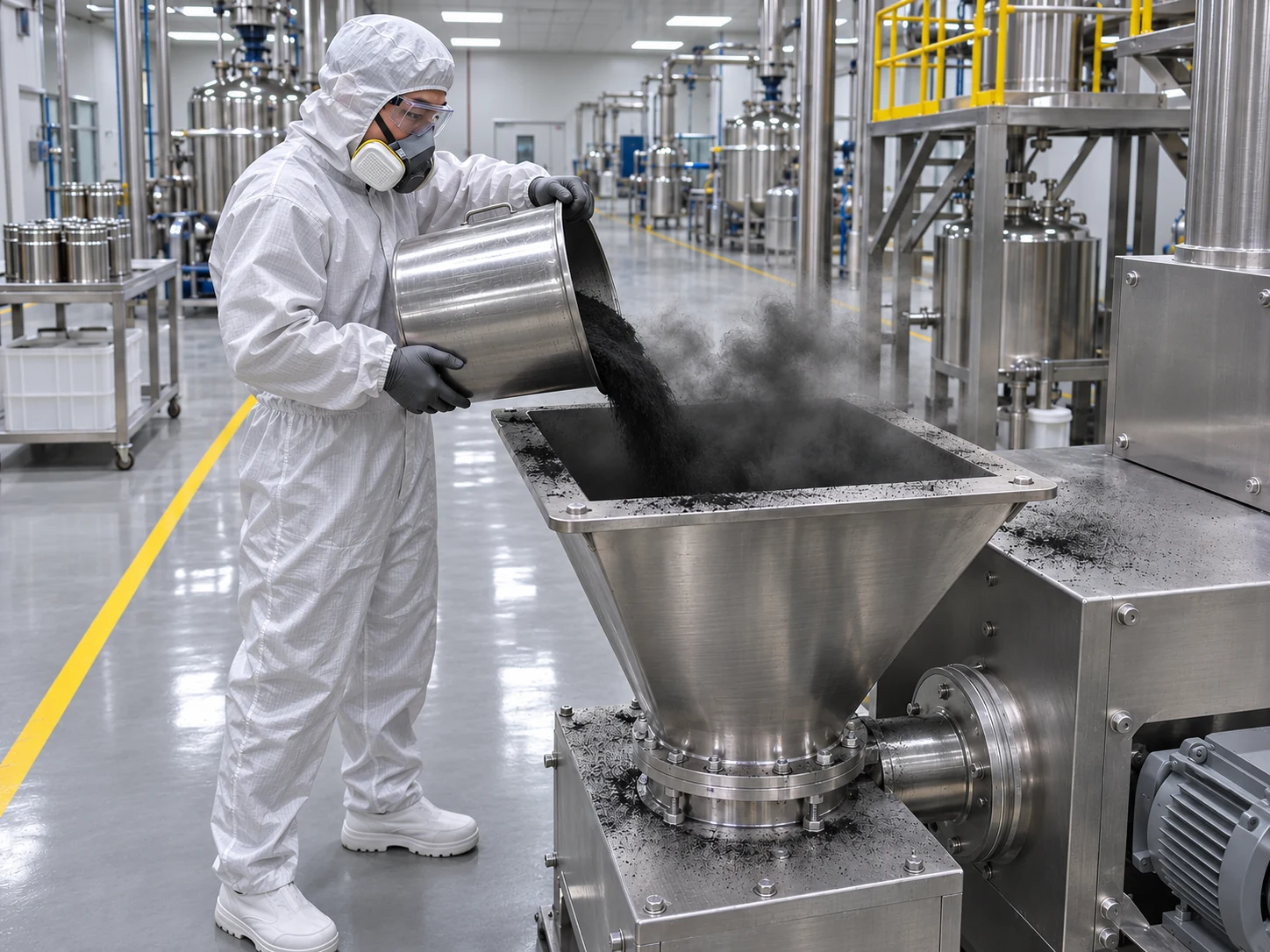
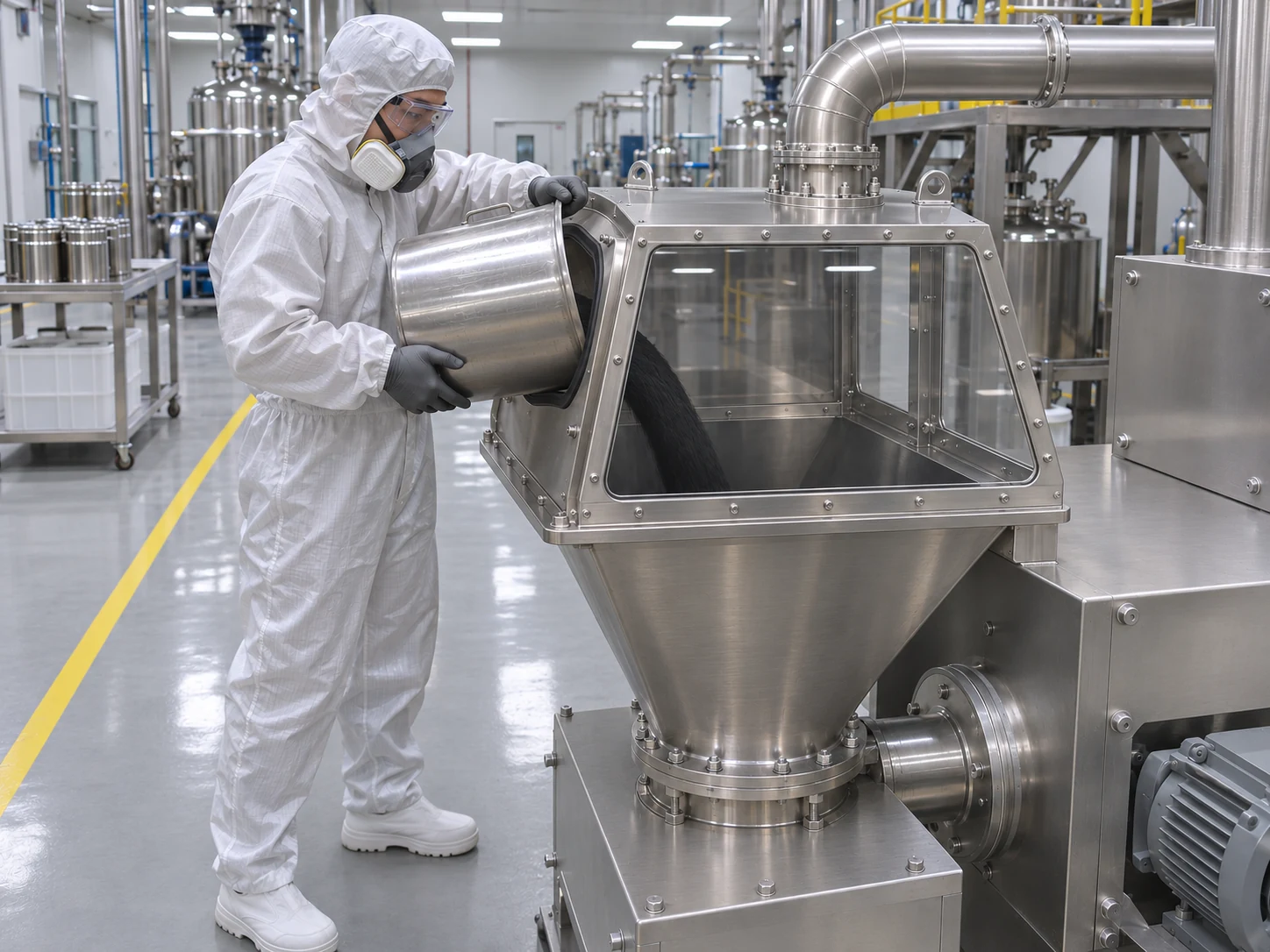
Safety notes
- Graphite, conductive additives and aluminium-foil dust need an explosion assessment; where required, choose venting, isolation and antistatic media.
- Use antistatic filter media and earth the whole unit.
What to tell us for selection
- Material types
- Processes
- Whether dust is recovered
- Number of dust points
- Combustibility data for the dust (if available)
- Clean-room requirements