
TECHNICAL KNOWLEDGE
Choosing Filter Media: Membrane, Flame-Retardant and Antistatic Options
A membrane keeps dust on the surface so it cleans off easily; flame-retardant media resists ignition by sparks; antistatic media drains static charge. Combine them to suit the dust, temperature, sparks and combustibility.
Request a Technical Assessment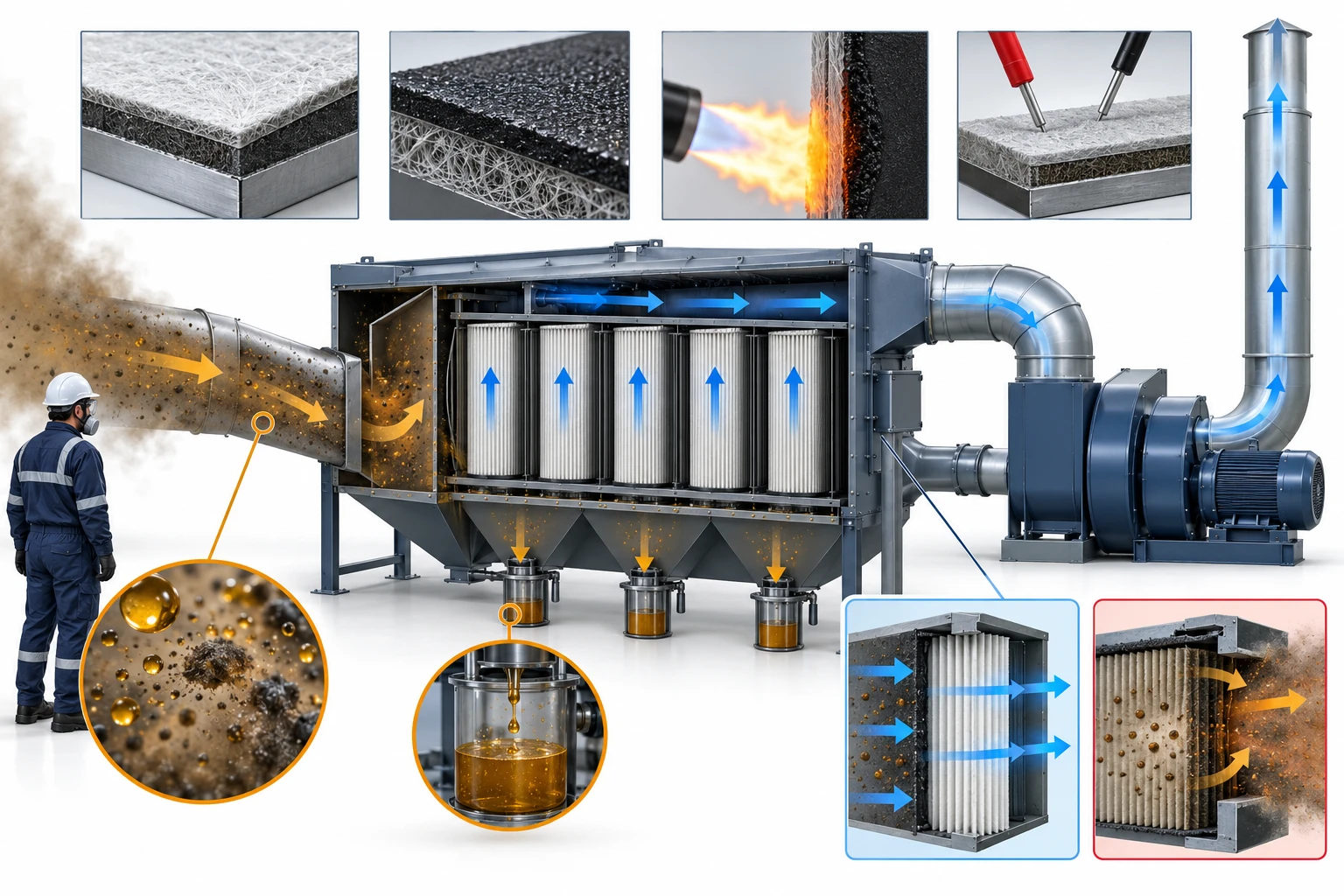
Common media
| Duty | Recommended media |
|---|---|
| Welding and laser fume (fine particles) | Nano-membrane or PTFE-membrane cartridges |
| General dry dust | Polyester-membrane cartridges or bags |
| Combustible or static-prone dust | Antistatic media |
| Heavy sparks from cutting or grinding | Flame-retardant media, with a spark arrestor |
| Hot fume | High-temperature felts (e.g. FMS), after checking inlet temperature |
| Traces of oil or moisture | Membrane media, and find the source of oil or water |
| Recirculation or strict final stage | H13, H14 HEPA |
Nano-membrane and polyester membrane
Changing the media changes filter area and airflow. SCU-4, with four Φ325×1000 cartridges, has 120 m² with nano-membrane and 60 m² with polyester membrane. Choose nano-membrane for fine welding and laser fume; polyester membrane suits general dry dust.
Points to watch
- Flame-retardant media is not explosion protection; combustible dust also needs venting and earthing.
- Antistatic media only works with the unit earthed.
- When changing brand or size, check dimensions, seals and media; the same diameter does not guarantee a fit.