
INDUSTRY APPLICATION
Electronics, Electrical & Semiconductors
Circuit boards, components and electrical equipment: dust volumes are small, but particles are fine and requirements are high.
Send your duty, get a proposal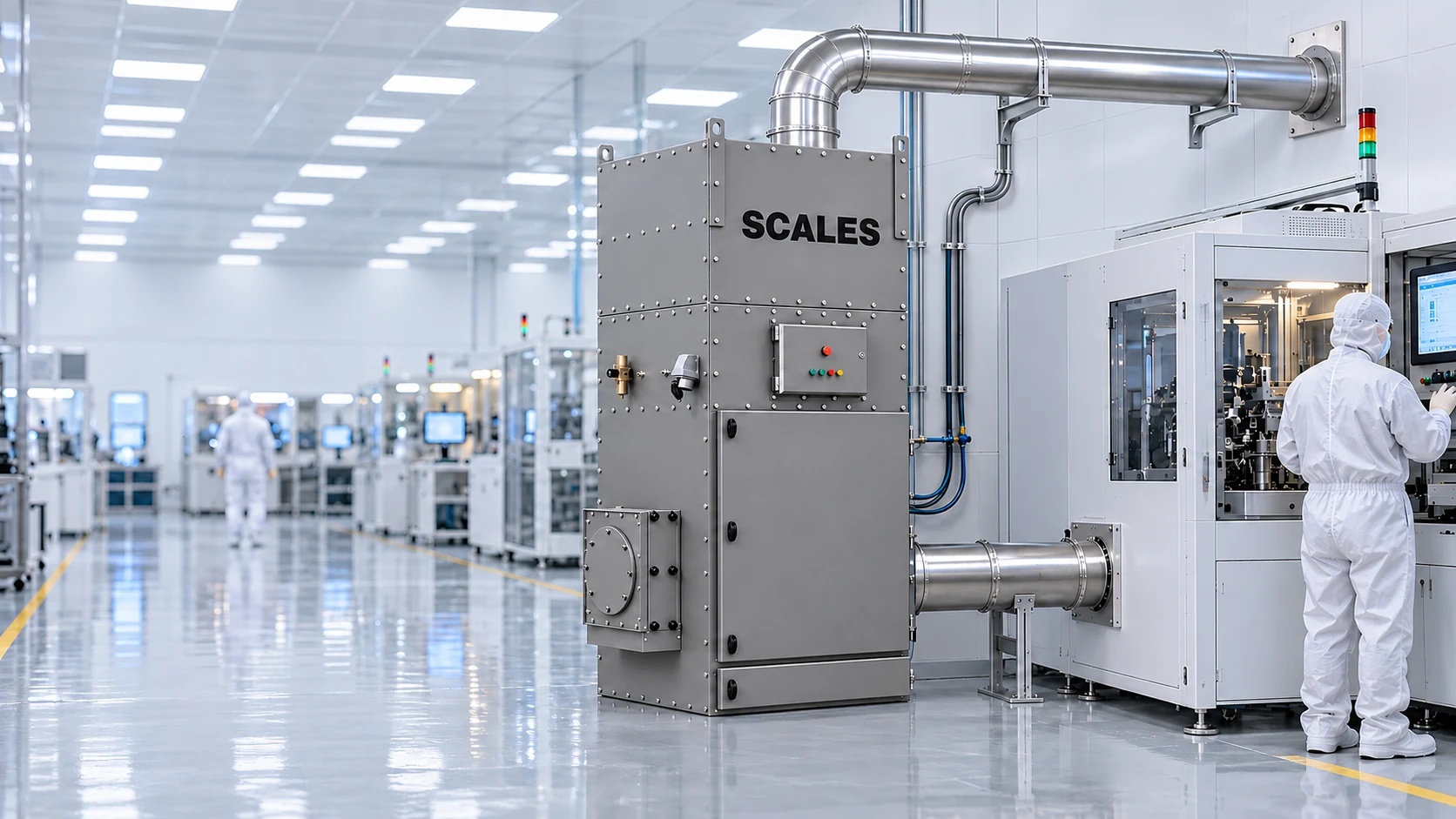
Industry overview
This sector covers printed circuit boards (PCBs), electronic components, connectors, motors, transformers, switchgear, home appliances and semiconductor packaging and test. The main contaminants are fine dust and soldering fume: drilling, routing and depaneling PCBs release glass-fibre and resin dust, laser marking and cutting produce fume, wave, reflow and hand soldering give off flux fume, and motor and transformer plants weld, grind and machine insulating materials.
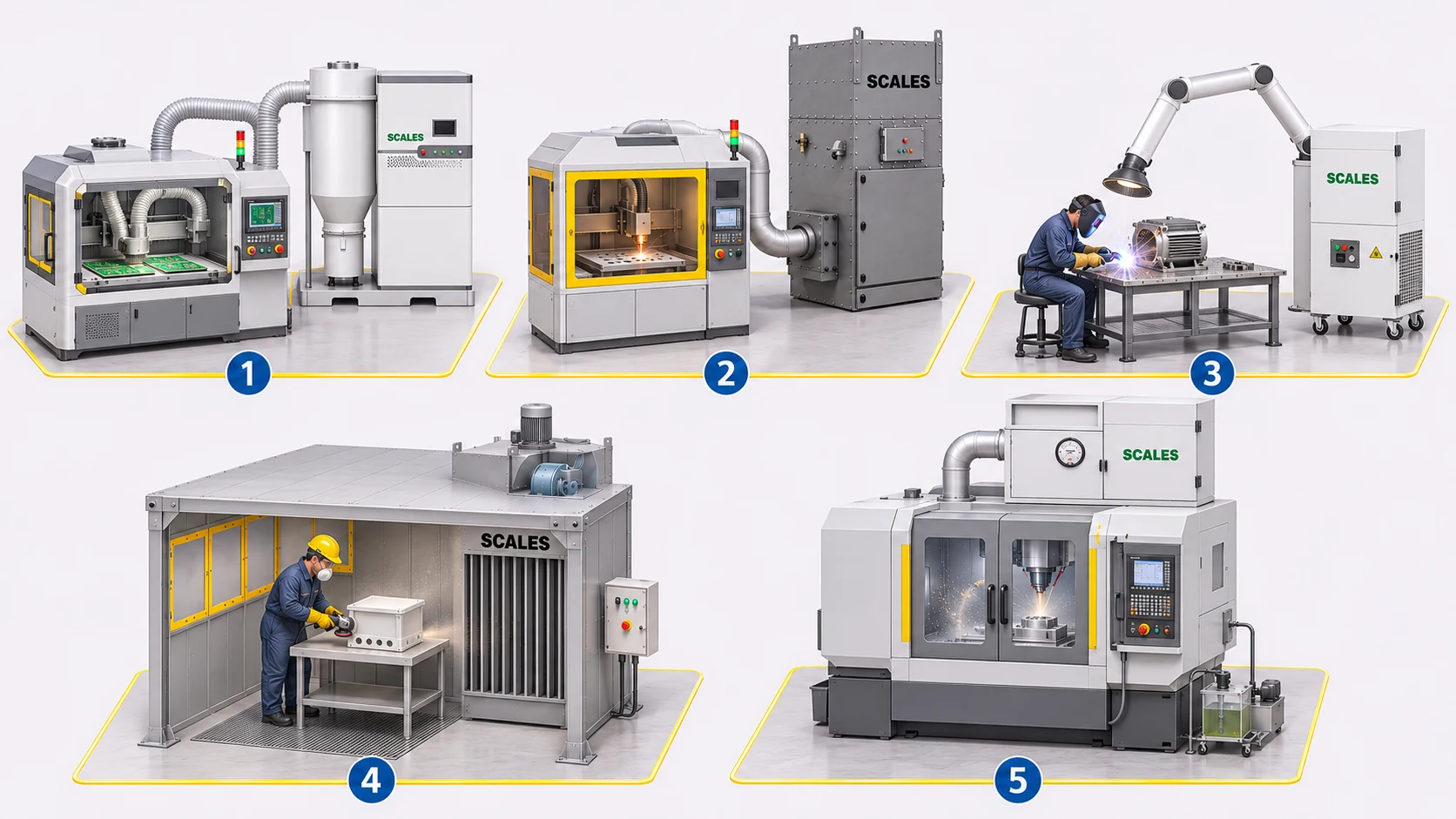
Main processes and contaminants
| Process | What it releases | Challenge | Recommended approach | SCALES series |
|---|---|---|---|---|
| PCB drilling, routing, depaneling | Glass-fibre and resin dust | Fine particles, many points | High-vacuum extraction at each machine | SVB-T, SVB |
| Laser cutting and marking | Fume | Fine particles | Extraction at the machine; cartridge filtration | SCU |
| Welding motors, transformers and switchgear | Welding fume | Extraction arms or integrated units | SCS, SCU | |
| Grinding insulating materials and housings | Dust | Grinding workroom | SCW | |
| Stamping and machining | Oil mist | Mist filter per machine | SPM, SEA |
How SCALES approaches it
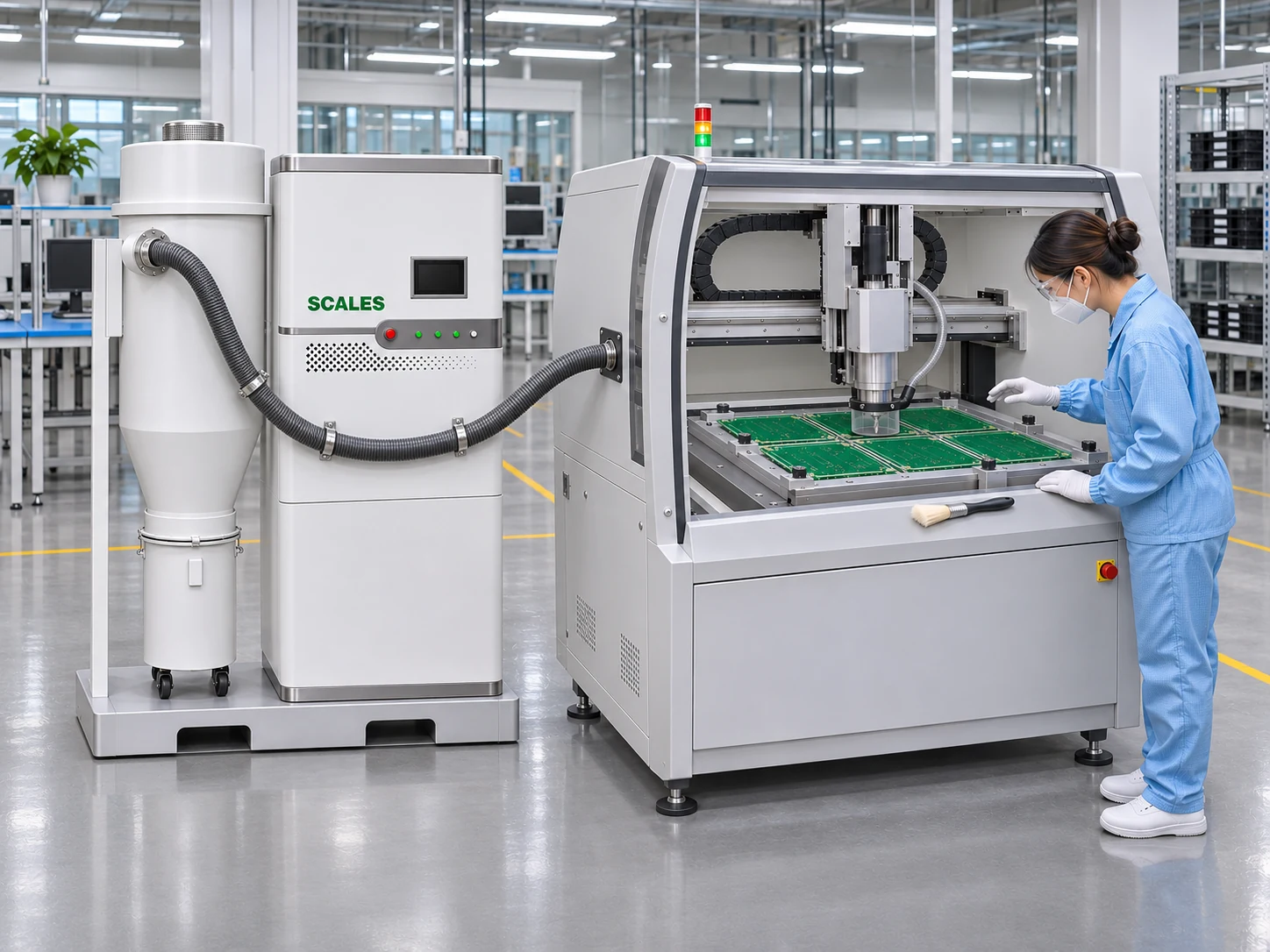
- The SLF and SIB series handle fine dust (0.1–5 µm) in electronics manufacturing. Where dust points are many and spread out, an SVB high-vacuum system reaches each machine with small-bore ducts.
- Demanding stations can add a HEPA final stage (H13 or H14 on SVB-T).
RESULT
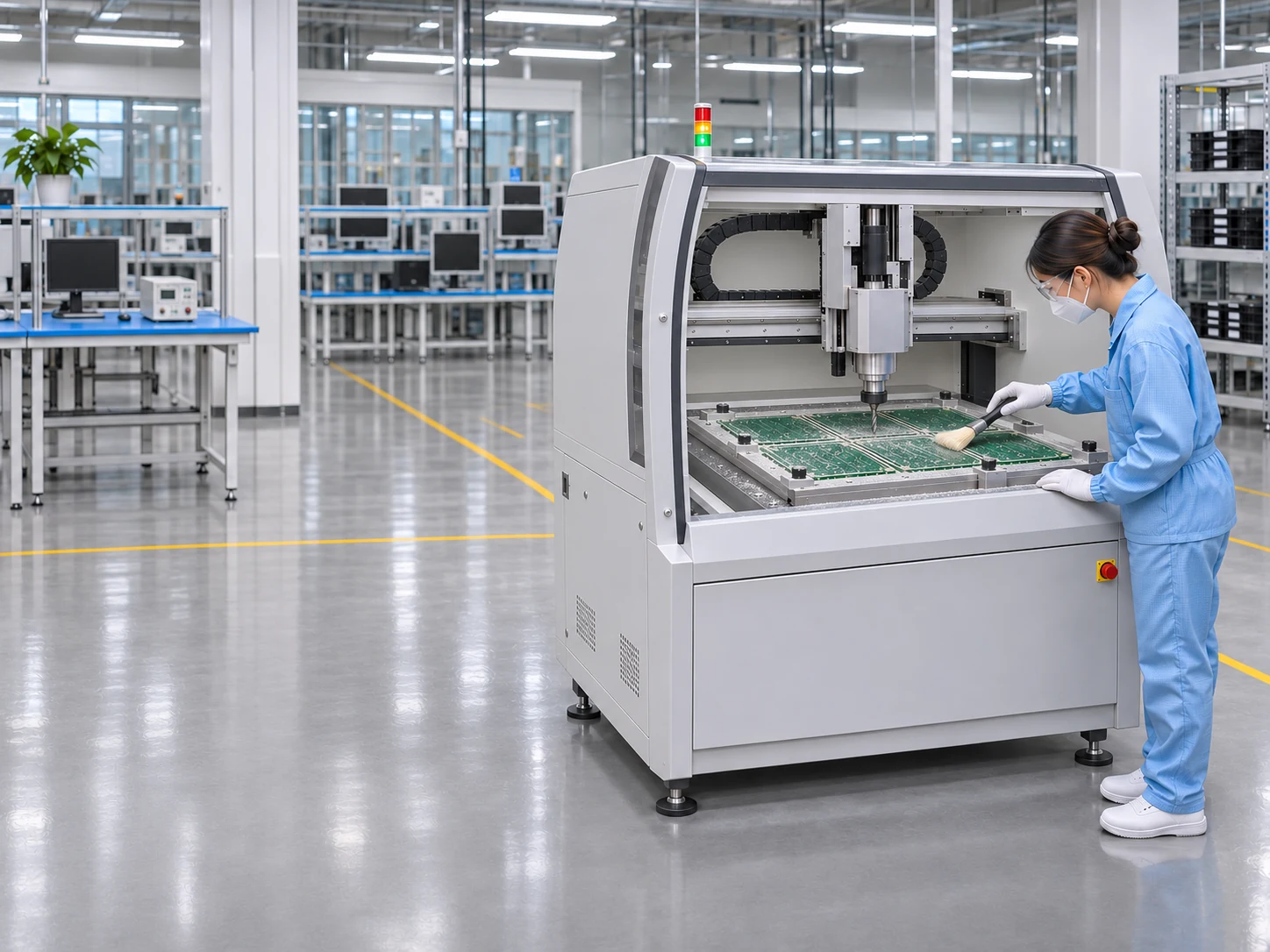
Before and after
Safety notes
- Flux fume contains organic compounds. Cartridges remove only the particles; odour and gaseous components can be treated with an activated-carbon stage.
What to tell us for selection
- Products
- Processes and number of machines
- Machine exhaust port size
- Clean-room class
- Whether air returns to the hall