
TECHNICAL KNOWLEDGE
How High-Vacuum Dust Extraction Differs from Conventional Systems
Conventional extraction uses large hoods and ducts at low suction to clear an area; high-vacuum extraction uses small hoses and high suction to capture dust right at the tool or machine port.
Request a Technical Assessment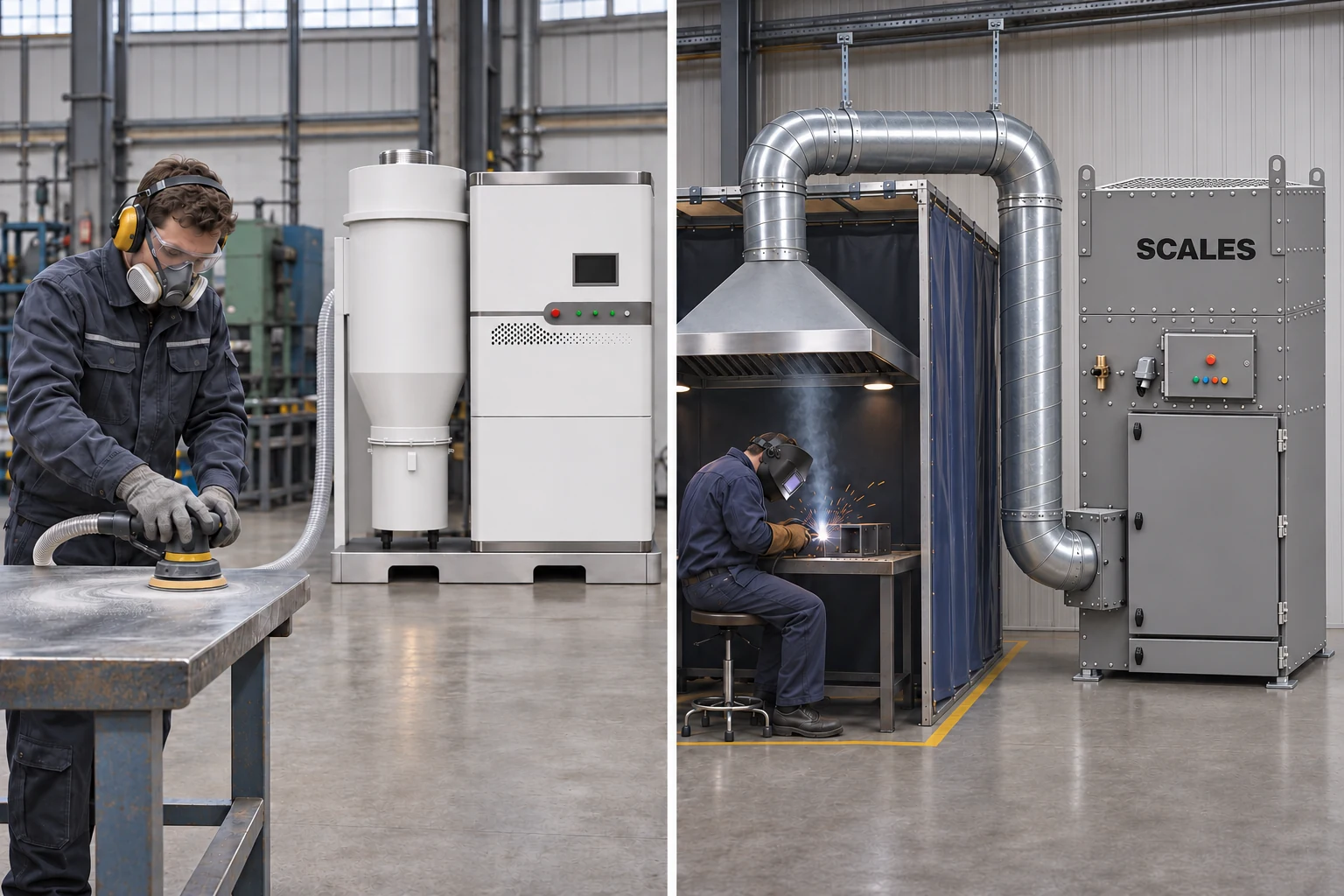
The difference
- Conventional: large hoods, high airflow, low suction; suited to booths, cutting tables and grinding rooms.
- High vacuum: small connections (hoses of a few tens of millimetres), low airflow, high suction that overcomes hose and port resistance; suited to hand grinders, sanders and machine ports.
- Low airflow, small pipes and high transport velocity keep dust from settling in the line.
When to use high vacuum
- Tools with extraction ports: sanders, angle grinders, trimmers.
- Machine ports: PCB depaneling, electrode slitting, CNC carving.
- Fine dust such as composites and carbon fibre that must be captured at source.
- Powder charging and bag spouts where collected material is recovered.
Design points
Each port needs its airflow and suction at the same operating point; longer hoses, kinks and extra fittings reduce suction at the tool. The number of tools used at once sets the main unit size, not the total number of ports.
SCALES SVB is a modular high-vacuum system, 1,500–12,000 m³/h, for many pick-up points; SVB-T is an integrated unit, 500–1,000 m³/h, with optional H13 or H14 final stage and explosion protection.