
INDUSTRY APPLICATION
Chemicals & Powder Materials
Milling, drying, charging and packing: chemical powder plants need clean air, product recovery and explosion protection at the same time.
Send your duty, get a proposal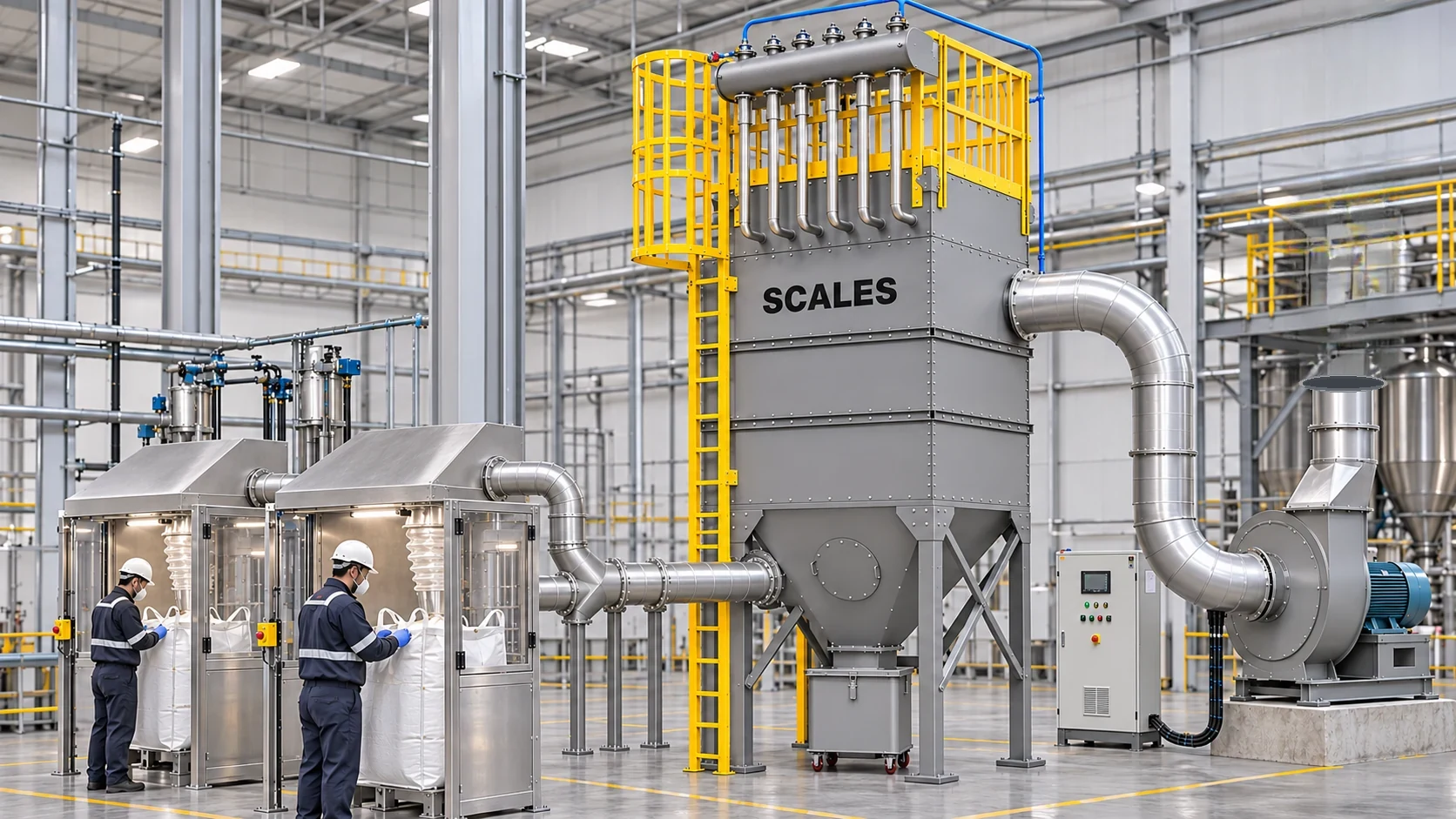
Industry overview
Chemical powders include pigments, dyes, catalysts, additives, plastic powders, agrochemical intermediates, inorganic salts, titanium dioxide, calcium carbonate and many new materials. Dust points are concentrated in milling, drying, mixing, screening, pneumatic conveying, silos and packing.
Many chemical dusts are combustible; some are toxic or corrosive, and some absorb moisture or are sticky. The powder is the product, so collected dust often goes back into the line.
Main processes and contaminants
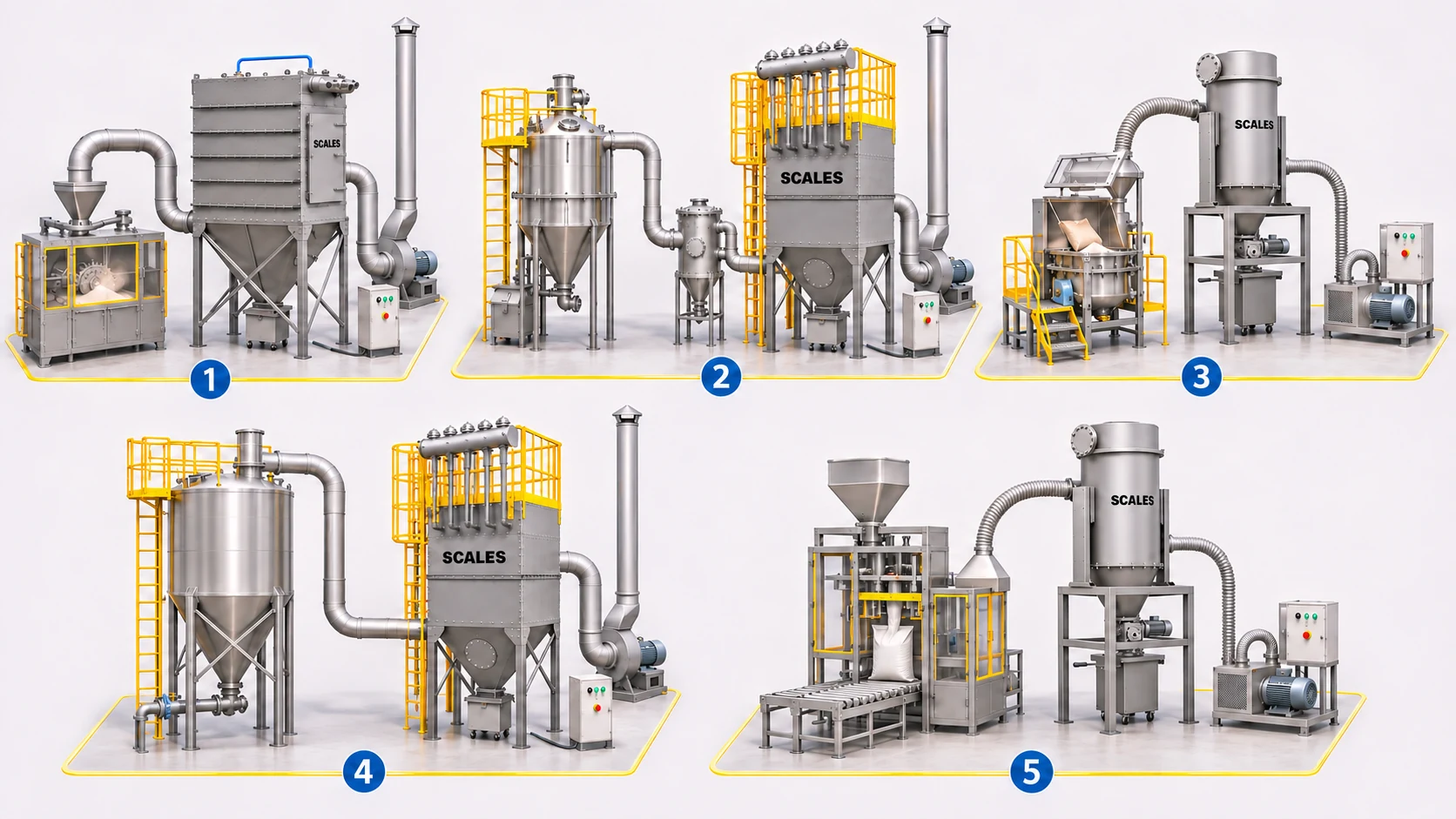
| Process | What it releases | Challenge | Recommended approach | SCALES series |
|---|---|---|---|---|
| Milling and grinding raw materials | Fine dust at high concentration | High concentration, combustible | Bag or cartridge with explosion venting | SMC, SIB |
| Drying (spray, flash, pneumatic) | Dust and moisture | High temperature and humidity | Baghouse; media chosen for temperature and humidity | SIB, SMC |
| Charging and mixing | Dust in bursts | Manual handling | Enclosed extraction at charging stations | SVB, SLF |
| Pneumatic conveying and silos | Dust in conveying exhaust | Must be recovered | Silo-top or end-of-line collectors | SIB, SVF |
| Packing | Dust | Escapes at the bag spout | Local extraction at the spout | SVB, SLF |
How SCALES approaches it
- The SMC flat-bag collector suits milling, drying and packing of chemical raw materials and is available with vent panels.
- SIB and SLF suit medium and coarse dust at high concentration (inlet up to 100 g/m³) and can handle some sticky dusts.
- SVB suits enclosed dust points in conveying, mixing and packing, and product recovery.
- SCALES provides dedicated solutions for damp, sticky, hygroscopic and explosive dusts.
RESULT
Before and after
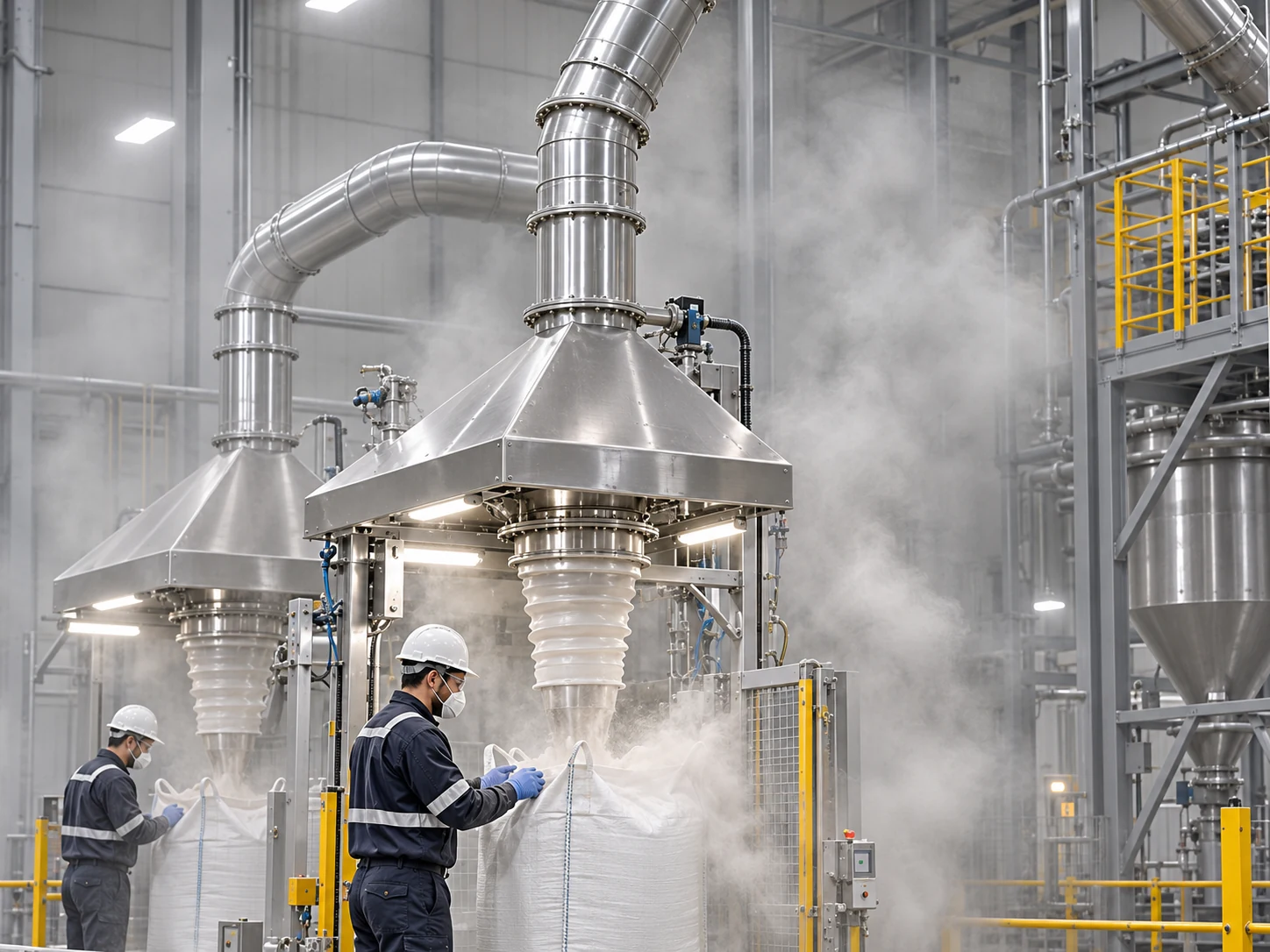
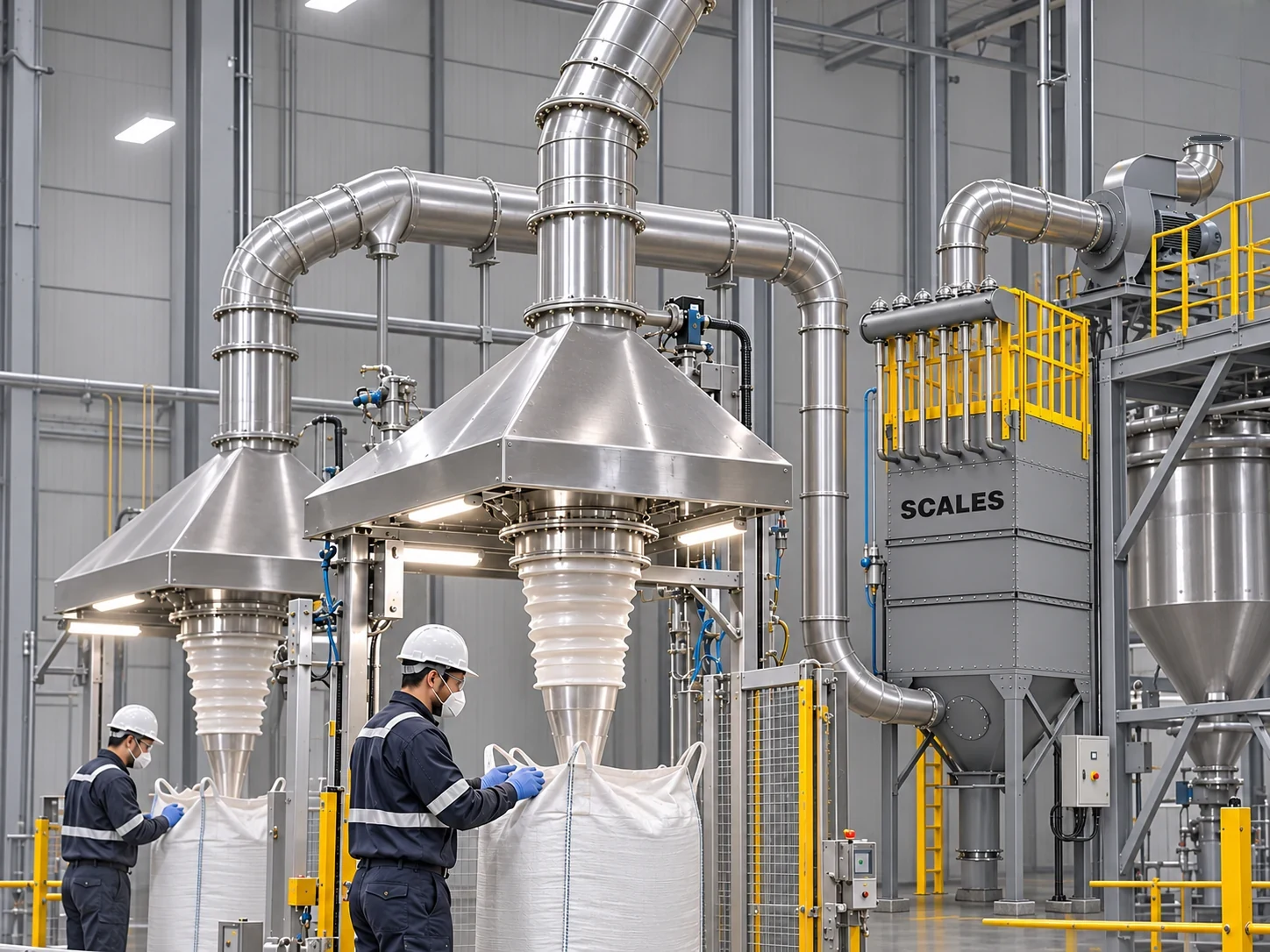
Safety notes
- Test combustible dust for explosibility first (lower explosive limit, minimum ignition energy, Kst and so on), then decide on venting, isolation, suppression and antistatic features.
- For toxic or corrosive dust, housing and media materials are chosen specifically.
What to tell us for selection
- Material names and safety data sheets (SDS)
- Particle size
- Moisture content
- Temperature
- Whether combustible and whether an explosion test report exists
- Whether recovery is needed
- Number of dust points