
BY CONTAMINANT
Moist, Sticky & Fibrous Dust
Moist, oily, sticky or fibrous dust blinds filters and blocks ducts. Plan cleaning, discharge and maintenance before choosing equipment.
Send your process details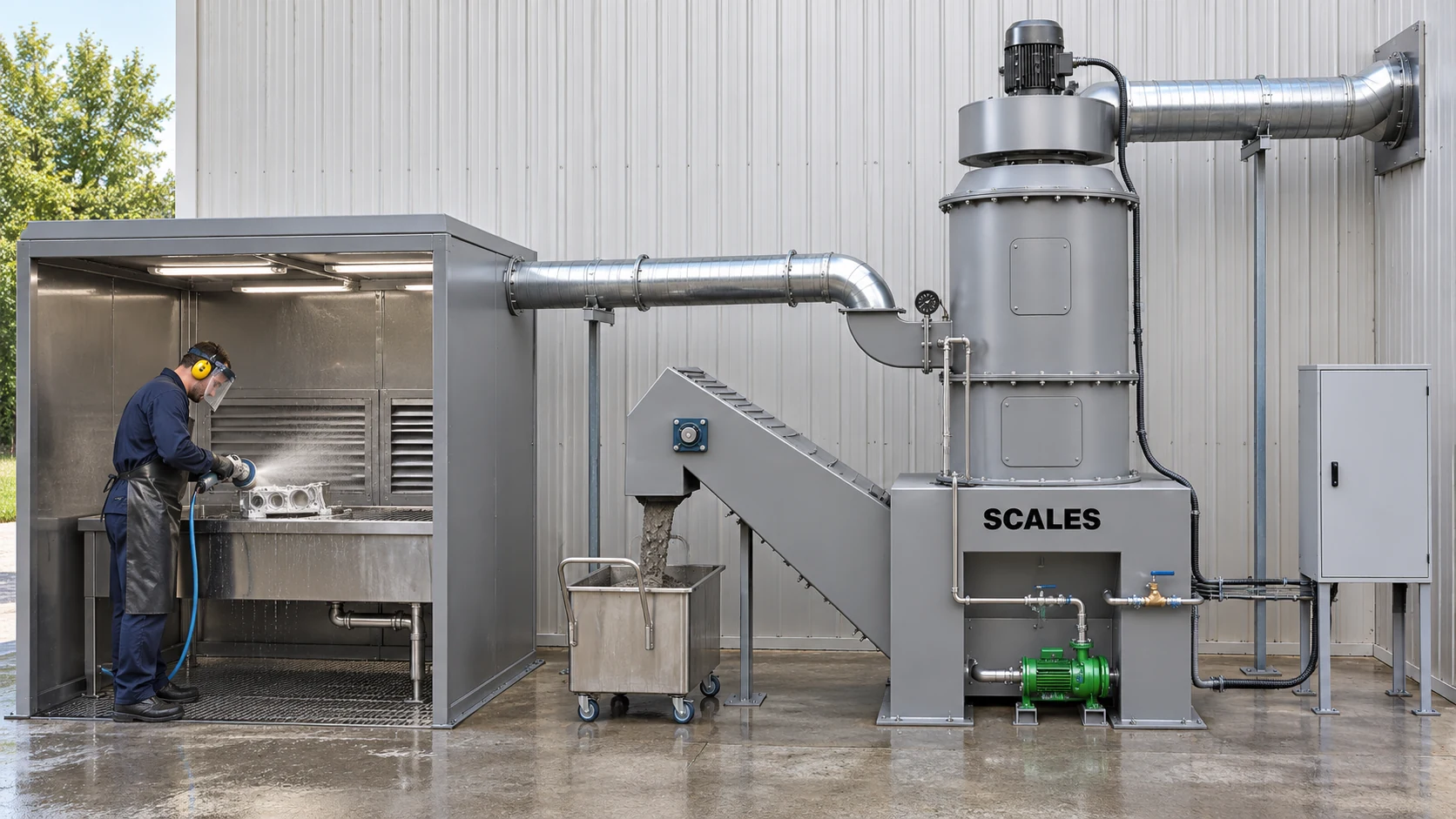
01
Typical cases
- Wet dust from wet grinding
- Oily metal grinding dust
- Sanding dust from resins, adhesives and coatings
- Fibres such as glass, carbon, cotton, hemp and paper
- Hygroscopic powders such as sugar, salt and some chemicals
02
Why it blocks
Moist and sticky dust clings to the media so pulse cleaning cannot dislodge it, and resistance keeps rising; fibres bridge and ball up in bends, duct floors and on the media. The cause is usually a mismatch between dust and equipment, not too little filter area.
03
How to choose
| Approach | Suits | Key points |
|---|---|---|
| Dry cartridges or bags with membrane media | Slightly moist or lightly oily dust | Smooth membrane surfaces clean easily; pre-coat the media where needed |
| SVT venturi wet scrubber | Wet or very sticky dust, and flammable metal dust such as aluminium and magnesium | Manage recirculating water and sludge, and drain sludge regularly |
| Pre-separation | Fibres and large particles | Remove the coarse fraction first to protect the filter |
| Duct design | All cases | Keep velocity high enough to avoid settling, avoid tight bends, add clean-out ports |
04
Maintenance
- Watch the pressure drop; a steady rise means the media may be blinding.
- Open access doors only after shutdown.
- On wet units, drain sludge, top up water and check the level regularly.
05
Tell us when you enquire
- Material and dust condition: moisture, oil, fibre length
- How existing equipment blocks and how it is cleaned
- Operating hours and production cycle
- Site photos
NEXT STEP