
INDUSTRY APPLICATION
Pharmaceuticals
Dust control for APIs and solid dosage forms must protect the environment and the workforce, and prevent cross-contamination.
Send your duty, get a proposal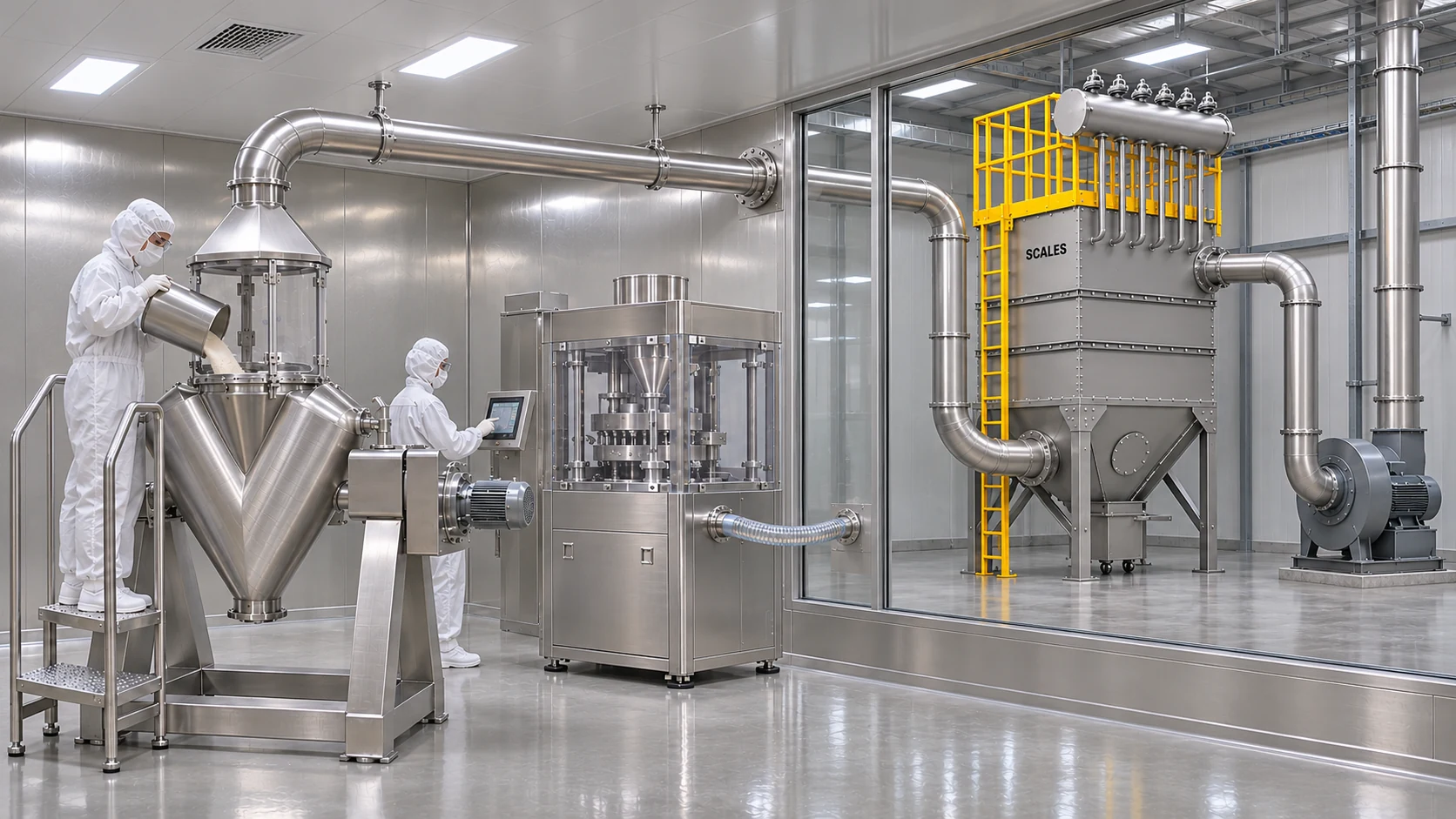
Industry overview
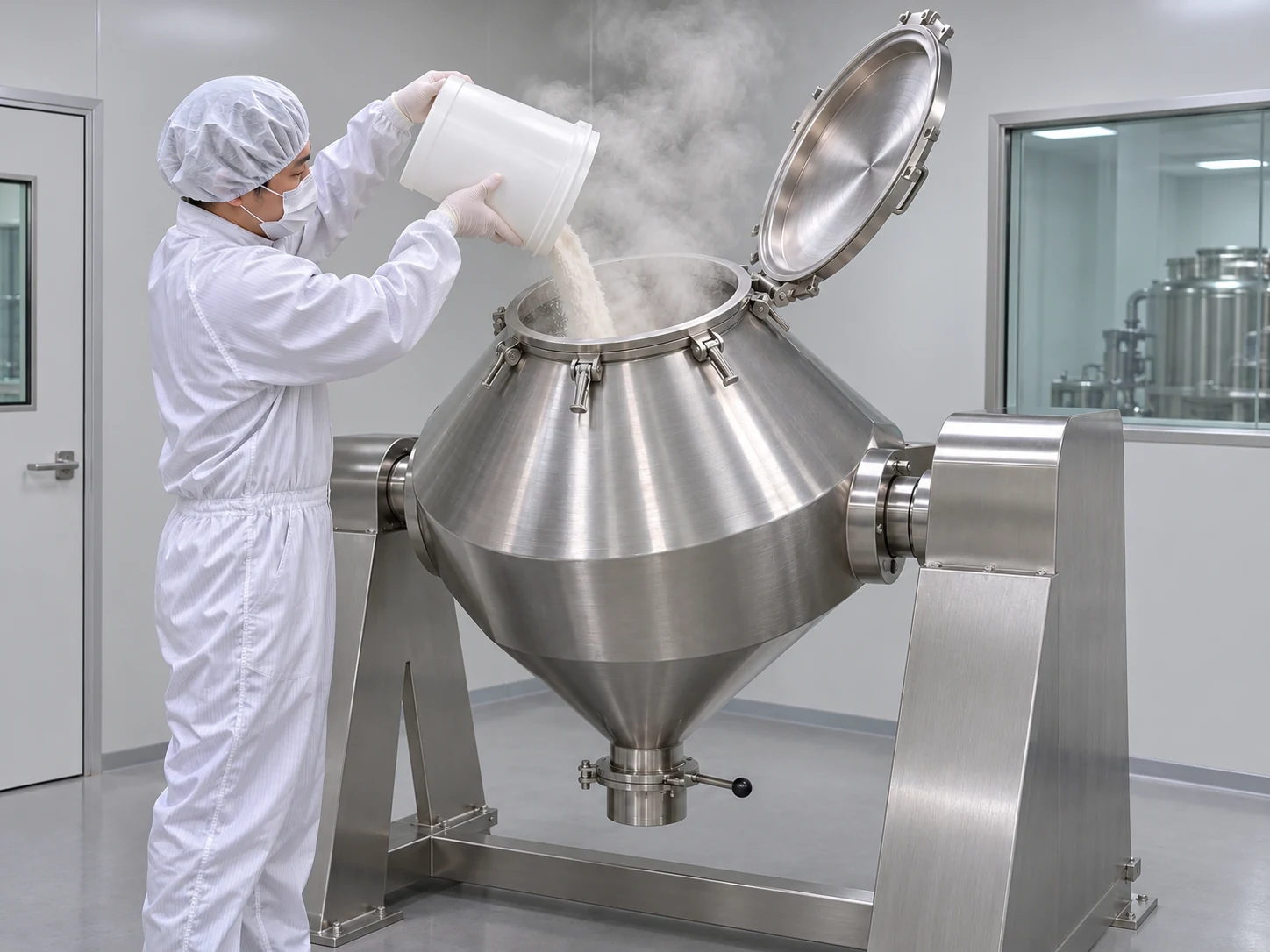
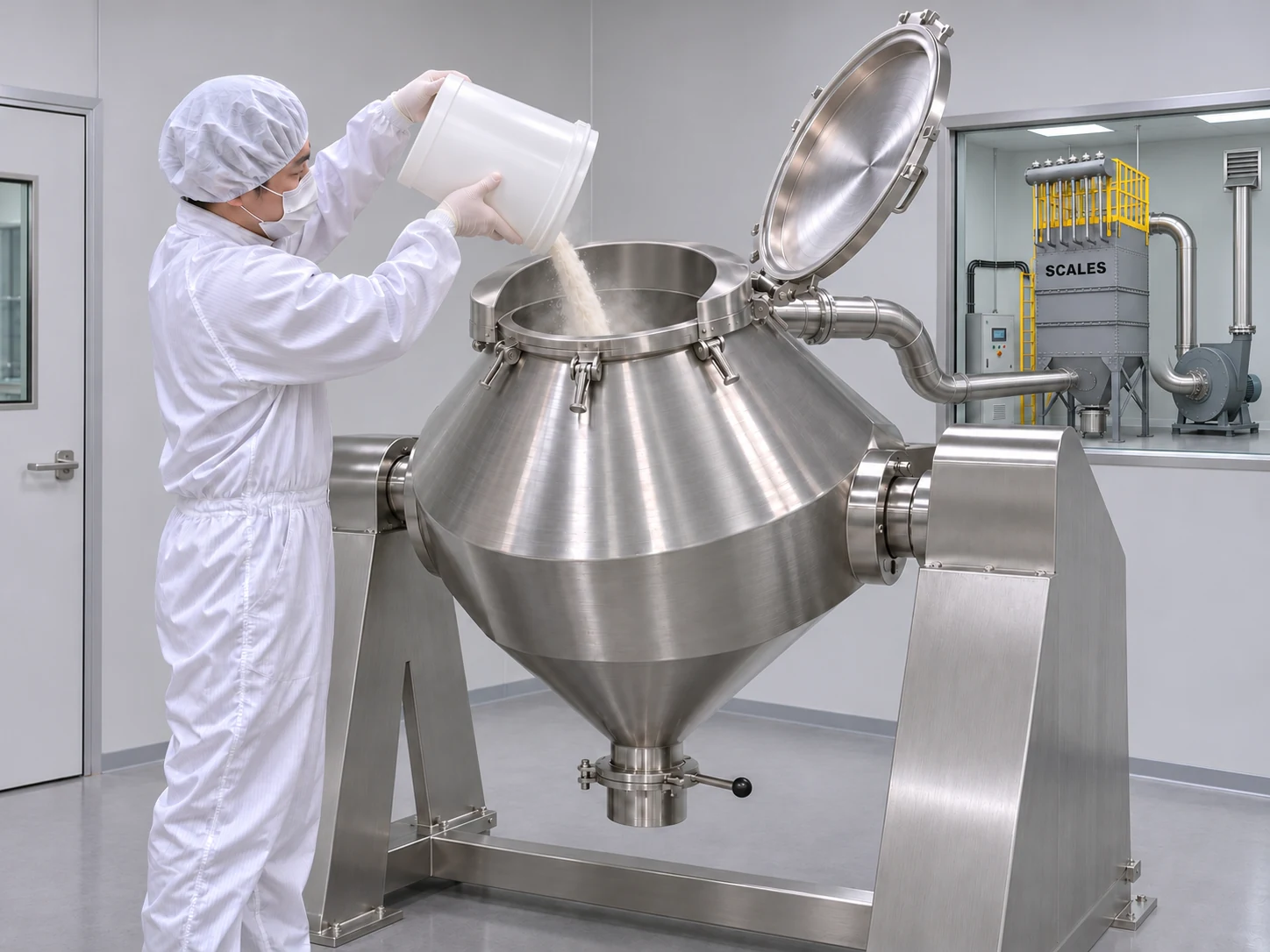
Pharmaceutical dust comes mainly from milling, drying and sieving APIs, and from weighing, blending, granulating, tableting, coating and capsule filling in solid dosage forms (tablets, capsules, granules). Drug dust is biologically active, some of it highly potent, with serious effects on operators; cross-contamination between products must also be prevented.
Main processes and contaminants
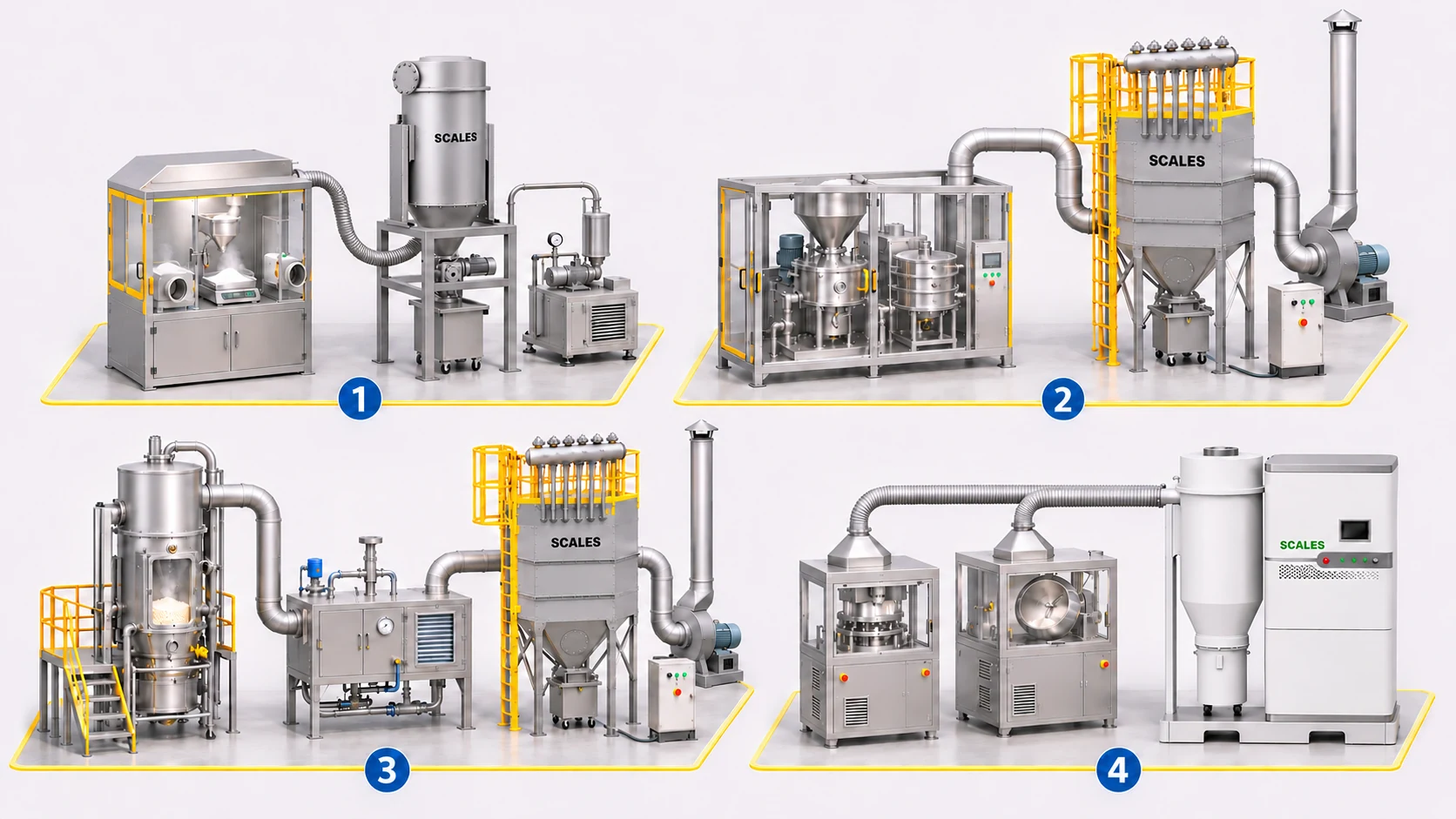
| Process | What it releases | Challenge | Recommended approach | SCALES series |
|---|---|---|---|---|
| Weighing and dispensing | Drug powder | Operators work close by | Extraction at weighing booths or charging stations | SVB, SLF |
| Milling, sieving, blending | Fine drug powder | High concentration, combustible | Cartridge or bag, explosion protected | SIB, SLF, SVF |
| Granulating and drying (fluid bed) | Dust and moisture | Humidity | Media chosen for temperature and humidity | SIB |
| Tableting, capsule filling, coating | Fine dust | Many points | Extraction at each machine | SVB-T, SVB |
How SCALES approaches it
- The SLF and SIB series suit fine pharmaceutical dust, and SMC can also handle it.
- High-vacuum systems reach each machine with small-bore ducts, which suits halls full of tablet presses and capsule fillers.
- Where finer filtration is needed, add an H13 or H14 HEPA final stage.
RESULT
Before and after
Safety notes
- Many drug powders are combustible and are assessed as combustible dust.
- For highly potent drugs, plan for contained filter changes so operators do not come into contact with the dust.
What to tell us for selection
- Products and dosage forms
- Processes and number of machines
- Combustibility and potency data for the powders
- Clean-room class
- Whether contained filter changes are required