
INDUSTRY APPLICATION
Woodworking & Furniture
Panel sizing, carving and sanding: wood dust is high in volume, fine and combustible, the three things that matter most in a furniture plant.
Send your duty, get a proposal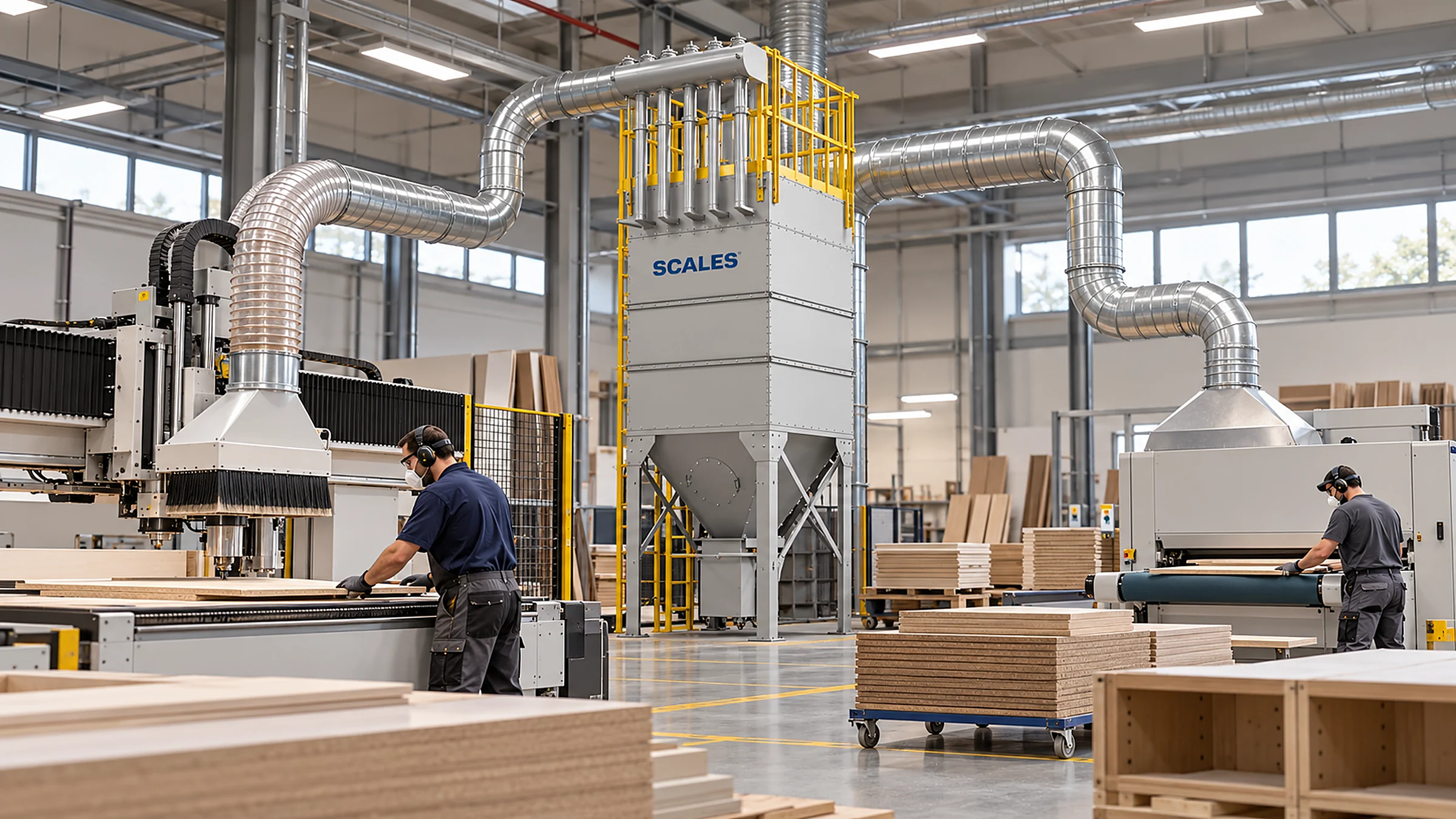
Industry overview
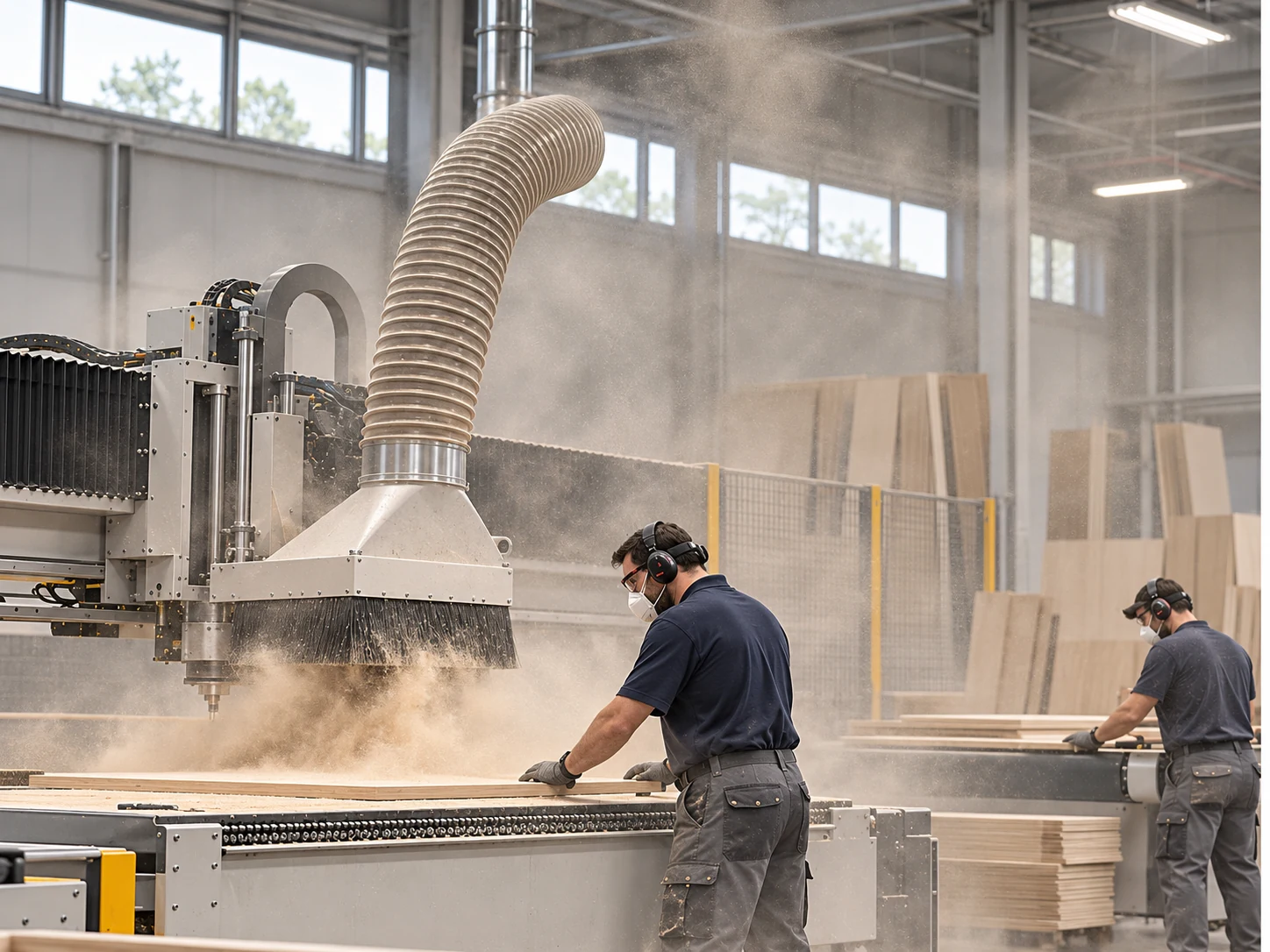
Woodworking and furniture covers wood-based panels, solid-wood and panel furniture, custom cabinetry, doors and windows, and wooden products. The main processes are panel sizing, edge banding, drilling, carving, profiling, sanding and pre-finish sanding. CNC nesting machines and sanders produce the most dust; sanding dust is fine and stays airborne for a long time. Wood dust is combustible, and hardwood dust is harmful to health.
Main processes and contaminants
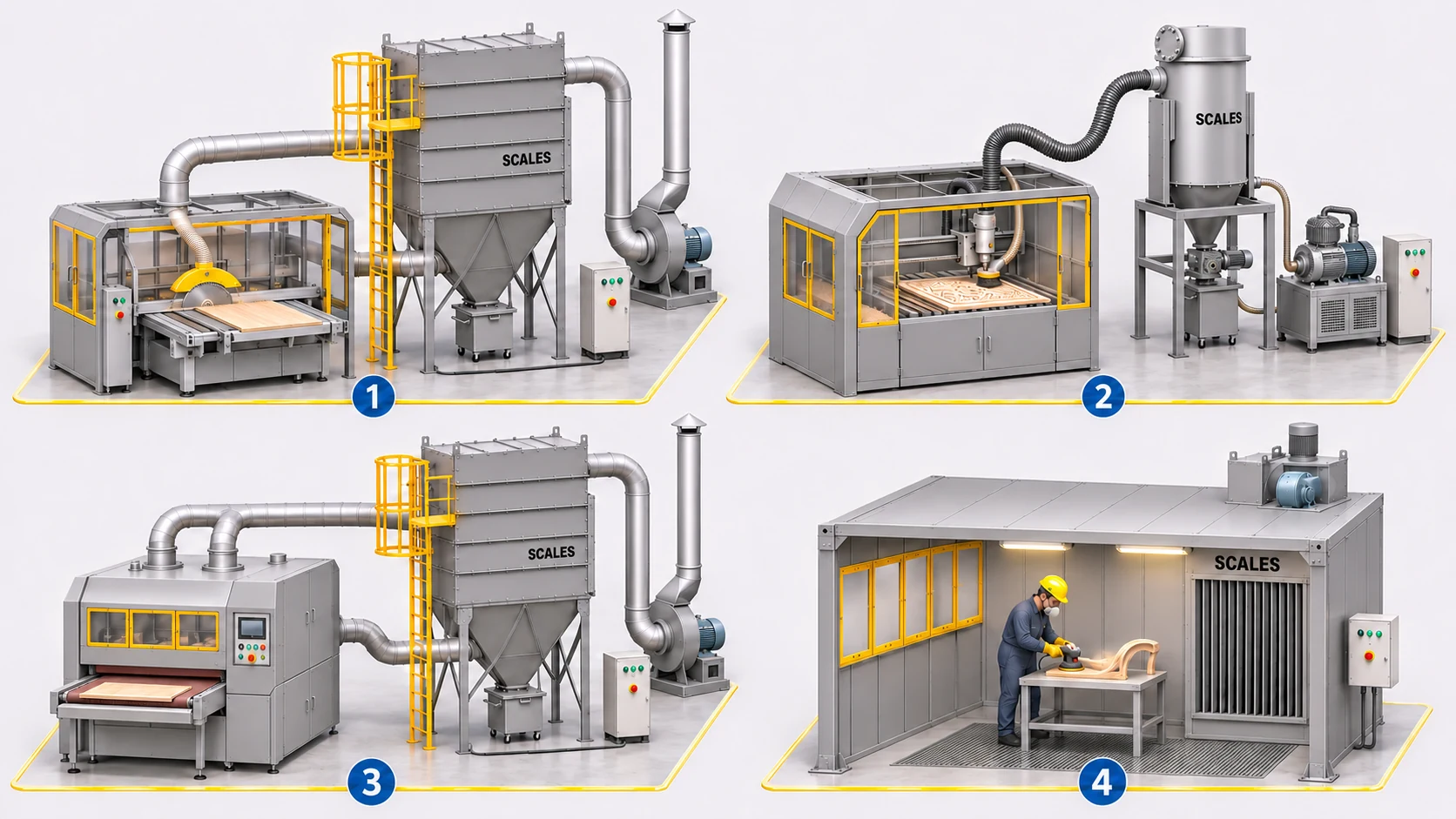
| Process | What it releases | Challenge | Recommended approach | SCALES series |
|---|---|---|---|---|
| Panel sizing and sawing | Chips and wood dust | High volume | Extraction at each machine; baghouse | SMC, SIB |
| CNC carving and profiling | Wood dust | Many points | High vacuum | SVB |
| Sanding | Fine wood dust | Fine particles, combustible | Extraction at the sander; bag or cartridge | SMC, SIB, SLF |
| Hand sanding | Fine dust | Grinding workroom | SCW |
How SCALES approaches it
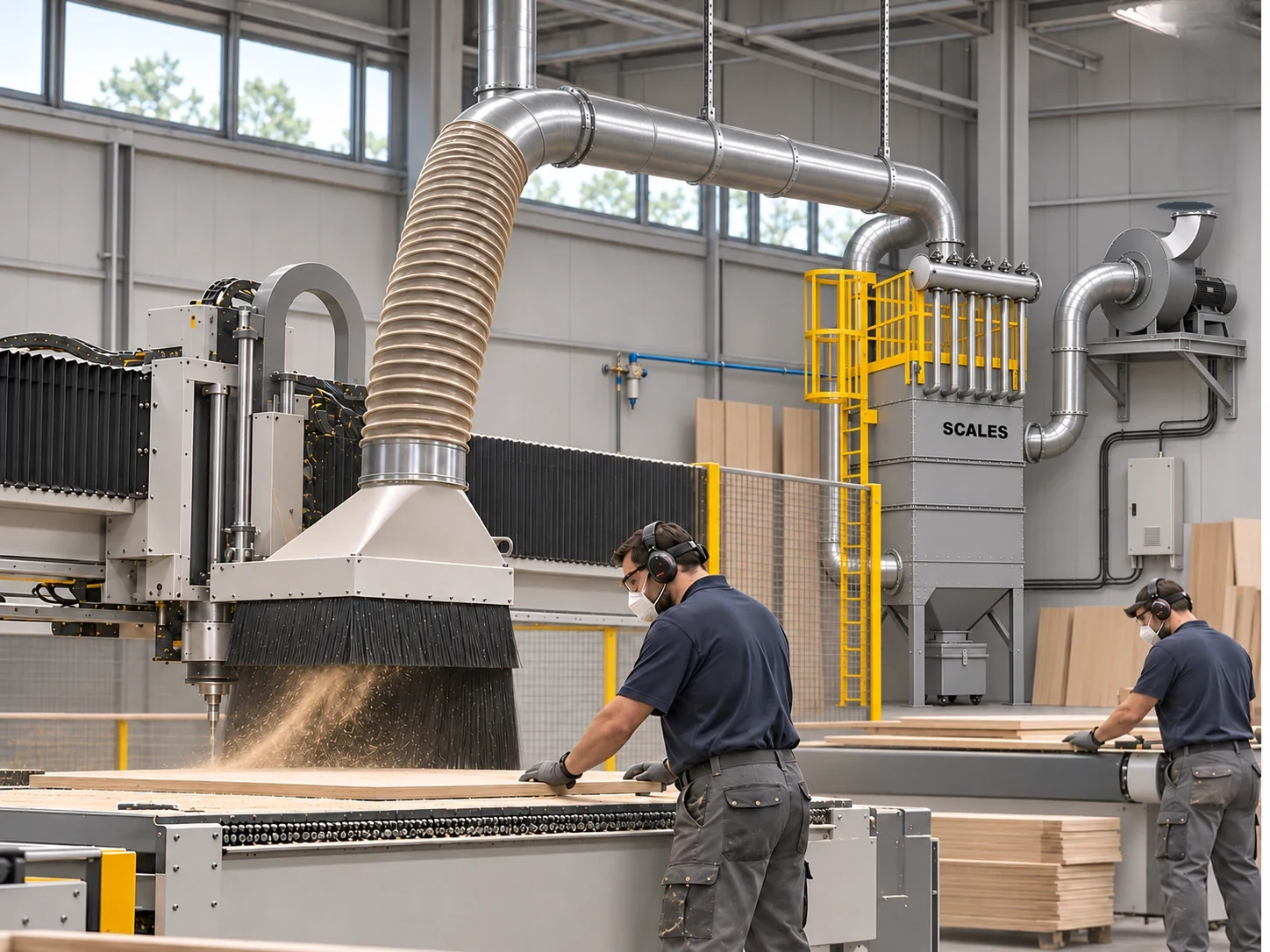
- Woodcarving, sanding and panel sizing suit the SVB high-vacuum collector; wood cutting, grinding and sanding suit SMC; woodworking and furniture sanding can also use the SCW workroom.
- Where a shop has many machines, the main duct is sized for all machines running together and for the pressure loss to the farthest one.
RESULT
Before and after
Safety notes
- Wood dust is combustible. Collectors need explosion venting, ducts and equipment must be earthed, and sparks must be kept out of the collector.
What to tell us for selection
- Machine list and exhaust port sizes
- Machines running together
- Wood species
- Shop floor plan