
SERVICE SUPPORT
Maintenance & Service
Routine maintenance and preventive care keep equipment stable and reduce energy and consumable costs. Service requests are handled through one channel and followed through to resolution.
Submit a service request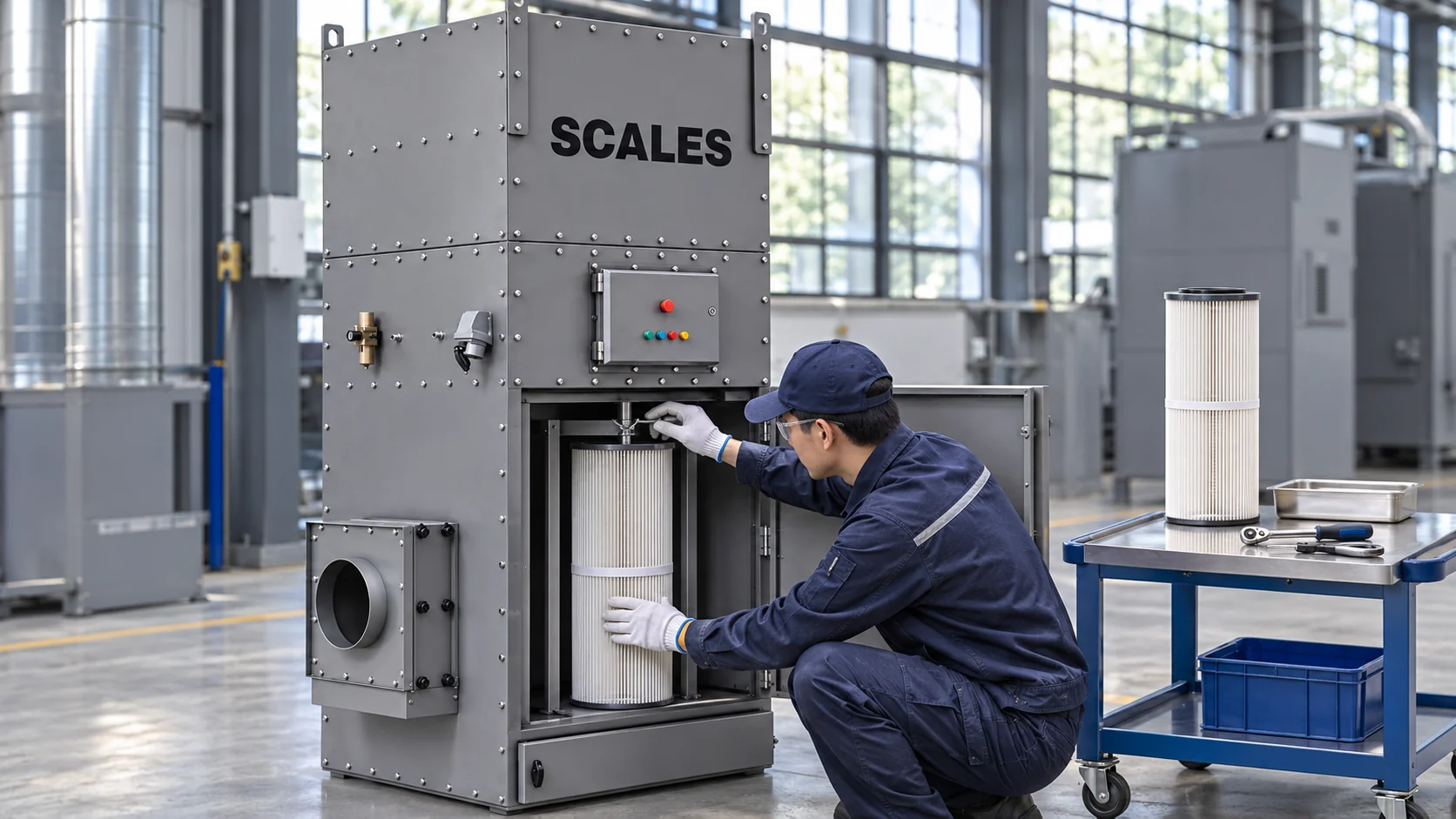
01
Daily checks (every shift or day)
| Check | How | If abnormal |
|---|---|---|
| Pressure drop | Read the gauge and compare with normal | Rising steadily: poor cleaning or blinded media. Sudden fall: damaged filter or air leak |
| Cleaning | Listen for pulse valves; check air pressure | Silent or weak: check solenoids and air supply |
| Outlet | Look for visible dust at the outlet | Dust visible: check the filters at once |
| Dust container or hopper | Is it full? | Empty it; do not store dust |
| Hoods and stations | Is fume being captured? | If not: check dampers, blocked ducts, fan |
| Oil drain on mist units | Is the drain clear? | Oil building up: clear the drain line |
| Wet units | Water level, quality, sludge | Top up and remove sludge |
02
Preventive maintenance schedule
Adjust to actual operating conditions. When the process changes (material, temperature, shifts, stations running together), adjust the intervals too.
| Interval | Tasks |
|---|---|
| Weekly | Empty dust containers; drain compressed-air water; check door seals; check pre-filters on mist units |
| Monthly | Check pulse valves and diaphragms; fan belts, bearing temperature and vibration; dust in ducts; remove sludge from wet units |
| Quarterly | Check filters and gaskets; control panel and wiring; wash electrostatic cells (adjust to load) |
| Annually | Full check of housing, hopper and ducts for wear and corrosion; measure airflow and pressure drop against commissioning records; update maintenance records |
03
Common faults and fixes
| Symptom | Likely cause | Action |
|---|---|---|
| Pressure drop rising, airflow falling | Poor cleaning; media blinded by oil or water; very fine dust | Check air supply and pulse valves; find the oil or water source; replace filters if needed |
| Dust at the outlet | Damaged filter; cartridge not sealed | Stop, replace damaged filters, refit seals |
| Fume not captured at the station | Wrong damper position; dust in ducts; fan rotation or loose belt | Reset dampers, clean ducts, check the fan |
| Pulse valves not firing | Solenoid or controller fault; low air pressure | Check solenoids, controller and air supply |
| Hopper blocked or bridging | Damp or sticky dust | Check temperature and humidity; add vibration or improve discharge |
| Electrostatic efficiency falling | Oil build-up on cells; unstable high voltage | Wash the cells; check the HV supply |
| Oil leaking from a mist unit | Blocked drain; aged seals | Clear the drain, replace seals |
04
Repair service
When reporting a fault, send the model and a nameplate photo; photos or video of the problem; when and how often it happens; pressure-drop and current readings; recent maintenance records; and any process changes.
- Remote support
- Send photos, video and readings; an engineer diagnoses remotely and guides the fix.
- On-site repair
- If it cannot be solved remotely, an engineer comes to site.
- Annual inspection
- A full yearly inspection with a report and recommendations.
- Service plans
- A plan covering scheduled checks, filter changes and spares, sized to your equipment and production.
NEXT STEP