
TECHNICAL KNOWLEDGE
What Differential Pressure Readings Tell You
The differential-pressure gauge shows the pressure difference across the filters, which reflects media resistance. A slow rise means the media is loading or cleaning is weak; a sudden drop may mean a damaged filter or a leak.
Request a Technical Assessment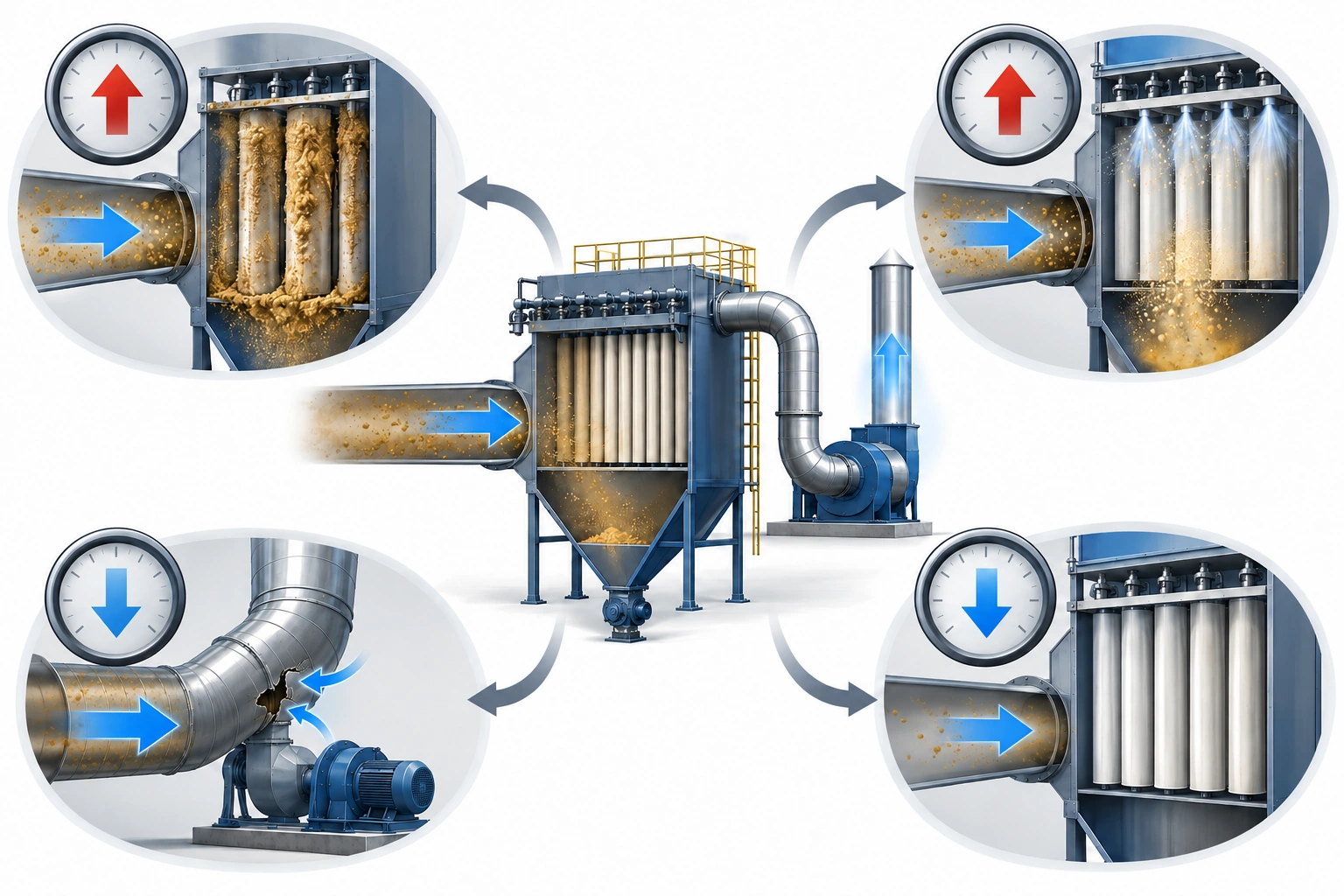
How to read it
- Check the gauge is connected across the filters, with high and low lines the right way round and not blocked.
- Both sides being negative is normal in a suction system: −600 Pa upstream and −1,500 Pa downstream give 900 Pa.
- Record pressure drop in normal production at commissioning as your baseline. SCALES SCU starts at 200–260 Pa.
Watch the trend, not just the number
| Reading | Likely cause | First step |
|---|---|---|
| Slowly rising | Media loading, weak cleaning | Check air pressure and pulse valves |
| Stays high after cleaning | Media blinded by oil, water or sticky dust | Find the oil or water source; replace filters if needed |
| Sudden drop | Damaged filter, poor seal, leak | Check the outlet for dust; stop and inspect |
| Low and unchanging | Blocked or wrong pressure lines | Check the lines and gauge |
Keeping records
Record pressure drop daily at the same time and in the same production state, together with fan current and cleaning. If it rises from 700 Pa to 1,100 Pa, first check whether output or stations changed that day before deciding the filters are clogging.