
INDUSTRY APPLICATION
Food & Beverage
Flour, sugar, starch, milk powder and seasonings: food dust looks harmless, yet it is a common source of combustible dust.
Send your duty, get a proposal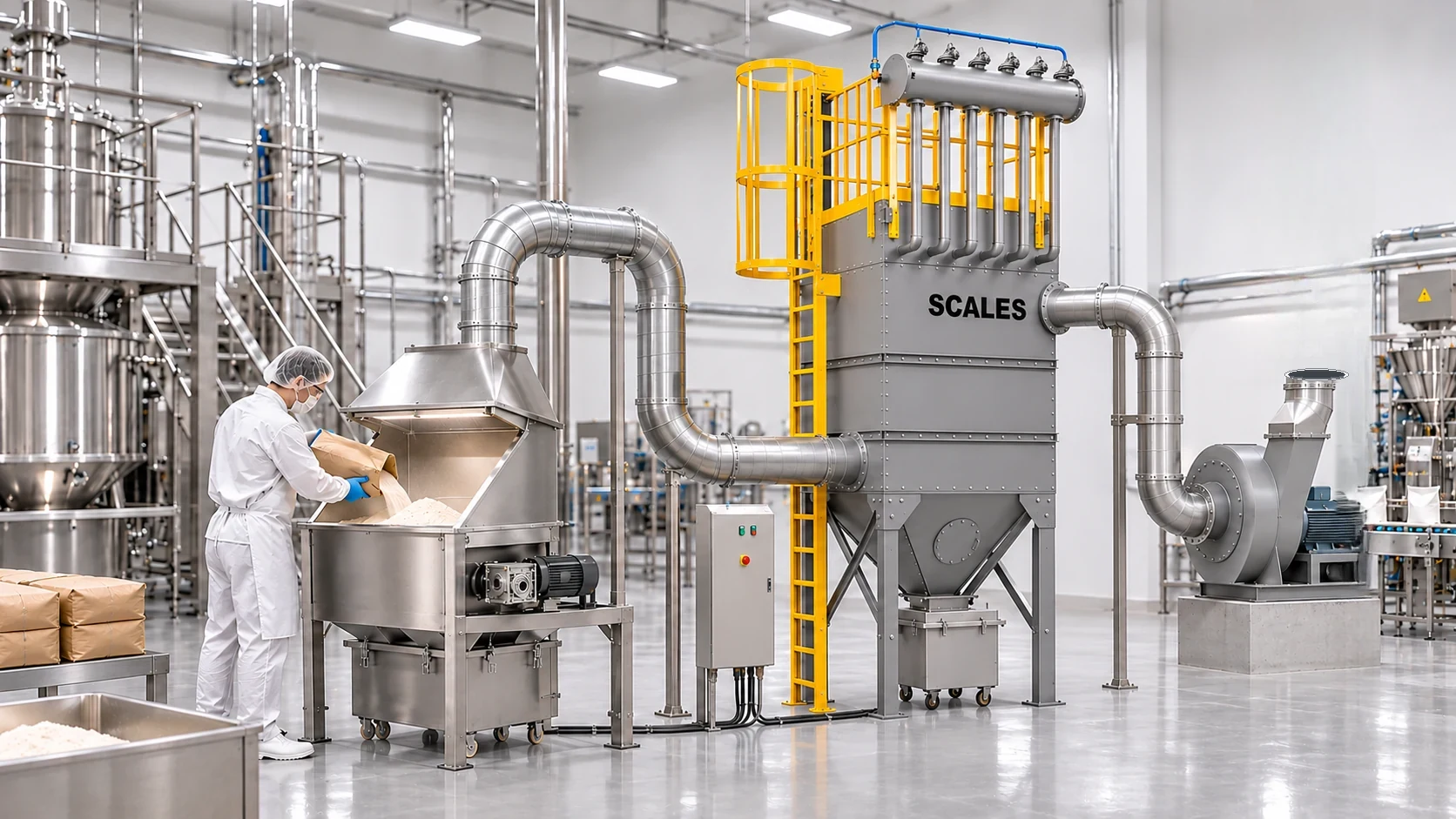
Industry overview
Dust in food plants comes from raw-material intake, charging, milling, mixing, screening, pneumatic conveying and packing. Common dusts are flour, starch, sugar, milk powder, cocoa, spices and feed. Most food dust is combustible and also matters for food hygiene; frying, baking and cooking add oil fume and steam.
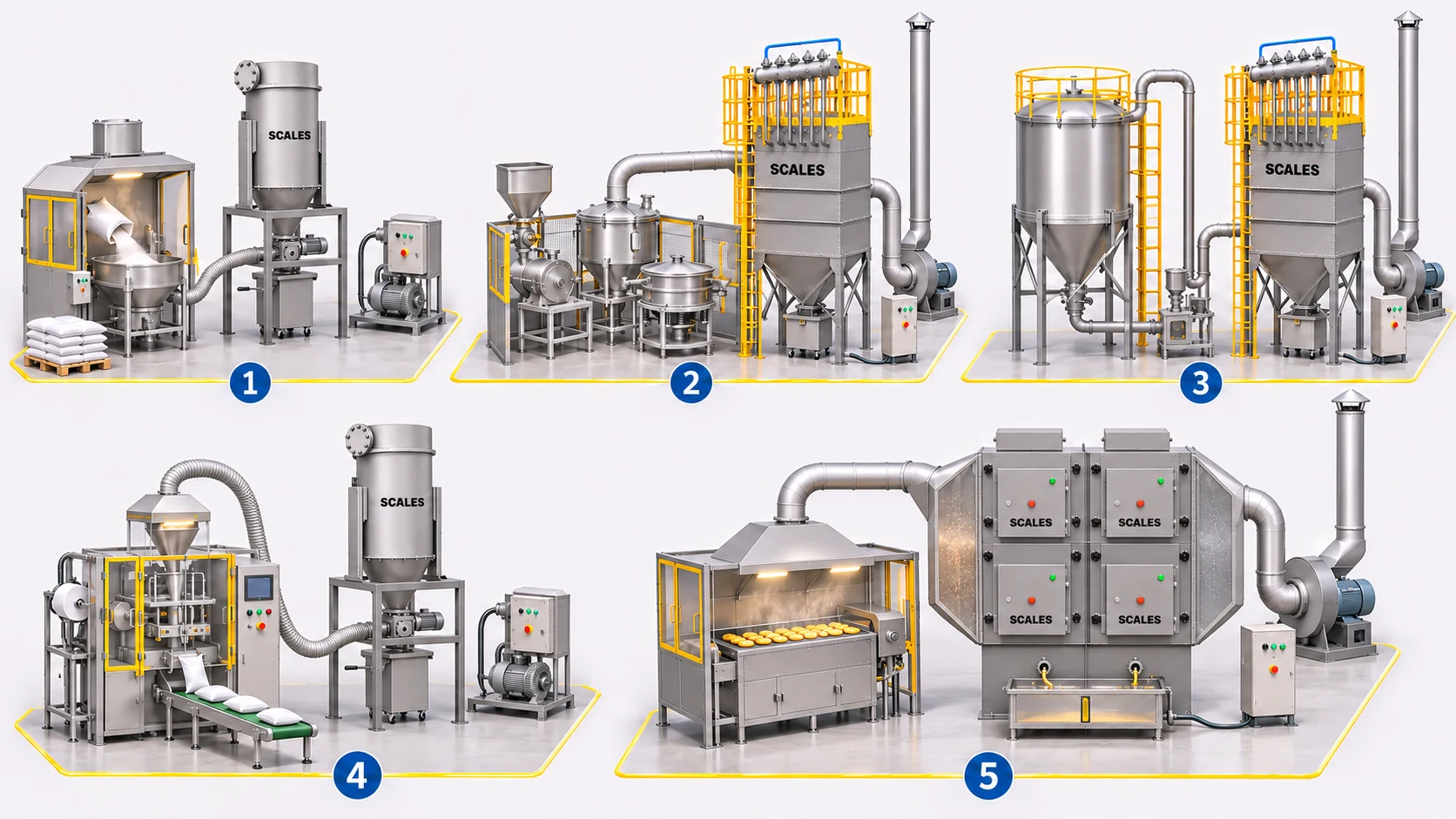
Main processes and contaminants
| Process | What it releases | Challenge | Recommended approach | SCALES series |
|---|---|---|---|---|
| Intake and charging | Dust in bursts | Combustible, manual handling | Extraction at charging stations | SVB, SLF |
| Milling, mixing, screening | Fine dust | Combustible | Cartridge or bag with explosion venting | SIB, SLF, SVF |
| Pneumatic conveying and silos | Dust in conveying exhaust | Must be recovered | Silo-top collectors | SIB, SVF |
| Packing | Dust | Extraction at the spout | SVB, SLF | |
| Frying and baking | Oil fume and steam | Sticky and wet | Electrostatic | SEM |
How SCALES approaches it
- SVB suits enclosed dust points in conveying, mixing and packing in food plants.
- Where dust is recovered, the discharge is designed for reuse.
- Electrostatic units also treat oil fume and can serve frying and baking lines.
RESULT
Before and after
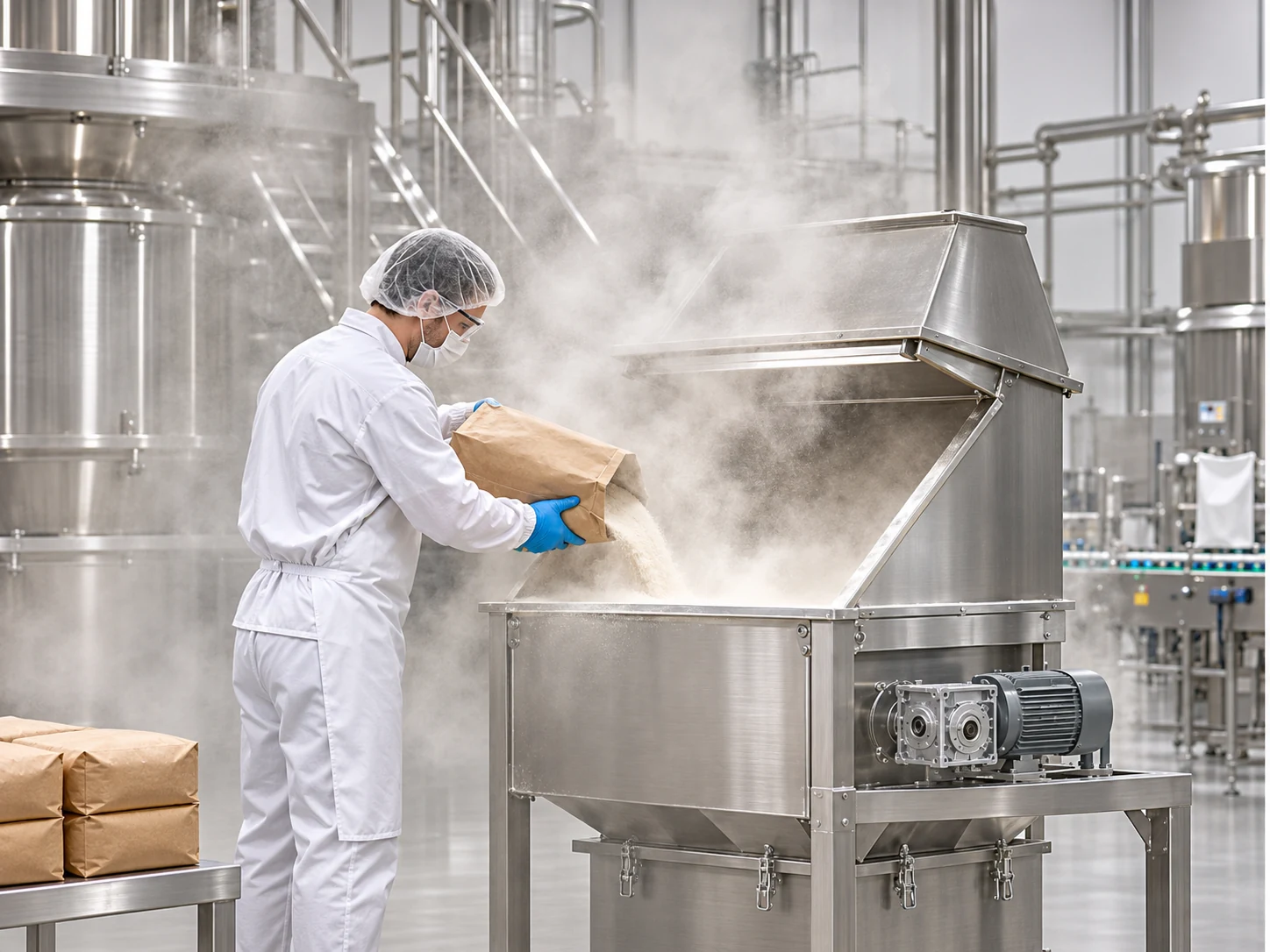
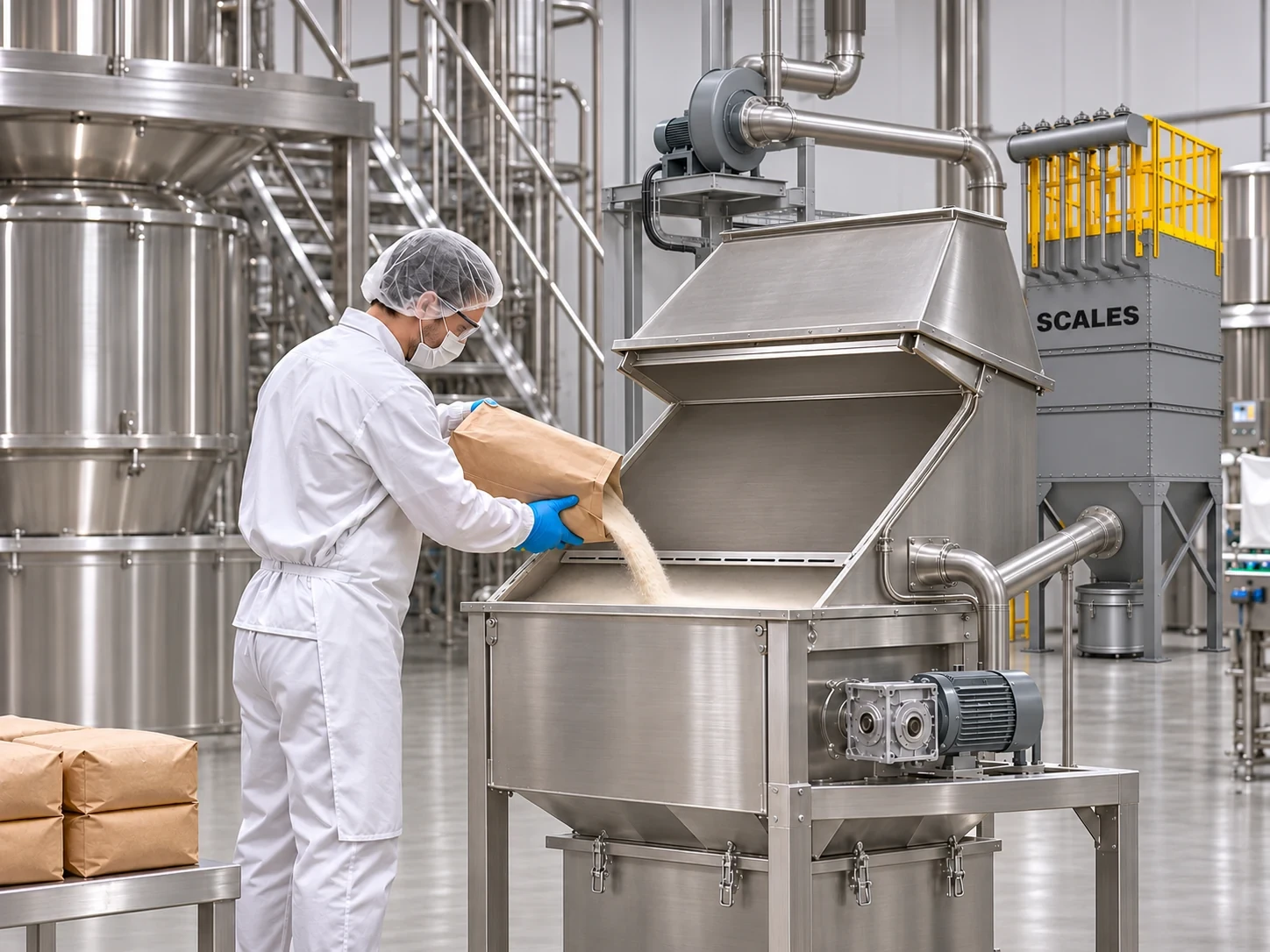
Safety notes
- Flour, starch and sugar are combustible dusts. Assess explosibility and choose venting and antistatic features.
- Where equipment contacts food or dust is reused, materials are confirmed against food-grade requirements.
What to tell us for selection
- Materials
- Processes
- Number of dust points
- Whether dust is recovered
- Combustibility data
- Hygiene requirements