
TECHNICAL KNOWLEDGE
Managing Sparks in Plasma Cutting Extraction Systems
Plasma cutting throws many sparks, and hot particles can travel down the duct and ignite dust on the cartridges. Fire prevention has to cover the whole path from the table to the cartridges and hopper.
Request a Technical Assessment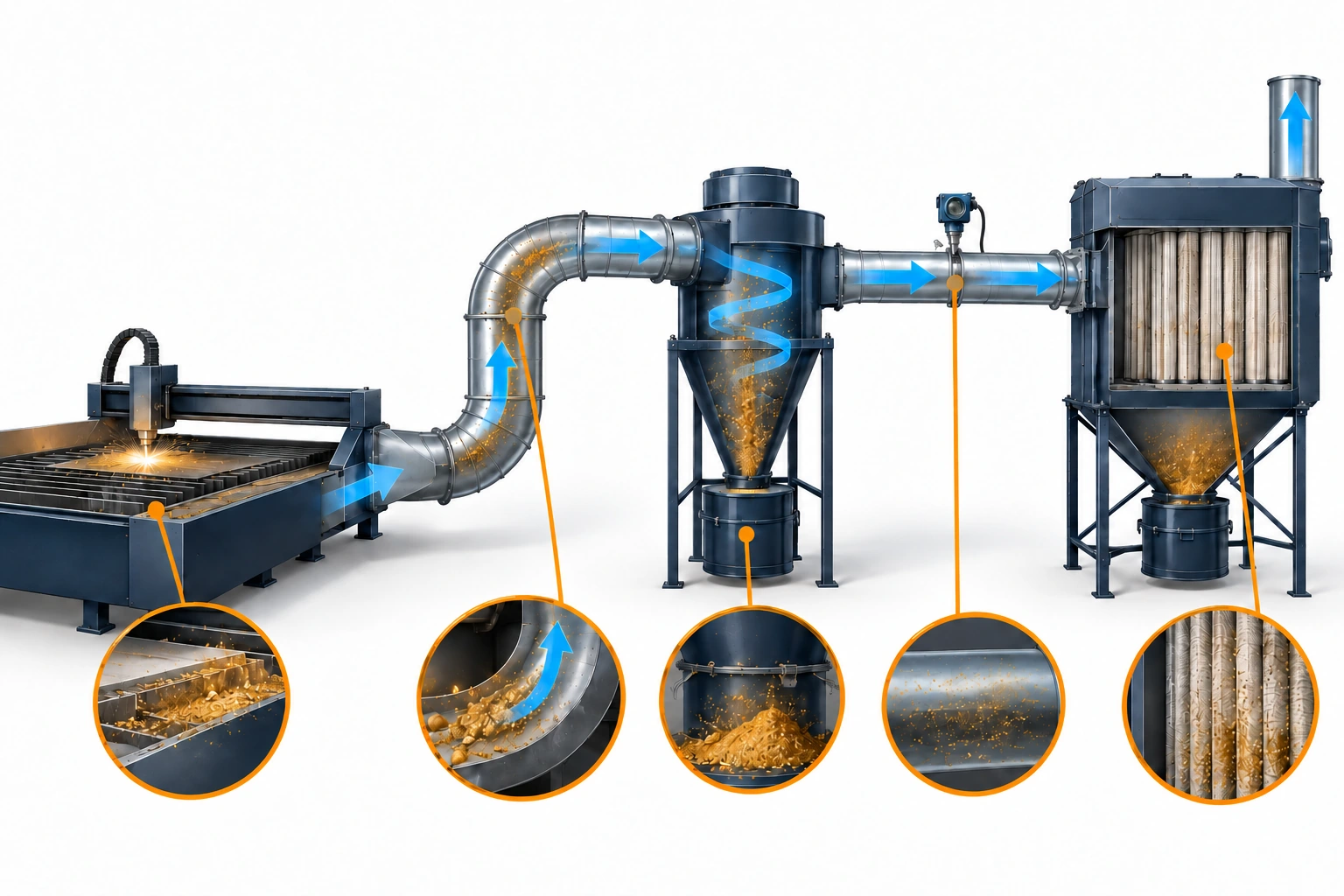
Layers of protection
- Table plenum: empty slag trays regularly so hot slag and dust do not build up.
- Ducts: a spark arrestor or labyrinth pre-separator at the inlet quenches or drops sparks before the cartridges; avoid very short, straight runs so sparks have time to cool.
- Cartridges: flame-retardant media, not ordinary combustible media.
- Dust collection: empty hoppers and drawers promptly; do not store dust.
- Large systems: add spark detection, alarms and interlocked shutdown, with a fire-suppression connection where needed.
Flame-retardant, fire protection and explosion protection differ
Flame-retardant media only resists ignition; fire protection keeps sparks out and detects and controls a fire; explosion protection deals with combustible dust that could explode, through venting and isolation. Carbon-steel cutting usually needs the first two; aluminium, magnesium or titanium dust is combustible and must be assessed for explosion protection.
Daily practice
- Empty slag trays and check the spark arrestor every shift.
- Before switching material, especially to aluminium, confirm the system suits it.
- Post who responds to alarms and how to shut down at the station.