
TECHNICAL KNOWLEDGE
Exhaust Outdoors or Recirculate Air to the Workshop?
Exhausting filtered air outdoors is simplest and safest. Recirculation can save heating and cooling, but it needs thorough filtration and monitoring, and harmful components must not return to the hall.
Request a Technical Assessment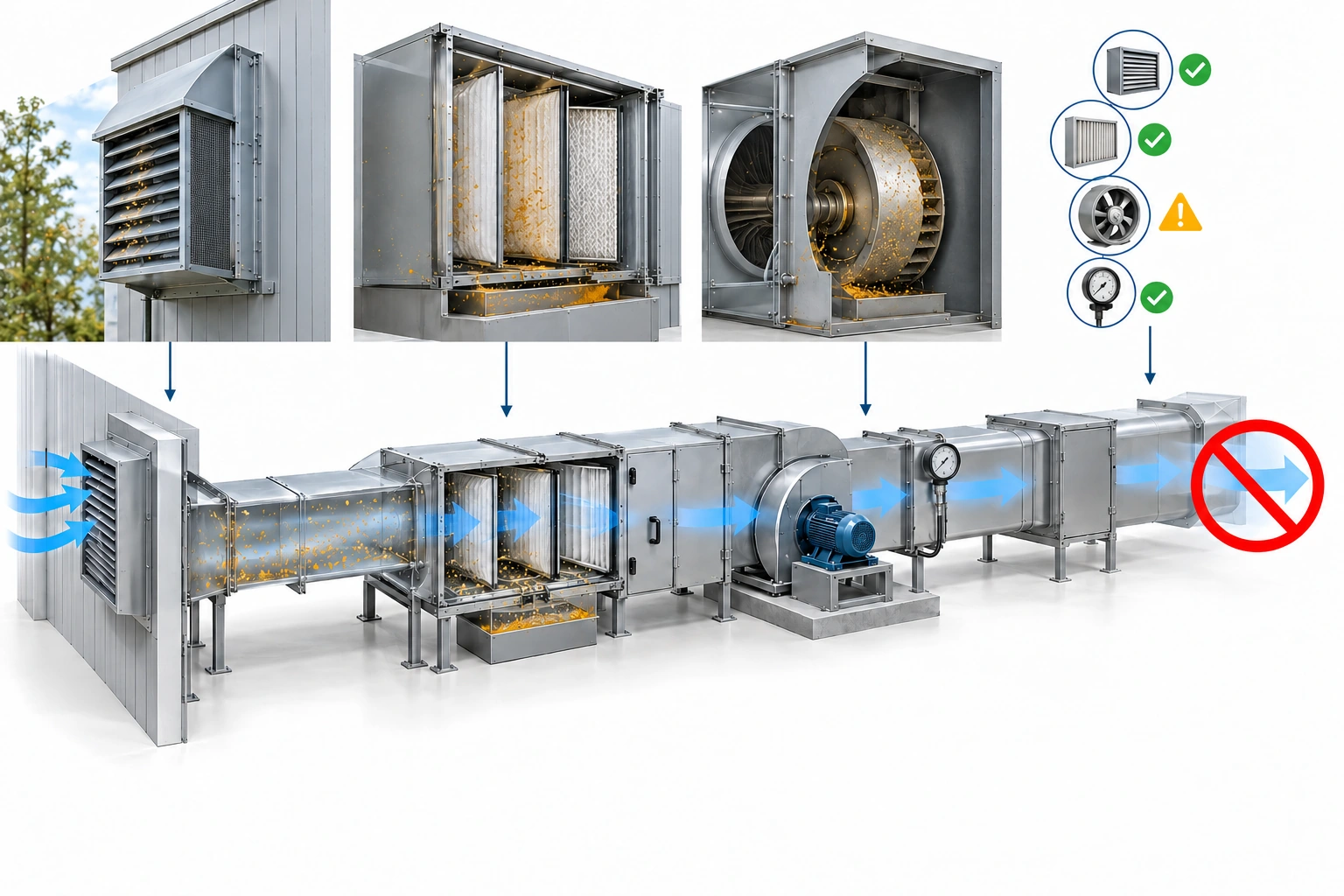
Comparing the options
| Aspect | Exhaust outdoors | Recirculate |
|---|---|---|
| Energy | Every m³ exhausted must be replaced, losing heating or cooling | Saves heating and cooling |
| Requirements | Outlet position and make-up air | HEPA final stage, pressure monitoring, switch to outdoor exhaust on fault |
| Suits | Most duties | Dry dust with known composition and no harmful gases |
When not to recirculate
- Fume from stainless or galvanised welding (chromium, nickel, zinc).
- Oil smoke with odour and gaseous components.
- Combustible dust systems.
- Where local rules do not allow it.
If you recirculate
Add an H13 or H14 final stage, monitor pressure drop, alarm on filter damage or abnormal readings, and be able to switch to outdoor exhaust. Recirculating in winter and exhausting in summer is also common.