
TECHNICAL KNOWLEDGE
Oil Mist and Oil Smoke: What Is the Difference?
Oil mist is coolant broken into small droplets; oil smoke is oil that evaporates on hot surfaces and condenses into much finer particles. Both often occur in the same shop, and they are treated differently.
Request a Technical Assessment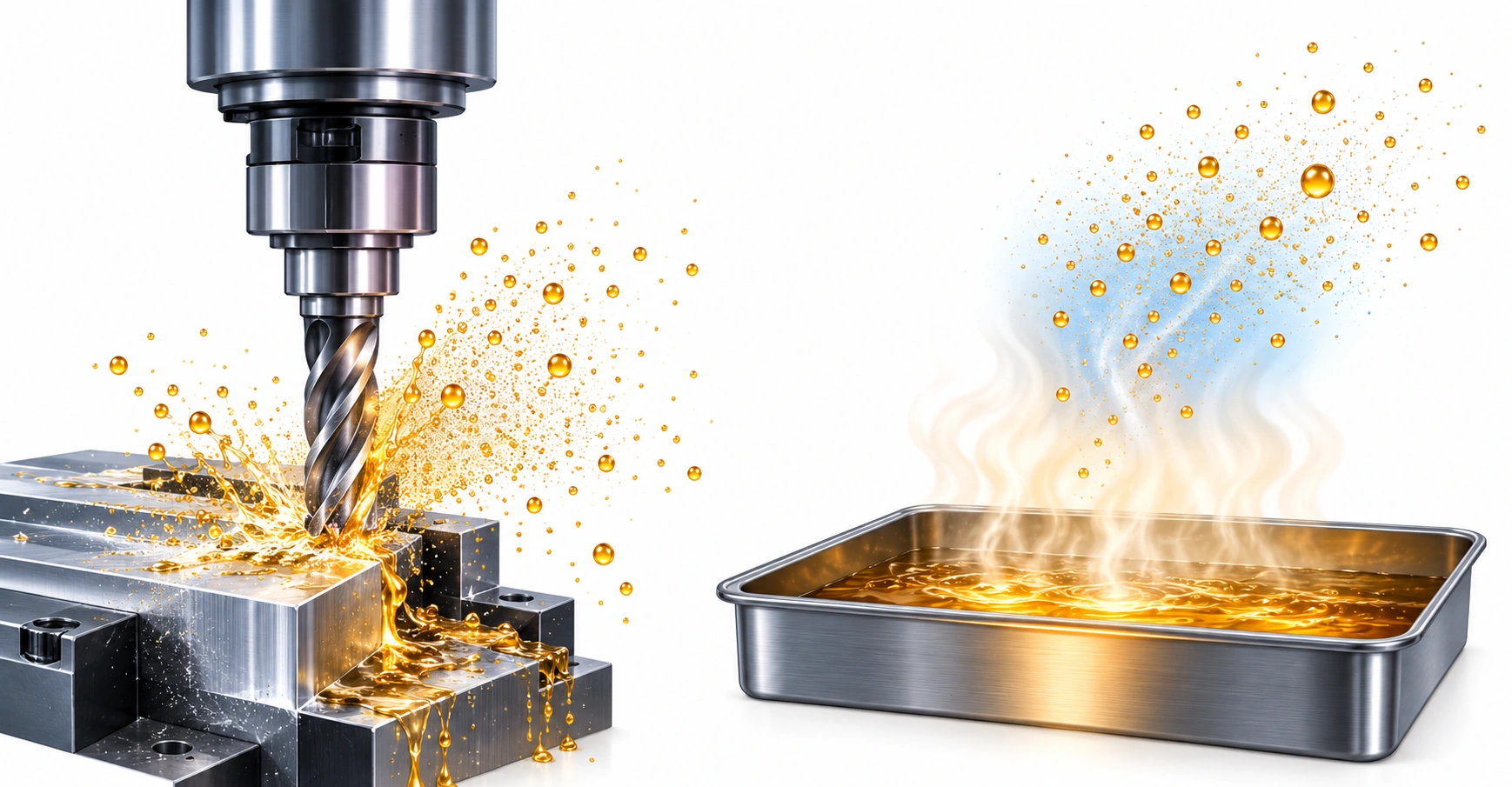
How to tell them apart
- Oil mist: fast spindles and high-pressure coolant break emulsion or cutting oil into droplets. Particles are larger and settle as a film on floors and machines.
- Oil smoke: in quenching, hot forging, die casting and extrusion, oil evaporates on hot parts or dies and condenses into blue-white smoke. Particles are very fine, travel far and often smell.
- One machine can produce both; in high-speed neat-oil cutting, heat at the tool tip also creates smoke.
How each is treated
Mist droplets are larger, so multi-stage mechanical filters capture them well: SPM or SOH on single machines, SOS, SOF or electrostatic units for heavy loads.
Smoke is fine and sticky and blinds ordinary media quickly, so washable electrostatic cells (SEM, SEA) are the usual choice; hot or humid smoke is cooled in a scrubber first. Electrostatic units and filters remove the particles only; add activated carbon where odour or gases must be treated.
What to tell us
- Process and equipment: machining centres, cold headers, quench tanks or die-casting machines, and how many.
- Fluid: emulsion, semi-synthetic or neat oil; quench oil or release agent type.
- Temperature of the fume as it leaves the machine, and whether there is water vapour.
- Current situation: visible haze in the hall, oil on floors and cabinets.