
TECHNICAL KNOWLEDGE
How to Evaluate a Dust Extraction Proposal
A sound proposal explains how each source is captured, how the airflow was calculated, the system resistance, how the fan and collector were chosen, how they will be maintained, and how the result will be accepted.
Request a Technical Assessment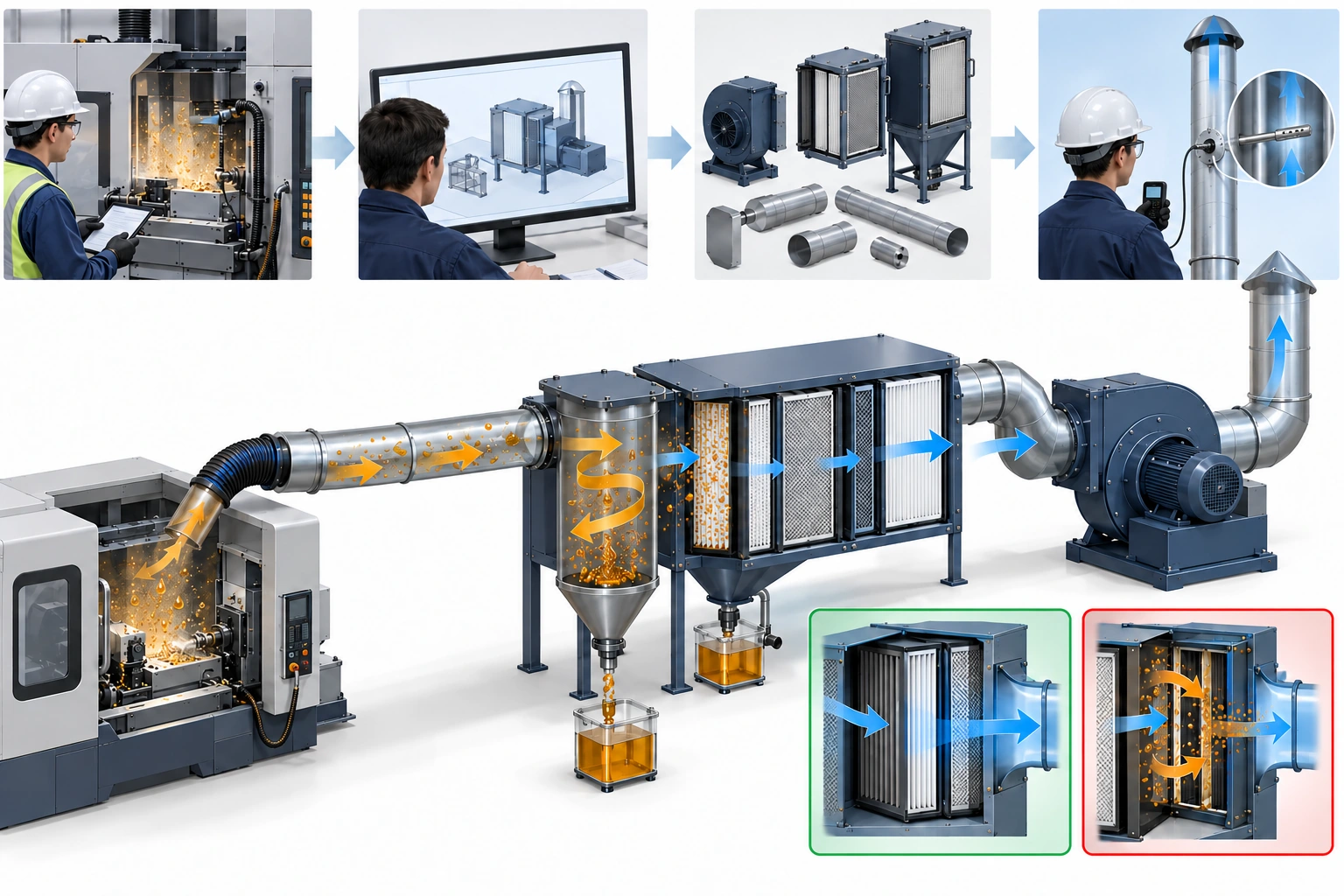
Six questions to ask
- What hood is used at each source, and how far from it?
- How was the airflow calculated? Are opening areas, velocities and simultaneous stations shown?
- What is the duct layout and system resistance? Where does the fan operate?
- What are the filter area and filtration velocity? Why this media?
- What measures cover sparks, oil or combustible dust?
- How is it maintained, how often are filters changed, how is it accepted?
Comparing proposals
Put proposals in one table on the same basis: same sources, same airflow, same scope (main unit, filters, fan, controls, ducts, installation, commissioning, transport, tax). Comparing unit prices alone rarely shows where they differ. Include running costs too: power, compressed air, filters and maintenance.
Warning signs
- Only model numbers, no airflow calculation.
- Very low airflow and price, with hoods far from the sources.
- Promised results with no acceptance method.
- No statement of what is excluded.