
TECHNICAL KNOWLEDGE
Choosing Extraction Arms, Side-Draft Hoods and Overhead Hoods
Enclose the source wherever you can. Where you cannot, use extraction arms for manual welding, side-draft hoods for fixed stations, and overhead hoods only where a steady plume rises from a hot source.
Request a Technical Assessment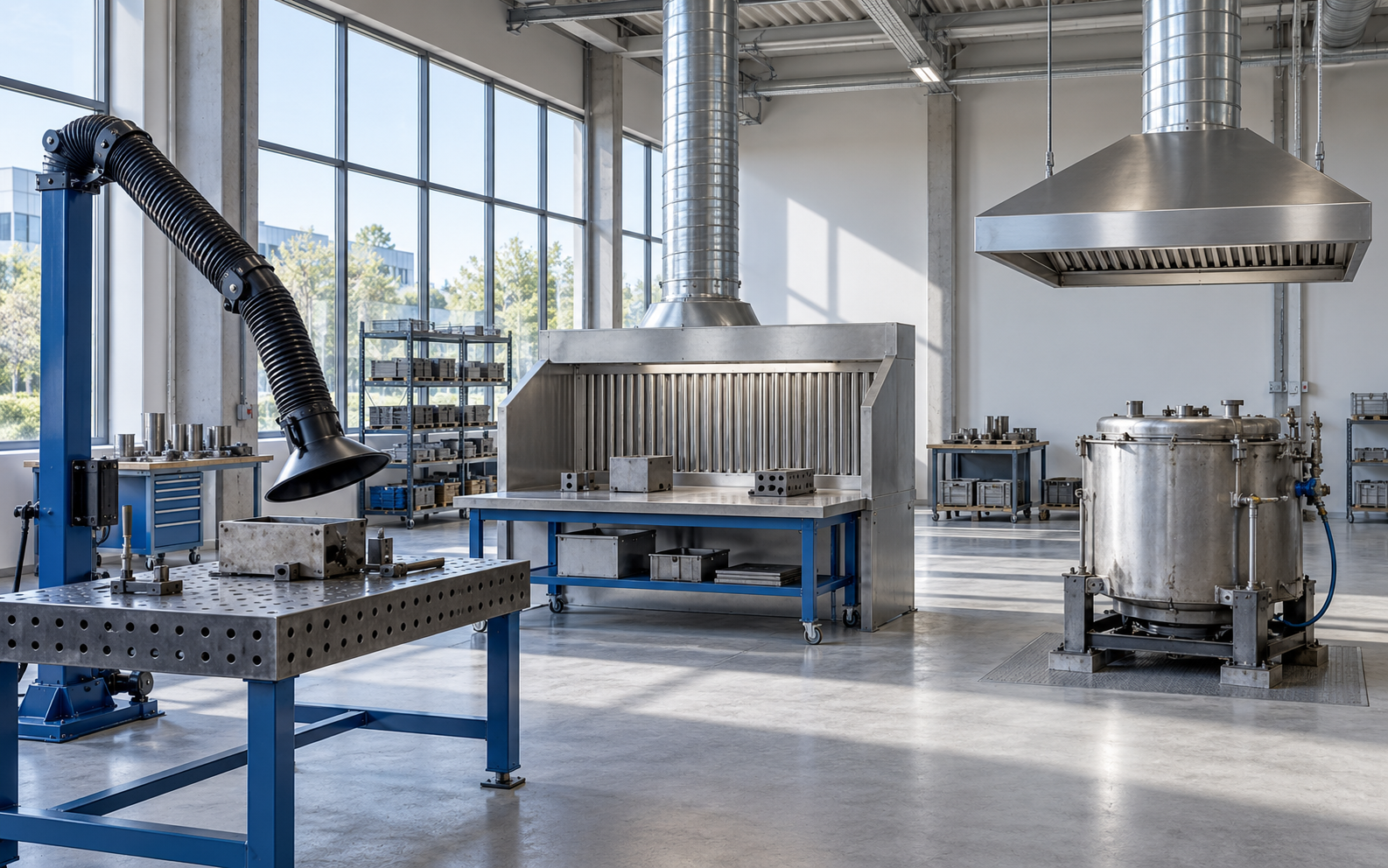
Three hood types
| Hood | Suits | Watch out for |
|---|---|---|
| Extraction arm | Manual welding and grinding where the station changes | Must be moved with the work; only effective close to the source |
| Side-draft hood | Fixed benches for welding or grinding | Face the direction the fume travels; do not let the part block it |
| Overhead canopy | Hot sources such as furnaces and quench tanks | Not suitable if the plume passes the operator's face before reaching the hood |
Order of choice
- First ask whether you can enclose: booths, cutting tables, machine enclosures. The tighter the enclosure, the less airflow.
- If not, is the source fixed? Fixed: side draft. Moving: extraction arm.
- Use an overhead canopy only where the plume rises and people are not in its path.
- Large parts and long welds: if arms cannot reach, consider on-torch extraction or a grinding workroom (SCW).
Checking after installation
Watch a full work cycle in normal production: is the fume drawn in, does any escape around the hood, do draughts from doors or fans push it away? Use smoke tubes to see the airflow if needed.